
Catalogue Search | MBRL


Are you sure you want to remove the book from the shelf?

{{itemTitle}}
53,588
result(s) for
"stress test"
Sort by:
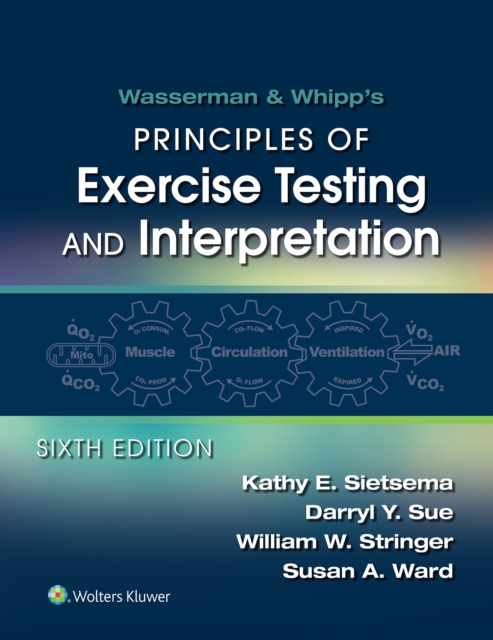
Wasserman & Whipp's principles of exercise testing and interpretation
Thoroughly revised and updated for today's clinicians, Wasserman Whipp's Principles of Exercise Testing and Interpretation, Sixth Edition, provides a comprehensive, practical overview of cardiopulmonary exercise testing (CPET) ideally suited for pulmonologists, cardiologists, anesthesiologists, and others with an interest in clinical exercise testing. Written by authors who are uniquely positioned to convey relevant aspects of research and apply them to clinical contexts, this volume offers in-depth coverage of essential information for conducting CPET, or for utilizing data from this discipline in clinical practice or research.
eBook

Pocket Guide to Stress Testing
The stress test is key to the clinical evaluation and management of patients with known or potential cardiovascular disease.By measuring the heart's ability to respond to external stress, it can provide vital insights into the general physical condition of patients, highlighting abnormalities in blood flow, risk of coronary artery disease, and.
eBook

Relationship Between Pressure-Derived Physiologic Indices and Inducible Myocardial Ischemia During the Adenosine Stress Test
We evaluated the relationship between pressure-derived physiologic indices and inducible myocardial ischemia (IMI), defined by significant ST-segment changes during adenosine stress testing, in 227 patients with left main or left anterior descending coronary artery disease. Associations with symptomatic improvement, assessed by the 7-item Seattle Angina Questionnaire at 1 month post-PCI, were also analyzed. Optimal cut-off values for IMI were lower than current thresholds, with the instantaneous wavefree ratio (iFR) showing superior diagnostic accuracy (higher AUC) compared to other indices. PCI provided the greatest symptomatic relief in patients with moderate-to-severe angina and concomitant IMI. In conclusion, iFR more accurately identifies IMI, and PCI benefits are most pronounced in patients with IMI-related chest pain.
Journal Article

The Coordination Role of Stress Tests in Bank Risk-Taking
We examine whether stress tests distort banks' risk-taking decisions. We study a model in which a regulator may choose to rescue banks in the event of concurrent bank failures. Our analysis reveals a novel coordination role of stress tests. Disclosure of stress-test results informs banks of the failure likelihood of other banks, which can reduce welfare by facilitating banks' coordination in risk-taking. However, conducting stress tests also enables the regulator to more effectively intervene banks, coordinating them preemptively into taking lower risks. We find that, if the regulator has a strong incentive to bail out, stress tests improve welfare, whereas if the regulator's incentive to bail out is weak, stress tests impair welfare.
Journal Article

New Model for Defining and Implementing Performance Tests
The article proposes a new model for defining and implementing performance tests used in the process of designing and operating IT systems. By defining the objectives, types, topological patterns, and methods of implementation, a coherent description of the test preparation and execution is achieved, facilitating the interpretation of results and enabling straightforward replication of test scenarios. The model was used to develop and implement performance tests in a laboratory environment and in a production system. The proposed division of the testing process into layers correlated with the test preparation steps allows to separate quasi-independent areas, which can be handled by isolated teams of engineers. Such an approach allows to accelerate the process of implementation of performance tests and may affect the optimization of the cost of their implementation.
Journal Article

Association between Plasma IL-6 Response to Acute Stress and Early-Life Adversity in Healthy Adults
Increased production of peripheral cytokines and other pro-inflammatory markers has been linked to psychiatric disorders such as major depressive disorder and post-traumatic stress disorder. Recent research has pointed to early-life stress, particularly childhood maltreatment, as an independent and preventable risk factor for systemic inflammation in adulthood. Some data suggest that adults with a history of childhood maltreatment exhibit a heightened inflammatory response to acute stress challenge. To further elucidate the relationship between childhood maltreatment and pro-inflammatory cytokine production, we examined plasma IL-6 response to the Trier Social Stress Test (TSST) in 69 healthy adult subjects without depression or post-traumatic stress disorder. Serial plasma IL-6 concentrations were measured during a standardized psychosocial stressor in
n
=19 subjects with moderate–severe childhood maltreatment (MAL), and
n
=50 controls without maltreatment (CTL), as indicated by self-ratings on the childhood trauma questionnaire (CTQ). CTQ total scores were positively correlated with overall change in IL-6 response, as well as the maximum IL-6 concentration during the TSST. Greater acute IL-6 release and higher IL-6 concentrations over time were observed for the MAL group relative to the CTL group. Inflammation may be an important developmental mediator linking adverse experiences in early life to poor adult physical and mental health. The results of this preliminary study warrant further investigation in a larger sample.
Journal Article

Efficient methods for acute stress detection using heart rate variability data from Ambient Assisted Living sensors
Background
Using Ambient Assisted Living sensors to detect acute stress could help people mitigate the harmful effects of everyday stressful situations. This would help both the healthy and those affected more by sudden stressors, e.g., people with diabetes or heart conditions. The study aimed to develop a method for providing reliable stress detection based on heart rate variability features extracted from portable devices.
Methods
Features extracted from portable electrocardiogram sensor recordings were used for training various classification algorithms for stress detection purposes. Data were recorded in a clinical trial with 7 participants and two stressors, the Trier Social Stress Test and the Stroop colour word test, both validated by standardised questionnaires. Different heart rate variability feature sets (all, time-domain and non-linear only, frequency-domain only) were tested to investigate how classification performance is affected, in addition to various time window length setups and participant-wise training sessions. The accuracy and F1 score of the trained models were compared and analysed.
Results
The best results were achieved with models using time-domain and non-linear heart rate variability features with 5-min-long overlapping time windows, yielding 96.31% accuracy and 96.26% F1 score. Shorter overlapping windows had slightly lower performance, with 91.62–94.55% accuracy and 91.77–94.55% F1 score ranges. Non-overlapping window configurations were less effective, with both accuracy and F1 score below 88%. For participant-wise learning, average F1 scores of 99.47%, 98.93% and 96.1% were achieved for feature sets using all, time-domain and non-linear, and frequency-domain features, respectively.
Conclusion
The tested stress detector models based on heart rate variability data recorded by a single electrocardiogram sensor performed just as well as those published in the literature working with multiple sensors, or even better. This suggests that once portable devices such as smartwatches provide reliable hear rate variability recordings, efficient stress detection can be achieved without the need for additional physiological measurements.
Journal Article
Detection of Coronary Artery Disease With Coronary Computed Tomography Angiography and Stress Testing in Candidates for Liver Transplant
Cardiac complications are the leading cause of morbidity and mortality in recipients of liver transplant (LT). Previous guidelines recommended stress testing to exclude coronary artery disease (CAD), although recent guidelines recommend coronary computed tomography angiography (CCTA). We aimed to assess the prevalence and predictors of CAD on CCTA and compare CCTA with stress testing in consecutive adult candidates for LT who underwent CAD noninvasive assessment between 2020 and 2023. Patients who underwent a stress test between January and December 2020 formed the stress cohort, and patients who underwent CCTA between January 2021 and September 2023 formed the CCTA cohort. There were 141 patients in the stress test cohort and 269 patients in the CCTA cohort. Stress test results were nondiagnostic or inconclusive in 18 patients (12.8%) whereas CCTA was nondiagnostic in 6 patients (2.2%). In patients evaluated with CCTA, mean coronary artery calcium (CAC) score was 332 ± 716 AU, with moderate or greater (>50%) stenosis in 33 patients (12.3%). New CAD was diagnosed in 158 patients (58.7%) using CCTA and in 5 patients (3.5%) using stress tests. Clinically actionable CAD (coronary artery calcium >100) on CCTA was present in 96 patients (35.7%). The number of CAD risk factors was associated with the presence of CAD on CCTA. In conclusion, there was a great burden of CAD, mainly nonobstructive, in a large cohort of candidates for LT who underwent CAD testing over a 4-year period. The current recommended risk-based evaluation of candidates for LT using CCTA as a first-line test was feasible and effective. Diagnosis of clinically actionable CAD on CCTA provides a vast opportunity for optimizing cardiac care in candidates for and recipients of LT.
Journal Article

Risk Stratification in Pediatric Wolff-Parkinson-White: Practice Variation Among Pediatric Cardiologists and Electrophysiologists
Background
Published guidelines provide recommendations for risk stratification in pediatric Wolff-Parkinson-White (WPW). There are no data on provider concordance with these guidelines. We hypothesized that significant practice variation exists between pediatric cardiologists (PC) and electrophysiologists (EP).
Method
The records of all patients, age 8 to 21 years, with a new ECG diagnosis of WPW between 1/1/2013 and 12/31/2018, from a single center, were retrospectively reviewed. Subjects were categorized on the basis of symptoms and resting ECG findings as one of the following: asymptomatic intermittent WPW, asymptomatic persistent WPW, or symptomatic WPW. The performance and results of diagnostic testing, including Holter monitor, event monitor, exercise stress test (EST), and electrophysiology study (EPS), were recorded. The primary outcome was concordance with published guidelines. A secondary outcome was documentation of a discussion of sudden cardiac death (SCD) risk.
Results
615 patient encounters were analyzed in 231 patients with newly diagnosed WPW pattern on ECG (56% male; mean age at diagnosis 13.9 ± 2.5 years). EP were observed to have a significantly higher rate of guideline concordance than PC (95% vs. 71%, p < 0.001). There was significant practice variation between PC and EP in the documentation of a discussion of SCD risk: 96% in EP vs. 39% in PC (p < 0.001).
Conclusion
Significant practice variation exists in the non-invasive and invasive risk stratification of pediatric WPW, with lower concordance to published guidelines amongst PC, when compared to EP. This report highlights the need to promote awareness of current WPW guidelines in the pediatric cardiology community at large.
Journal Article
Diastolic Stress Echocardiography in Patients With Hypertrophy Cardiomyopathy: Association With Exercise Capacity
Diastolic dysfunction plays a major role in precipitating congestive heart failure in patients with hypertrophic cardiomyopathy (HCM). In many such patients, symptoms are unmasked only during exercise because left ventricular (LV) filling pressure is normal at rest but increase with exercise. We sought to establish whether abnormal postexercise diastolic parameters are associated with reduced exercise capacity in patients with HCM. We examined 590 patients with asymptomatic/minimally symptomatic HCM (age 54 ± 14 years, 57% men, body mass index 30 ± 6 kg/m2, 84% on β blockers) with HCM by 2-dimensional and Doppler echocardiography at rest and after maximal treadmill exercise echocardiography (TSE). A complete echocardiogram (including LV ejection fraction, LV thickness, LV outflow tract [LVOT] gradient, degree of mitral regurgitation) was recorded. Diastolic parameters (septal and lateral [e’] velocities of the mitral annulus, peak early [E] and late [A] mitral inflow velocity, E/A ratio, E/e’, right ventricular systolic pressure [RVSP], and left atrial volume index) were recorded at rest and after TSE. Exercise functional capacity was recorded and divided into <85% or >85% of age-gender predicted metabolic equivalents (AGP-METs). After maximal exercise, 32% patients had at least moderate mitral regurgitation, mean LVOT gradient was 61 ± 59 mm Hg, E/A ratio was 1.2 ± 1.0, average E/e’ ratio 12.9 ± 1.0, and peak RVSP was 36 ± 15 mm Hg. Only 42% of patients achieved >85% of AGP-METs; the mean METs was 7 ± 3. On multivariable logistic regression analysis, higher body mass index (odds ratio [OR] 1.05), β-blocker use (OR 2.58), higher left atrial volume index (OR 1.02), higher peak stress LVOT gradient (LVOTG) (OR 1.06), peak stress E/e’ (OR 1.04), and higher RVSP (OR 1.03) were independently associated with <85% AGP-METs achieved (all p <0.05). In conclusion, in patients with asymptomatic/minimally symptomatic HCM who underwent TSE, there is a significant and independent association between abnormal diastolic response to exercise and reduced exercise capacity in HCM. Incorporating diastolic parameters during stress echocardiography could provide incremental diagnostic utility in deciphering the exact etiology of dyspnea in such patients.
Journal Article