
Catalogue Search | MBRL


Are you sure you want to remove the book from the shelf?

{{itemTitle}}
4,321
result(s) for
"suffrage history"
Sort by:


To Be Equals in Our Own Country
To Be Equals in Our Own Country chronicles the bitter struggle for women's suffrage in Quebec, the last province to grant Canadian women this fundamental human right.
eBook

Suffrage : the epic struggle for women's right to vote
\"Four generations of women fought for the right to vote. This book shows how their grand reform effort overcame resistance from traditionalists fearing social decay, religious leaders citing scriptural prohibitions, and a stodgy political establishment reluctant to share power\"-- Provided by publisher.
Book

Suffrage Reconstructed
The Fourteenth Amendment, ratified on July 9, 1868, identified all legitimate voters as \"male.\" In so doing, it added gender-specific language to the U.S. Constitution for the first time. Suffrage Reconstructed is the first book to consider how and why the amendment's authors made this decision. Vividly detailing congressional floor bickering and activist campaigning, Laura E. Free takes readers into the pre- and postwar fights over precisely who should have the right to vote. Free demonstrates that all men, black and white, were the ultimate victors of these fights, as gender became the single most important marker of voting rights during Reconstruction.
Free argues that the Fourteenth Amendment's language was shaped by three key groups: African American activists who used ideas about manhood to claim black men's right to the ballot, postwar congressmen who sought to justify enfranchising southern black men, and women's rights advocates who began to petition Congress for the ballot for the first time as the Amendment was being drafted. To prevent women's inadvertent enfranchisement, and to incorporate formerly disfranchised black men into the voting polity, the Fourteenth Amendment's congressional authors turned to gender to define the new American voter. Faced with this exclusion some woman suffragists, most notably Elizabeth Cady Stanton, turned to rhetorical racism in order to mount a campaign against sex as a determinant of one's capacity to vote. Stanton's actions caused a rift with Frederick Douglass and a schism in the fledgling woman suffrage movement. By integrating gender analysis and political history, Suffrage Reconstructed offers a new interpretation of the Civil War-era remaking of American democracy, placing African American activists and women's rights advocates at the heart of nineteenth-century American conversations about public policy, civil rights, and the franchise.
The Fourteenth Amendment, ratified on July 9, 1868, identified all legitimate voters as \"male.\" In so doing, it added gender-specific language to the U.S. Constitution for the first time.Suffrage Reconstructedis the first book to consider how and why the amendment's authors made this decision. Vividly detailing congressional floor bickering and activist campaigning, Laura E. Free takes readers into the pre- and postwar fights over precisely who should have the right to vote. Free demonstrates that all men, black and white, were the ultimate victors of these fights, as gender became the single most important marker of voting rights during Reconstruction.Free argues that the Fourteenth Amendment's language was shaped by three key groups: African American activists who used ideas about manhood to claim black men's right to the ballot, postwar congressmen who sought to justify enfranchising southern black men, and women's rights advocates who began to petition Congress for the ballot for the first time as the Amendment was being drafted. To prevent women's inadvertent enfranchisement, and to incorporate formerly disfranchised black men into the voting polity, the Fourteenth Amendment's congressional authors turned to gender to define the new American voter. Faced with this exclusion some woman suffragists, most notably Elizabeth Cady Stanton, turned to rhetorical racism in order to mount a campaign against sex as a determinant of one's capacity to vote. Stanton's actions caused a rift with Frederick Douglass and a schism in the fledgling woman suffrage movement. By integrating gender analysis and political history,Suffrage Reconstructedoffers a new interpretation of the Civil War-era remaking of American democracy, placing African American activists and women's rights advocates at the heart of nineteenth-century American conversations about public policy, civil rights, and the franchise.
eBook


Democracy and the Vote in British Politics, 1848-1867
The Second Reform Act, passed in 1867, created a million new voters, doubling the electorate and propelling the British state into the age of mass politics. It marked the end of a twenty year struggle for the working class vote, in which seven different governments had promised change. Yet the standard works on 1867 are more than forty years old and no study has ever been published of reform in prior decades.
This study provides the first analysis of the subject from 1848 to 1867, ranging from the demise of Chartism to the passage of the Second Reform Act. Recapturing the vibrancy of the issue and its place at the heart of Victorian political culture, it focuses not only on the reform debate itself, but on a whole series of related controversies, including the growth of trade unionism, the impact of the 1848 revolutions and the discussion of French and American democracy.
eBook


The Politics of Voter Suppression
The Politics of Voter Suppressionarrives in time to assess actual practices at the polls this fall and to reengage with debates about voter suppression tactics such as requiring specific forms of identification. Tova Andrea Wang examines the history of how U.S. election reforms have been manipulated for partisan advantage and establishes a new framework for analyzing current laws and policies. The tactics that have been employed to suppress voting in recent elections are not novel, she finds, but rather build upon the strategies used by a variety of actors going back nearly a century and a half. This continuity, along with the shift to a Republican domination of voter suppression efforts for the past fifty years, should inform what we think about reform policy today.
Wang argues that activities that suppress voting are almost always illegitimate, while reforms that increase participation are nearly always legitimate. In short, use and abuse of election laws and policies to suppress votes has obvious detrimental impacts on democracy itself. Such activities are also harmful because of their direct impacts on actual election outcomes. Wang regards as beneficial any legal effort to increase the number of Americans involved in the electoral system. This includes efforts that are focused on improving voter turnout among certain populations typically regarded as supporting one party, as long as the methods and means for boosting participation are open to all. Wang identifies and describes a number of specific legitimate and positive reforms that will increase voter turnout.
eBook
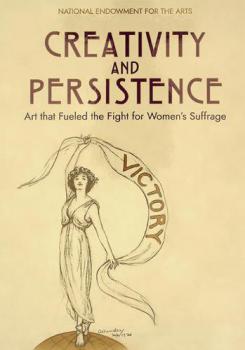
Creativity and persistence : art that fueled the fight for women's suffrage
\"The National Endowment for the Arts commemorates how the arts were critical to the ultimate success of the women's suffrage movement--just as they have been critical to countless social and political movements before and since. The arts--from poetry to visual arts to fashion--have a unique ability to serve as a rallying cry, disseminating messages across large audiences, and inspiring us in a way that few other things can\"-- Provided by publisher.
Book

The Hidden History of the War on Voting
The New York Times -bestselling author explores America's history with voter disenfranchisement and how to ensure everyone has a voice in this democracy.In today's America, only a slim majority of people register to vote, and a large percentage of registered voters don't bother to show up: Donald Trump was elected by only twenty-six percent of.
eBook