
Catalogue Search | MBRL


Are you sure you want to remove the book from the shelf?

{{itemTitle}}
10,304
result(s) for
"sustainable building materials"
Sort by:

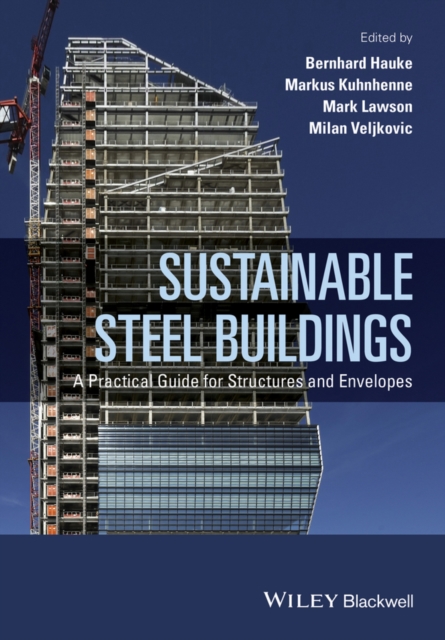
Sustainable Steel Buildings
Sustainable Steel Buildings reviews steel and its potential as a sustainable building material and shows how steel can be used to deliver buildings and structures with a high level of sustainability. The book's main focus is on the advantages and disadvantages of steel and how those characteristics can be used under a range of international certification systems (DGNB, LEED, BREEAM, openhouse etc).
eBook


Application of nanotechnology in concrete and supplementary cementitious materials: a review for sustainable construction
The increasing research endeavors on nanotechnology encompasses a number of disciplines including the aspects of sustainable construction in civil and environmental engineering. Tremendous achievements have been reported on nanotechnology adoption on sustainable construction, but there are so much more to explore than has been achieved. Some of the advancements on the adoption of nanotechnology on sustainable construction, includes the enhancement of the rheology, strength and durability properties of concrete; which has been proved to be hinged on the nanoscopic characteristics of its constituent. Any modification at the nanoscopic level of concrete and its constituent influences its behavior, including its strength and durability characteristics. Hence, it is projected that the performance of concrete and sustainable construction materials in the future would be greatly enhanced by the application of nanotechnology to manipulate the atoms and molecules of these materials and their constituents at the nanoscale.
Journal Article

Phase and dimensional stability of volcanic ash-based phosphate inorganic polymers at elevated temperatures
Phosphate geopolymers are part of chemically bonded phosphate cements obtained from an aluminosilicate and phosphate solution. Their structure consisting of phosphate bonds makes them suitable for use as refractory material. This study deals with the influence of phosphoric acid concentration (6, 8 and 10 mol/L) on the stability of volcanic ash-based phosphate geopolymers exposed to 100, 600 and 1000 °C. The results reveal that the onset of crystallization is about 600 °C with the formation of aluminum phosphate (V) and tridymite, then crystallization of iron (III) phosphate (V) and hematite at 1000 °C. The degree of crystallization of these phases increases with phosphoric acid concentration. The geopolymers obtained with 8 mol/L of phosphoric acid showed the best thermal stability at 1000 °C in terms of compressive strength change. The maximum thermal linear shrinkage recorded was 3%. The major phases of all geopolymers remain stable up to 1000 °C, after which the melting of phases happens.
Journal Article

Different mineral admixtures in concrete: a review
The present work reviews the various mineral admixtures used in concrete which modifies the concrete properties. In this study, cement is partially or completely replaced by different mineral admixtures such as fly ash, silica fume, rice husk ash, Ground Granulated Blast Furnace Slag, palm oil fuel ash and metakaolin. The strength obtained is different for different mineral admixtures by adding these to concrete. Various concrete characteristics like split tensile, compressive and flexural strength, durability, workability are presented.
Journal Article

Low impact building : housing using renewable materials
\"Low Impact Building: Housing using Renewable Materials is about changing the way we build houses to reduce their 'carbon' footprint and to minimise environmental damage. One of the ways this can be done is by reducing the energy and environmental impact of the materials and resources used to construct buildings by choosing alternative products and systems. In particular, we need to recognise the potential for using natural and renewable construction materials as a way to reduce both carbon emissions but also build in a more benign and healthy way. This book is an account of some attempts to introduce this into mainstream house construction and the problems and obstacles that need to be overcome to gain wider acceptance of genuinely environmental construction methods.\"-- From publisher description.
Book

Sustainable Mitigation Strategies for Urban Heat Island Effects in Urban Areas
The globe is at a crossroads in terms of the urban heat island effect, with rising surface temperatures due to urbanization and an expanding built environment. This cause-and-effect connection may be linked to weather-related dangers, natural disasters, and disease outbreaks. Urbanization and industrialization will not lead to a secure and sustainable future. Finding solutions to problems such as the heat island effect is at the forefront of scientific research and policy development. Sustainable ways to decrease urban heat island impacts are a core principle for urban planners. This literature study examines the benefits of adding green infrastructure and sustainable materials in built-up areas to reduce the urban heat island effect. Materials such as reflective street pavements, coating materials including light-colored paint, phase-change materials, color-changing paint, fluorescence paint, and energy-efficient appliances are considered sustainable materials, whereas green infrastructure like green roofs, green walls, green parking and pavements, and shaded streets are considered to mitigate the urban heat island effect. The hurdles to the widespread adoption of such practices include a lack of governmental legislation, insufficient technological development, an erroneous estimation of economic gains, and unwillingness on the part of impacted parties.
Journal Article