
Catalogue Search | MBRL


Are you sure you want to remove the book from the shelf?

{{itemTitle}}
13,758
result(s) for
"sustainable living"
Sort by:

The ecology of home
Education researchers worldwide face a basic question: Is their purpose to use people to develop knowledge, or use knowledge to develop people This book offers an exploration to this fundamental question by examining what three core disciplines - ecology, economics, and ecumenism - have in common. These disciplines have roots in the ancient Greek notion of the household (oikos). By examining some complementary and competing principles among the disciplines, the book uncovers some commonalities between science, economics and religion, that support a holistic view of ecology or ecological education. The format for the discussion comprises a number of selected academic chapters on each of the topics above as well as a number of other creative media which include drawings figures, prose, poetry and photography which creatively draws connections among the diverse and interdisciplinary concepts and theories presented. In addition, the content of this book has attempted minimize academic jargon to make the ideas more accessible to an audience of academics, teachers and a wider general audience.
Book

Developing Secondary School Students’ Sustainable Living Awareness to Help Achieve the Sustainable Development Goals
In today’s world, there are numerous challenges all over the world because of human lifestyles. Therefore, raising awareness of sustainable living is crucial to developing ways for everyone to live better while meeting both present and future generations’ environmental, social, and economic needs. In this context, the aim of the current research was to investigate the effects of the learn–think–act-based Education for Sustainable Development Goals (ESDG) program on secondary school students’ sustainable living awareness. A single-group pre- and post-test model was used in this research. The research group consisted of 34 seventh-grade students enrolled in the “Environmental Education and Climate Change” elective course at a public school in Istanbul, Türkiye. The data were collected using the Sustainable Living Awareness Scale (SLAS). A paired-sample test was used for data analysis. The findings show that there were statistically significant differences between the pre- and post-test total and sub-factor scores of the secondary school students’ sustainable living awareness, with the post-test scores being higher. In other words, the results show that learn–think–act-based ESDG can be an effective way to develop students’ sustainable living awareness.
Journal Article

Color as a Key Factor in Creating Sustainable Living Spaces for Seniors
Color as a feature of interior spaces is a fundamental component of human interaction with the built environment. Therefore, planning the design concept of an interior space with attention to color choices is extremely important, especially when the users of a given space include individuals who require additional support and care, such as the elderly. The colors used in architecture and interiors play a crucial role in the well-being of older adults, influencing their spatial perception, behavior, and activity. With age, color perception changes due to the effects of the aging process on vision. Visual deficits lead to shifts in sensory perception, which can, in turn, affect the sense of well-being, often creating a heightened sense of uncertainty. These changes in color perception due to aging may impact the color preferences of older people within their living environments. To create supportive environments for seniors, it is necessary to investigate which colors are most easily recognized, which colors are easiest to distinguish, and which colors are preferred by older adults. Based on a review of the literature and research findings on age-related changes in chromatic and spatial perception, design recommendations and guidelines have been developed. To supplement this knowledge, a survey was conducted among seniors to gather insights on their color preferences. Observations and analyzes of the survey results point to strategies for color use and underscore the importance of color in designing sustainable living spaces for seniors.
Journal Article

Earth-friendly shopping
Explains how to shop to protect protect our planet and fight global warming.
Book

Shelter and Storm
Living mindfully with nature during a time of uncertainty In the midst of the environmental crises of the early twenty-first century, Tamara Dean sought a way to live lightly on the planet. Her quest drew her to a landscape unlike any other: the Driftless area of Wisconsin, a region untouched by glaciers, marked by steep hills and deeply carved valleys, capped with forests and laced with cold, spring-fed streams. There, she confronted, in ways large and small, the challenges of meeting basic needs while facing the ravages of climate change-an experience at once soul-stirring and practical that she recounts in Shelter and Storm. Dean's boundless curiosity and gift for storytelling imbue these essays with urgency and a sense of adventure. She invites readers to share in her discoveries while hunting for water, learning that a persistent weed could be food, or burning a hayfield to recreate a prairie. Contending with the fallout of fires, floods, and tornadoes, she offers responses to natural disasters that reflect the importance of community, now and for generations to come. Whether tracking down a rare, blue-glowing firefly, engineering a beaver-friendly waterway to appease a dying neighbor, or building a house of earthen blocks, Dean unites personal experience with science and history, presenting a perspective as informative as it is compelling. Keenly attentive to the stakes for our planet's future-and the implications of extreme weather, shifting agricultural practices, and political divides-Shelter and Storm illuminates a thoughtful way forward for anyone concerned about climate change and its far-reaching consequences or for anyone searching, as Dean has, for a more sustainable way to live. Retail e-book files for this title are screen-reader friendly.
eBook


Natural Water Treatment Systems for Safe and Sustainable Water Supply in the Indian Context
Based on the work from the Saph Pani project (Hindi word meaning potable water), this book aims to study and improve natural water treatment systems, such as River Bank Filtration (RBF), Managed Aquifer Recharge (MAR), and wetlands in India, building local and European expertise in this field.
eBook

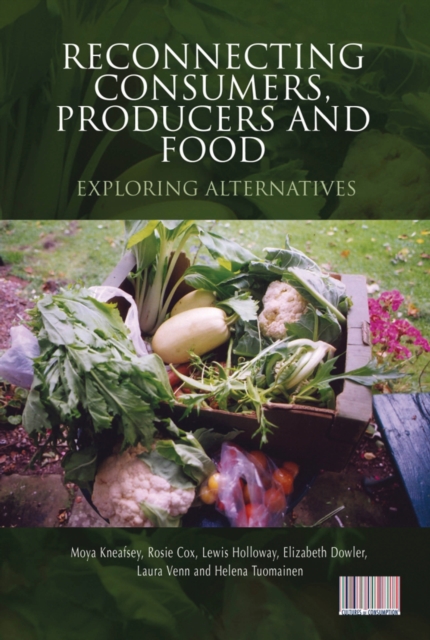
Reconnecting Consumers, Producers and Food
Reconnecting Consumers, Producers and Food presents a detailed and empirically grounded analysis of alternatives to current models of food provision. The book offers insights into the identities, motives and practices of individuals engaged in reconnecting producers, consumers and food. Arguing for a critical revaluation of the meanings of choice and convenience, Reconnecting Consumers, Producers and Food provides evidence to support the construction of a more sustainable and equitable food system which is built on the relationships between people, communities and their environments.
eBook