
Catalogue Search | MBRL


Are you sure you want to remove the book from the shelf?

{{itemTitle}}
3,196
result(s) for
"swing"
Sort by:


Dynamic Golf Swing Analysis Framework Based on Efficient Similarity Assessment
With advances in computing power and deep learning, image-based pose estimation has become a viable tool for quantitative motion analysis. Compared to sensor-based systems, vision-based approaches are cost-effective, portable, and easy to deploy. However, when applied to golf swings, conventional similarity measures often fail to match expert perception, as they rely on static, frame-wise posture comparisons and require strict temporal alignment. We propose a Dynamic Motion Similarity Measurement (DMSM) framework that segments a swing into seven canonical phases—address, takeaway, half, top, impact, release, and finish—and evaluates the dynamic trajectories of joint keypoints within each phase. Unlike traditional DTW- or frame-based methods, our approach integrates continuous motion trajectories and normalizes joint coordinates to account for player body scale differences. Motion data are interpolated to improve temporal resolution, and numerical integration quantifies path differences, capturing motion flow rather than isolated postures. Quantitative experiments on side-view swing datasets show that DMSM yields stronger discrimination between same- and different-player pairs (phase-averaged separation: 0.092 vs. 0.090 for the DTW + cosine baseline) and achieves a clear biomechanical distinction in spine-angle trajectories (Δ = 38.68). Statistical analysis (paired t-test) confirmed that the improvement was significant (p < 0.05), and coach evaluations supported perceptual alignment. Although DMSM introduces a minor computational overhead (≈169 ms), it delivers more reliable phase-wise feedback and biomechanically interpretable motion analysis. This framework offers a practical foundation for AI-based golf swing analysis and real-time feedback systems in sports training, demonstrating improved perceptual consistency, biomechanical interpretability, and computational feasibility.
Journal Article


Hell of a Hat
In the late '90s, third-wave ska broke across the American
alternative music scene like a tsunami. In sweaty clubs across the
nation, kids danced themselves dehydrated to the peppy rhythms and
punchy horns of bands like The Mighty Mighty Bosstones and Reel Big
Fish. As ska caught fire, a swing revival brought even more
sharp-dressed, brass-packing bands to national attention. Hell
of a Hat dives deep into this unique musical moment.
Prior to invading the Billboard charts and MTV, ska thrived from
Orange County, California, to NYC, where Moon Ska Records had eager
rude girls and boys snapping up every release. On the swing tip,
retro pioneers like Royal Crown Revue had fans doing the jump,
jive, and wail long before The Brian Setzer Orchestra resurrected
the Louis Prima joint. Drawing on interviews with heavyweights like
the Bosstones, Sublime, Less Than Jake, and Cherry Poppin'
Daddies-as well as underground heroes like Mustard Plug, The
Slackers, Hepcat, and The New Morty Show-Kenneth Partridge argues
that the relative economic prosperity and general optimism of the
late '90s created the perfect environment for fast, danceable music
that-with some notable exceptions-tended to avoid political
commentary.
An homage to a time when plaids and skankin' were king and doing
the jitterbug in your best suit was so money, Hell of a
Hat is an inside look at '90s ska, swing, and the loud noises
of an era when America was dreaming and didn't even know it.
eBook

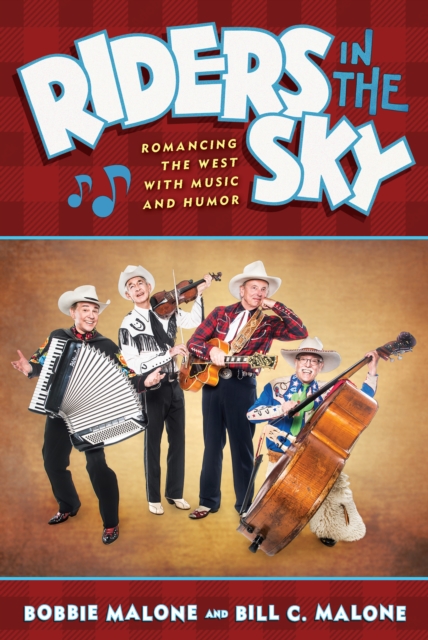
Riders in the Sky
\"...Bobbie and Bill Malone secure the Riders' rightful place in country music history, recounting the story of their remarkable journey, which simultaneously entertained millions of people and revived the venerable American tradition of the singing cowboy.\" --Ken Burns and Dayton Duncan, creators of PBS's Country Music For almost five.
eBook


Mechanical Performance Analysis and Experimental Research on High-Pressure Swing Components Assembled in Swing-After-the-Pump Rocket Engine
This paper, based on a combination of numerical analysis and experimental testing methods, conducts a mechanical performance analysis and experimental research on a HighPressure Swing Component for a Swing-After-the-Pump rocket engine. Taking into account the nonlinearities due to material properties, geometric configurations, and boundary conditions, the paper establishes a numerical analysis model for the High-Pressure Swing Component to study its mechanical characteristics. The fatigue life of the High-Pressure Swing Component is assessed using a strain-corrected Manson-Coffin formula. On this basis, a high-pressure swing test is conducted to effectively simulate actual working boundaries and load conditions, and to perform fatigue life testing. By comparing numerical simulation results with experimental data, the validity of the finite element simulation is verified. Additionally, the actual oscillating torque is obtained and the product’s fatigue life is evaluated, providing significant experimental data for the development of the Swing-After-the-Pump rocket engine.
Journal Article

The anatomy of greatness : lessons from the best golf swings in history
\"Every golf game begins with the swing, and no two are identical. Years ago, however, Brandel Chamblee, the highly regarded Golf Channel analyst and former PGA Tour professional, noticed that the best players of all time have shared similar positions in each part of the swing, from the grip and setup to the footwork, backswing, and follow-through. Since then, Chamblee, a student of gameś history, has used scientific precision and thoroughness to make a study of the common swing positions of the greats. Now, in The Anatomy of Greatness, he reveals what he has learned, offers hundreds of photographs as his proof, to show us how we can easily incorporate his findings into our own swings to hit the ball farther, straighter, and more consistently\"--Amazon.com.
Book

Effects of kettlebell swing training on cardiorespiratory and metabolic demand to a simulated competition in young female artistic gymnasts
We examined the effects of adding a Kettlebell Swing training program (KB) to the regular skill-training protocol (REGULAR) on cardiorespiratory fitness, cardiorespiratory/metabolic demand, and recovery to a simulated competition of female artistic gymnastics. Nine gymnasts (13±2 years) had their REGULAR complemented with a 4-week kettlebell training (REGULAR+KB), consisting of 3 sessions/week of 12x30” swings x 30” rest with ¼ of their body weight, while 9 aged-matched gymnasts acted as a comparison group. Peak oxygen uptake () during routines was estimated from the O2 recovery curve using backward extrapolation and off-kinetics parameters were modeled through a mono-exponential function. Heart rate (HR) was monitored continuously and capillary blood lactate (BLa-) was measured before and after each routine (1st and 3rd min). Cardiorespiratory fitness () was evaluated using a ramp cycle ergometer test. A training-by-time interaction effect was observed for (p = 0.009) as increments were only observed after REGULAR+KB (M = 8.85, SD = 9.67 ml.kg.min-1). No training-by-time interactions were observed for HRpeak (p = 0.39), (p = 0.07), or La-post3 (p = 0.25), both training protocols reduced HRpeak (M = -12; SD = 11 b.min-1) and BLa-post1 (M = -0.70; SD = 1.29 mmol.L-1) during the simulated competition, but not relative . No training-by-time interaction was observed for the off-transient time constant (p = 0.38). recovery was slower (M = 5; SD = 10 s) after both protocols. Both training protocols improved cardiorespiratory and metabolic demands and recovery kinetics to a simulated competition of female artistic gymnastics, although increases in cardiorespiratory fitness were only observed in REGULAR+KB.
Journal