
Catalogue Search | MBRL


Are you sure you want to remove the book from the shelf?

{{itemTitle}}
2,022
result(s) for
"teaching pragmatics"
Sort by:

Learning pragmatics from native and nonnative language teachers
\"This book focuses on how both nonnative and native teachers may enhance their handling of target language pragmatics in the classroom and provides ideas that both sets of teachers may draw on to compensate for gaps in their knowledge. Focus is also given to learner strategies and motivation, technological advances, assessment and research methods\"-- Provided by publisher.
Book
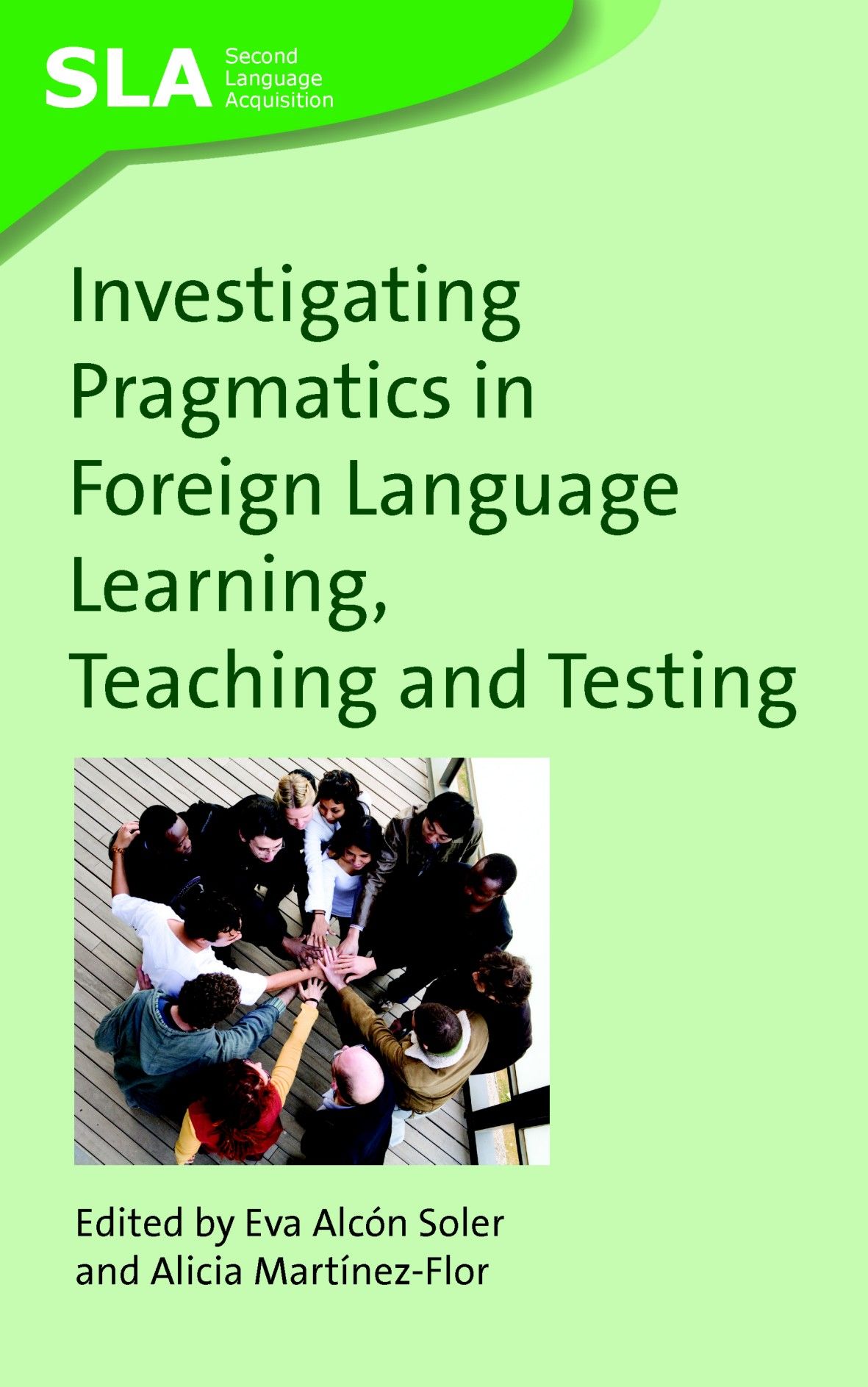
Investigating Pragmatics in Foreign Language Learning, Teaching and Testing
The book focuses on investigating pragmatic learning, teaching and testing in foreign language contexts. The volume brings together research that investigates these three areas in different formal language learning settings. The number and variety of languages involved both as the first language (e.g. English, Finnish, Iranian, Spanish, Japanese) as well as the target foreign language (e.g. English, French, German, Indonesian, Korean, Spanish) makes the volume specially attractive for language educators in different sociocultural foreign language contexts. Additionally, the different approaches adopted by the researchers participating in this volume, such as information processing, sociocultural, language socialization, computer-mediated or conversation analysis should be of interest to graduate students and researchers working in the area of second language acquisition.
eBook


Developing Pragmatic Awareness of Requests in the EFL Classroom: A Focus on Instructional Effects
Explicit teaching of pragmatics to second language learners has been studied by a large number of researchers. However, the review of the related studies shows that while some researchers believe in the effectiveness of explicit instruction of pragmatics, others believe that explicit instruction is not effective and it does not contribute to the language learners’ pragmatics awareness. The main goal of this study was to investigate the outcomes of teaching pragmatics- focusing on the concept of politeness through the speech act of request - by explicit intervention. The participants were Iranian intermediate 36 EFL students who were selected through convenience sampling. A quasi-experimental research method was used, and the participants were divided into two groups. The experimental group benefited from overt metapragmatic discussions and explanations, role plays and other pragmatically-oriented tasks. Different instruments were used: a written discourse completion test (DCT), a general English proficiency test to homogenize the participants, a pre-test of participant's initial pragmatic awareness and ability in politeness, and a post-test of pragmatic awareness and ability in the production of politeness features following the periods of instruction. Data were analyzed using descriptive and inferential statistics (t-test). The results of data analyses revealed that students' speech act comprehension and production improved significantly in the explicit instruction group, but no change was made in students' speech act comprehension and production of the students who received no instruction. It is concluded that pragmatic competence can be taught to EFL learners explicitly.
Journal Article
Translanguaging and Teaching L2 Pragmatics
The predominant perspective in L2 language education holds that teachers should primarily employ the target language. Various influences, including historical colonial strategies for English learning and teaching have shaped this view, associating native English speakers as the perfect standard. As a result, augmented exposure to the target language, both within and beyond the classroom, has been considered extremely crucial. However, in the past two decades, there have been substantial shifts in monolingual approaches, proposing translanguaging pedagogy, which involves integrating languages other than the primary target language into classroom instruction. This particularly involves recognizing and leveraging learners' linguistic repertoire (, encompassing their mother tongue and any heritage or community languages. The inclusion of multiple languages in language classrooms, whether incidental or deliberate, can serve various educational purposes, such as providing clarifications, explanations, discipline, as well as fostering inclusion and social equity. Additionally, the translanguaging approach aligns EFL learners' language knowledge with their educational purposes while acknowledging their identity. Therefore, adding translanguaging into EFL teaching programs can be auspicious. Pedagogical translanguaging has recently received attention among ELT scholars, and a sizable body of research has already been conducted to examine its possible advantages in teaching/learning L2 skills. The present paper attempts to take into view pedagogical translanguaging as fruitful tool in teaching L2 pragmatics.
Journal Article
Cultural Keywords in Discourse
The book contributes to a global turn in cultural keyword studies by exploring keywords from discourse communities in Australia, Brazil, Hong Kong, Japan, Melanesia, Mexico and Scandinavia. Providing new case studies, the volume showcases the diversity of ways in which cultural logics form and shape discourse.
eBook


L2 Pragmatics Instruction in the Greek EFL Classroom: Teachers’ Competence, Beliefs, and Classroom Challenges
While Greek EFL learners’ pragmatic competence has been frequently investigated, few studies have focused on Greek EFL teachers’ pragmatic knowledge. Complementing these earlier studies based on semi-structured interviews, we employed an extended online questionnaire and discourse completion tasks (DCTs) to explore the pragmatic competence of 72 Greek EFL teachers. Pragmatic comprehension was evaluated using scenarios that required participants to assess speech acts, while their ability to produce pragmatically appropriate responses was also assessed. Likert-scale items explored teachers’ perceptions about L2 instruction and their own abilities in this regard. Findings suggest that Greek EFL teachers possess an above average level of pragmatic competence, which nevertheless has not led to them systematically integrating L2 pragmatics instruction in their classrooms. Additional qualitative data collected through semi-structured interviews suggest that teachers’ lack of integration of explicit pragmatics instruction is not due to their not recognizing its importance, but rather to feeling inadequately prepared to implement this, which in turn points to the lack of emphasis on L2 pragmatics in teacher education programs. We catalog the most significant challenges in incorporating L2 pragmatics instruction in Greek EFL classrooms in terms of teacher and learner factors, as well as the Greek EFL context itself.
Journal Article

Teaching of Pragmatics: Issues in a Global Age
This article reviews literature on pragmatic teaching in three domains: (1) instructional methods in interpragmatics (2) pragmatic teaching resources (3) test and assessment of pragmatic ability .It aims at providing a comprehensive perspective of the available choices for pragmatics teaching and the ways that second language learners’ pragmatic development can be enhanced in the classroom. In the area of instructional methods, this article reviews researches under the theoretical SLA framework of explicit versus implicit instruction, input processing instruction, and skill acquisition and practice. In the domain of pragmatic teaching resources, two types of pedagogical resources are reviewed: textbooks development and the possibility of the application of CA based research material and electronic corpora to the classroom pragmatics teaching and learning. In the discussion of test and assessment of pragmatic ability, two categories are reviewed. The first is the comparative study of the six types of instruments to test second language learners’ pragmatic ability which is aimed to provide statistical and practical aspects for the test developers and test users. The second reviews the teacher assessment and its related assessment instruments in the application of pragmatic teaching .Finally, this article discusses unique challenges and opportunities pragmatics teaching faces in the current era.
Journal Article
