
Catalogue Search | MBRL


Are you sure you want to remove the book from the shelf?

{{itemTitle}}
43,245
result(s) for
"technical analysis"
Sort by:


Outdoor Testing to Compare the Technical and Economic Aspects of Single-and Dual-Fluid Photovoltaic/Thermal (PV/T) Systems
Integration of a dual-fluid heat exchanger with a photovoltaic/thermal (PV/T) system has become increasingly important because it not only significantly reduces the photovoltaic (PV) solar cells’ temperature but also produces additional thermal energy. In this study, energy, exergy, and economic analyses of a dual-fluid (water/air) PV/T system are performed in comparison with a reference PV module and single-fluid PV/T systems for the climate of Cheonan, South Korea. Daily and yearly performance evaluations of all of the aforementioned PV/T systems were carried out through experimentation. Based on the experimental findings, the economic feasibility of the dual-fluid PV/T system is assessed in the context of its financial benefits over both a shorter and longer period of time. Results show that the energy and exergy efficiencies of the dual-fluid PV/T system are significantly higher than those of single-fluid PV/T systems, by 20% and 11%, respectively. In addition, relevant to local domestic electricity price, the cost of energy is reduced by 80%, 60%, and 45% with the dual-fluid PV/T system and water and air type PV/T systems, respectively. Furthermore, using the dual-fluid PV/T system, extra revenue is generated through carbon credit by mitigating CO2 emissions into the atmosphere.
Journal Article

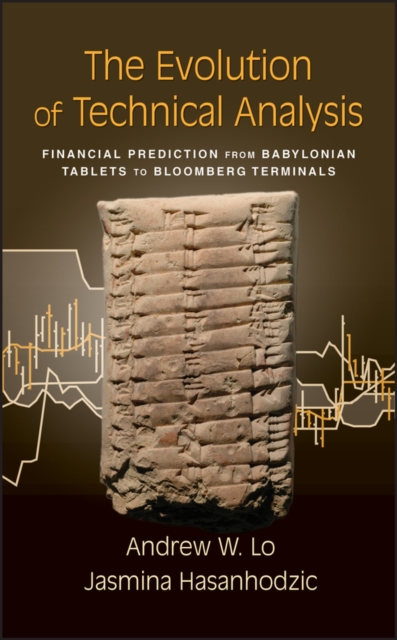
The evolution of technical analysis
A comprehensive history of the evolution of technical analysis from ancient times to the Internet age Whether driven by mass psychology, fear or greed of investors, the forces of supply and demand, or a combination, technical analysis has flourished for thousands of years on the outskirts of the financial establishment.
eBook

The handbook of technical analysis : the practitioner's comprehensive guide to technical analysis
A self study exam preparatory guide for financial technical analysis certifications Written by the course director and owner of www.tradermasterclass.com, a leading source of live and online courses in trading, technical analysis, and money management, A Handbook of Technical Analysis: The Practitioner's Comprehensive Guide to Technical Analysis is the first financial technical analysis examination preparatory book in the market. It is appropriate for students taking IFTA CFTe Level I and II (US), STA Diploma (UK), Dip TA (Aus), and MTA CMT Level I, II, and III exams in financial technical analysis, as well as for students in undergraduate, graduate, or MBA courses. The book is also an excellent resource for serious traders and technical analysts, and includes a chapter dedicated to advanced money management techniques. This chapter helps complete a student's education and also provides indispensable knowledge for FOREX, bond, stock, futures, CFD, and option traders. Learn the definitions, concepts, application, integration, and execution of technical-based trading tools and approaches Integrate innovative techniques for pinpointing and handling market reversals Understand trading mechanisms and advanced money management techniques Examine the weaknesses of popular technical approaches and find more effective solutions The book allows readers to test their current knowledge and then check their learning with end-of-chapter test questions that span essays, multiple choice, and chart-based annotation exercises. This handbook is an essential resource for students, instructors, and practitioners in the field. Alongside the handbook, the author will also publish two full exam preparatory workbooks and a bonus online Q&A Test bank built around the most popular professional examinations in financial technical analysis.
eBook


APPLICATION OF A CONVOLUTIONAL NEURAL NETWORK TO CREATE A DETECTOR OF TECHNICAL ANALYSIS FIGURES ON EXCHANGE QUOTES CHARTS
Today, the use of artificial intelligence based on neural networks is the most effective approach to solving image recognition problems. The possibility of using a convolutional neural network to create a pattern detector for technical analysis based on stock chart data has been investigated. The found figures of technical analysis can serve as the basis for making trading decisions in the financial markets. In the conditions of an ever-growing array of various information, the use of visual data reading tools is becoming more and more expedient, as it allows to speed up the process of searching and processing the necessary information for decision-makers. The modeling process, analysis, and results of applying the pattern detector of technical analysis are presented. The general approach to the construction and learning of a convolutional neural network is also described, and the process of preliminary processing of input data is described. Using the created detector allows to automate the search for patterns and improve the accuracy of making trading decisions. After finding the patterns, it becomes possible to obtain additional stock statistics for each type of figure: the context in front of the figures, the percentage of successfully completed figures, volume analysis, etc. These technical solutions can be used as expert and trading systems in the stock market, as well as integrated into existing ones.
Journal Article


Profiteering from the Dot-Com Bubble, Subprime Crisis and Asian Financial Crisis
The paper explores the characteristics associated with the formation of bubbles that occurred in the Hong Kong stock market in 1997 and 2007, as well as the 2000 dot-com bubble of Nasdaq. It examines the profitability of technical analysis (
TA
) strategies generating buy and sell signals, with and without our proposed trading rules. The empirical results show that, by applying long and short strategies during the bubble formation and a short strategy after the bubble burst, it not only produces returns that are significantly greater than buy-and-hold strategies, but also produces greater wealth compared with
TA
strategies without trading rules. We conclude that these bubble detection signals help investors generate greater wealth from applying appropriate long and short moving average (
MA
) strategies.
Journal Article