
Catalogue Search | MBRL


Are you sure you want to remove the book from the shelf?

{{itemTitle}}
5,988
result(s) for
"temple architecture"
Sort by:


A metaverse based digital preservation of temple architecture and heritage
This study employs a case study design to examine virtual reality (VR) representations of three culturally significant temples in Asia: Kodaiji Temple in Japan, Angkor Wat in Cambodia, and the Shwedagon Pagoda in Myanmar. Each temple was selected for its historical, religious, and architectural importance, offering a comparative view of diverse digital preservation approaches within metaverse. Kodaiji Temple, a Zen Buddhist site in Japan, highlights the VR potential to convey spiritual ambiance along with architectural aesthetics. Cambodia’s Angkor Wat, a vast Khmer-style temple complex, presents unique technical challenges in digitally capturing its intricate carvings and expansive layout. Shwedagon Pagoda in Myanmar provides a study in digitizing sacred elements, including ritual practices and symbolism embedded in its structure. Drawing on secondary sources such as historical documents, academic articles, and cultural reports, this study investigates the effectiveness, challenges, and cultural implications of VR in preserving sacred temple architecture. Limitations regarding access to high-resolution VR models and the cultural sensitivities of digitalizing sacred spaces are acknowledged.
Journal Article

Application of the Dupin cyclide in temple architecture
In recent years, the construction of churches and temples has been rapidly developed, so the need for design and support for such constructions arose. A new department called \"Temple architecture\" even appeared at MArchI (Moscow Architectural Institute). The article considers a method for geometric construction of the surface of such objects as the dome of temples and churches from the parts of Dupin cyclides. As a result, two variants of domes made from the compartments of the Dupin cyclide were proposed. Based on the theoretical research, it becomes clear that there can be more design options, and if we use a special case of cyclides for construction - compartments of rotating cones - then many times more.
Journal Article

Grading of architectural heritage using AHP and TOPSIS methods: a case of Odishan Temple, India
Purpose>Ranking and grading of architectural heritage (AH) are common for the conservation process. Decision-makers are often intuitively made decisions for the selection of the AH. However, on many occasions, these decisions are not transparent and sometimes focused only on a few aspects of the AH.Design/methodology/approach>A transparent and robust methodology must be adopted to select and manage AH for the present and future generations. Selecting the list of parameters that are affecting the AH, and assessing their significance can strengthen the holistic assessment. From the literature, parameters and dimensions are identified for the evaluation of AH and its application for Odishan temple architecture (OTA). For minimizing biasedness associated with assessment, the research considered the opinion of experts, researchers and various stakeholders. For objective decision-making, the Delphi, the analytical hierarchy process (AHP) and the technique for order preference by similarity to ideal solutions (TOPSIS) methods were adopted.Findings>Later, by observing the dimension-wise ranks and comparing the obtained grading of OTA with the existing state of protection, it was found that some temples, though having higher values with distinct dimension, lack significantly in other dimensions. However, for unbiased evaluation, all the possible dimensions should be considered. This methodology will also be useful for other decision-making processes concerning the same.Research limitations/implications>This research is limited to the OTA. However, this methodology can be adopted by changing the definitions of the parameters according to the contextual needs.Practical implications>This methodology may be helpful for the further policy-making process for the conservation and management of such AH.Originality/value>To date, OTA is not graded through such a methodology. Also, limited studies are found in similar line worldwide.
Journal Article

Protecting the Religious Heritage of Wat Phra Sri Rattana Mahathat: Venerating the Holy Relic through Music
The inspiration for this creative work was drawn from my participation in the annual Lopburi merit-making ceremony at Wat Mahathat Lopburi, also known as Wat Phra Sri Rattana Mahathat, which is a significant religious site in the ancient city of Lopburi. The symbolism enshrined within the intricate architecture of the temple sparked my interest in the possibility of performing arts being used as a vehicle to protect the religious meanings and heritage of the temple. The creative process involved conducting surveys and gathering empirical evidence from Wat Phra Sri Rattana Mahathat, analyzing and categorizing the temple’s distinct patterns and stories across different eras. This interdisciplinary approach was used as a model for the eight-step creative process to produce new knowledge about the religious site. The main product of this investigation was a three-act play in traditional Thai musical style. Tableaux vivants were also created to accompany the performance. The play aimed to showcase the cultural and religious significance of the temple and promote the preservation of its unique cultural heritage. By using singing as a vehicle to protect the religious meanings and heritage of the temple, this creative work offers a unique perspective on the preservation of religious heritage and promotes the continued significance of religion in contemporary Thai society.
Journal Article

A Study of the Design Method of Miruk-Jõn Hall Kumsan-Sa Temple in Korea—Through a Comparison with the Kiwari Method
It is considered that it is difficult to build a well-constructed building without proportional or dimensional relationships of precise parts, so it is estimated that Korea has some sort of numerical determination method now. Also, in China there is “Ying Zao Fa Shi: 営造法式” of technical books and it is doubtful that there is no similar technology in Korea with the same architectural flow, given that there are ways to decide “Kiwarisho: 木割書” in Japan. Therefore, focus on this point and aim to clarify the dimension determination method of Miruk-jõn Hall Kumsan-sa Temple using analysis method of each proportional method in Japan.
Journal Article

Stories from a CNC factory in Ahmedabad
Around 1997, the temple making industry of western India witnessed a fundamental shift in production processes, brought about by digital modes of drawing and fabrication. This involved not only adjusting everyday working practices to the new technologies but adjusting the technologies themselves. This article is concerned with the design and making of the Shree Krishna temple in West Bromwich, United Kingdom in a CNC factory in Ahmedabad, India. Through accounts of a hereditary temple architect, a clay modeler and a software engineer it shows how digital modes of production have not only altered architectural labour in fundamental ways, but also created new understandings of improvisation, pragmatics and relations with historical artefacts. The article complicates commonly held dichotomies between “craft and automation”, and between “tradition and technology” by bringing to the fore new problems as well as creative interventions of a range of actors, producing new forms of expertise, qualities, and affects.
Journal Article
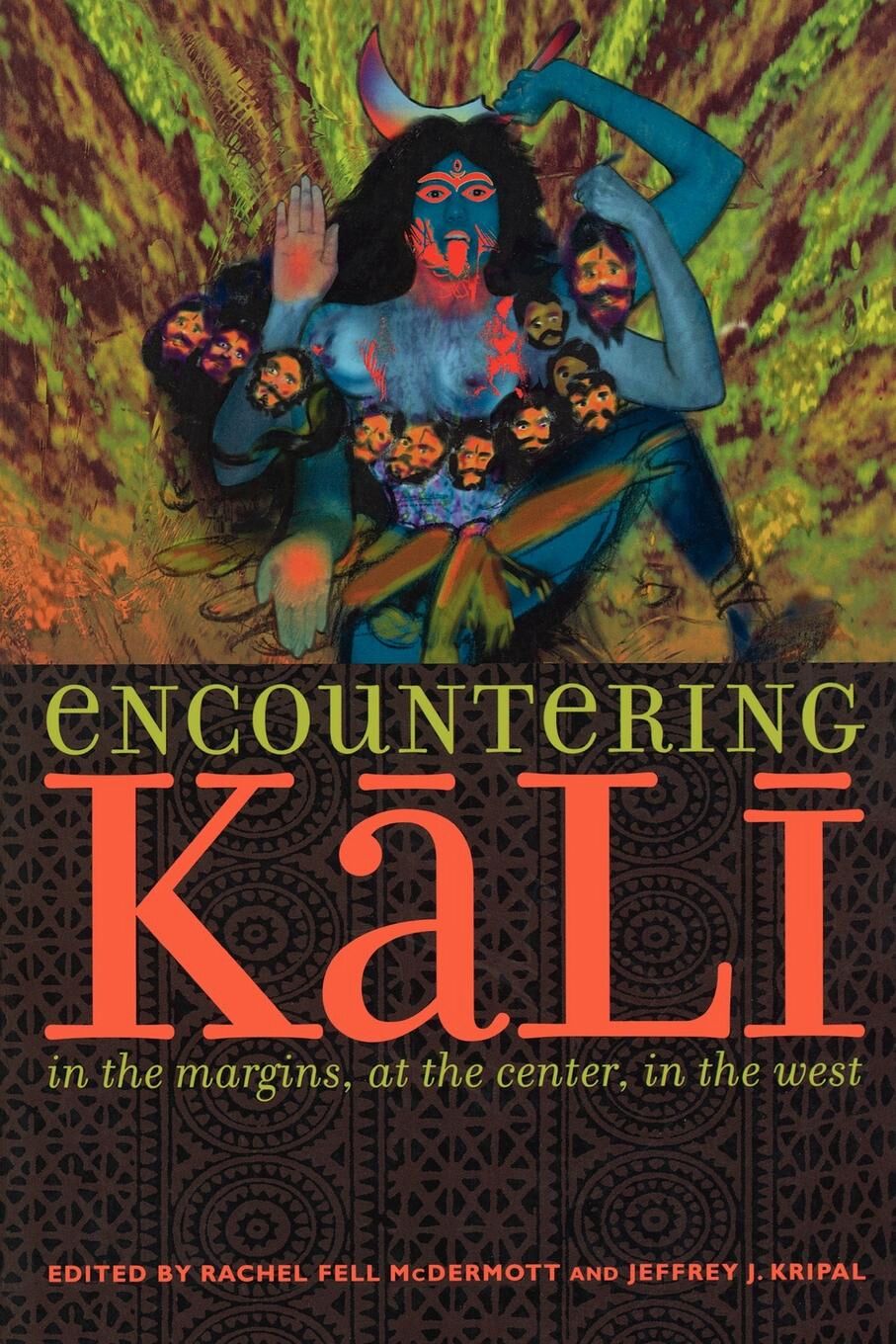
Encountering Kali
Encountering Kali explores one of the most remarkable divinities the world has seen—the Hindu goddess Kali. She is simultaneously understood as a blood-thirsty warrior, a goddess of ritual possession, a Tantric sexual partner, and an all-loving, compassionate Mother. Popular and scholarly interest in her has been on the rise in the West in recent years. Responding to this phenomenon, this volume focuses on the complexities involved in interpreting Kali in both her indigenous South Asian settings and her more recent Western incarnations. Using scriptural history, temple architecture, political violence, feminist and psychoanalytic criticism, autobiographical reflection, and the goddess's recent guises on the Internet, the contributors pose questions relevant to our understanding of Kali, as they illuminate the problems and promises inherent in every act of cross-cultural interpretation.
eBook

Uthaithong Chantakorn’s Buddhist Architecture: Maintaining Local Identity in Spite of Religious Nationalism
This investigation aims to examine local Thai-Lao cultural and religious identity through the Buddhist sculptures of Northeastern Thailand. Much of the Northeastern Thai region once belonged to the Lan Xang Kingdom and the people living there now have a mixed identity that is simultaneously Laotian and Thai. This manifests itself in the religious structures of the Northeast, which are notable for their adherence to national standards and their representation of local culture. This qualitative study examines the body of work created by Thai-Lao monk and Buddhist sculptor Uthaithong Chantakorn through document review, observation, and interviews. Results reveal the clear belief in ancestral spirits and Brahmanism that accompany more mainstream Buddhist doctrine and representations of the Jataka, and argue that subtle references to local folklore demonstrate a reaction to state attempts at ethnic cultural suppression through religious nationalism.
Journal Article