
Catalogue Search | MBRL


Are you sure you want to remove the book from the shelf?

{{itemTitle}}
2,140,893
result(s) for
"test"
Sort by:

Psychoanalysis and projective methods in personality assessment : the French school
\"Unique synthesis from the French School of psychoanalytical projective methods. This unique book synthesizes the work of leading thinkers of the French School of psychoanalytical projective methods in personality assessment. The French School is a direct successor to Rorschach's and Murray's original approaches using the Rorschach Test and the Thematic Apperception Test (TAT). Underlying this method is the idea of the coexistence of conscious and unconscious processes, of opposite instinctual pairs, and of agents that are ruled by conflicts (Freud). Transitional activity is seen as part of an intermediate space, a mediator space, and bearer of messages between the subject and the clinician (Winnicott). This book brings to life the important contributions of the French School, firstly exploring its theories and methods and then its clinical applications. Detailed case studies from different stages of life examine the psychopathology of everyday life with its severe and disabling states of suffering. Contemporary advances in research and clinical work are presented, and the groundbreaking early work of Nina Rausch de Traubenberg, Vica Shentoub, and Rosine Debray are also critically reread and discussed. Clinical tools adapted for clinicians and researchers in the appendices include a useful schema to facilitate the interpretation of the Rorschach and TAT together, a list of latent solicitations for the TAT, and the current version of the TAT Scoring Grid. This book is essential reading for clinical psychologists, psychiatrists, psychotherapists, researchers, and students interested in applying psychoanalytical theory to projective methods.\"-- Provided by publisher.
Book
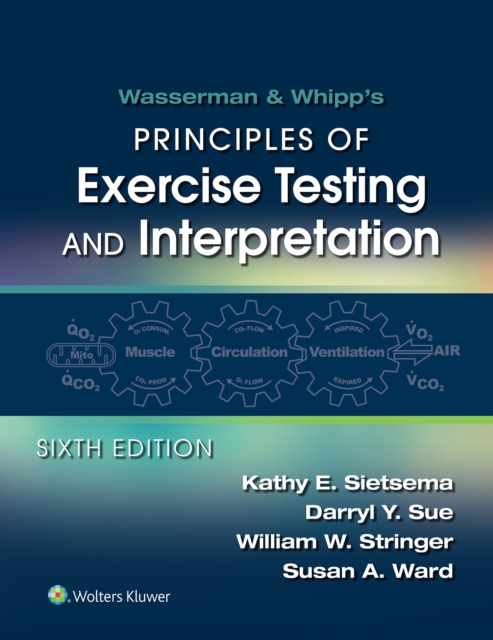
Wasserman & Whipp's principles of exercise testing and interpretation
Thoroughly revised and updated for today's clinicians, Wasserman Whipp's Principles of Exercise Testing and Interpretation, Sixth Edition, provides a comprehensive, practical overview of cardiopulmonary exercise testing (CPET) ideally suited for pulmonologists, cardiologists, anesthesiologists, and others with an interest in clinical exercise testing. Written by authors who are uniquely positioned to convey relevant aspects of research and apply them to clinical contexts, this volume offers in-depth coverage of essential information for conducting CPET, or for utilizing data from this discipline in clinical practice or research.
eBook

Turing's imitation game : conversations with the unknown
\"Can you tell the difference between talking to a human and talking to a machine? Or, is it possible to create a machine which is able to converse like a human? In fact, what is it that even makes us human? Turing's Imitation Game, commonly known as the Turing Test, is fundamental to the science of artificial intelligence. Involving an interrogator conversing with hidden identities, both human and machine, the test strikes at the heart of any questions about the capacity of machines to behave as humans. While this subject area has shifted dramatically in the last few years, this book offers an up-to-date assessment of Turing's Imitation Game, its history, context and implications, all illustrated with practical Turing tests. The contemporary relevance of this topic and the strong emphasis on example transcripts makes this book an ideal companion for undergraduate courses in artificial intelligence, engineering or computer science.\"-- Provided by publisher.
Book

Adapting educational and psychological tests for cross-cultural assessment
Adapting Educational and Psychological Tests for Cross-Cultural Assessment critically examines and advances new methods and practices for adapting tests for cross-cultural assessment and research. The International Test Commission (ITC) guidelines for test adaptation and conceptual and methodological issues in test adaptation are described in detail, and questions of ethics and concern for validity of test scores in cross-cultural contexts are carefully examined. Advances in test translation and adaptation methodology, including statistical identification of flawed test items, establishing equivalence of different language versions of a test, and methodologies for comparing tests in multiple languages, are reviewed and evaluated. The book also focuses on adapting ability, achievement, and personality tests for cross-cultural assessment in educational, industrial, and clinical settings.
This book furthers the ITC's mission of stimulating research on timely topics associated with assessment. It provides an excellent resource for courses in psychometric methods, test construction, and educational and/or psychological assessment, testing, and measurement. Written by internationally known scholars in psychometric methods and cross-cultural psychology, the collection of chapters should also provide essential information for educators and psychologists involved in cross-cultural assessment, as well as students aspiring to such careers.
Contents: Preface. Part I: Cross-Cultural Adaptation of Educational and Psychological Tests: Theoretical and Methodological Issues. R.K. Hambleton, Issues, Designs, and Technical Guidelines for Adapting Tests Into Multiple Languages and Cultures. F.J.R. van de Vijver, Y.H. Poortinga, Conceptual and Methodological Issues in Adapting Tests. T. Oakland, Selected Ethical Issues Relevant to Test Adaptations. S.G. Sireci, L. Patsula, R.K. Hambleton, Statistical Methods for Identifying Flaws in the Test Adaptation Process. S.G. Sireci, Using Bilinguals to Evaluate the Comparability of Different Language Versions of a Test. L.L. Cook, A.P. Schmitt-Cascallar, Establishing Score Comparability for Tests Given in Different Languages. L.L. Cook, A.P. Schmitt-Cascallar, C. Brown, Adapting Achievement and Aptitude Tests: A Review of Methodological Issues. Part II: Cross-Cultural Adaptation of Educational and Psychological Tests: Applications to Achievement, Aptitude, and Personality Tests. C.T. Fitzgerald, Test Adaptation in a Large-Scale Certification Program. C.Y. Maldonado, K.F. Geisinger, Conversion of the Wechsler Adult Intelligence Scale Into Spanish: An Early Test Adaption Effort of Considerable Consequence. N.K. Tanzer, Developing Tests for Use in Multiple Languages and Cultures: A Plea for Simultaneous Development. F. Drasgow, T.M. Probst, The Psychometrics of Adaptation: Evaluating Measurement Equivalence Across Languages and Cultures. M. Beller, N. Gafni, P. Hanani, Constructing, Adapting, and Validating Admissions Tests in Multiple Languages: The Israeli Case. P.F. Merenda, Cross-Cultural Adaptation of Educational and Psychological Testing. C.D. Spielberger, M.S. Moscoso, T.M. Brunner, Cross-Cultural Assessment of Emotional States and Personality Traits.
eBook

Test cricket : a history
The first narrative history of Test cricket as it nears its 150th birthday, telling the story of how the game has evolved since 1877, told through the moments and personalities that have shaped the format.
BOOK

Pocket Guide to Stress Testing
The stress test is key to the clinical evaluation and management of patients with known or potential cardiovascular disease. By measuring the heart's ability to respond to external stress, it can provide vital insights into the general physical condition of patients, highlighting abnormalities in blood flow, risk of coronary artery disease, and more. The Pocket Guide to Stress Testing gives cardiology professionals a complete breakdown of this everyday procedure that they can carry with them and consult on the go.
This second edition has been fully revised to reflect the most up-to-date information available on the best approaches to conducting and interpreting various forms of stress test. With chapters spanning topics such as testing guidelines, nuclear imaging techniques, and emergency and aftercare protocols, the clear and practical contents cover all aspects of the subject.
eBook


Biostatistics series module 3: Comparing groups: Numerical variables
Numerical data that are normally distributed can be analyzed with parametric tests, that is, tests which are based on the parameters that define a normal distribution curve. If the distribution is uncertain, the data can be plotted as a normal probability plot and visually inspected, or tested for normality using one of a number of goodness of fit tests, such as the Kolmogorov-Smirnov test. The widely used Student's t-test has three variants. The one-sample t-test is used to assess if a sample mean (as an estimate of the population mean) differs significantly from a given population mean. The means of two independent samples may be compared for a statistically significant difference by the unpaired or independent samples t-test. If the data sets are related in some way, their means may be compared by the paired or dependent samples t-test. The t-test should not be used to compare the means of more than two groups. Although it is possible to compare groups in pairs, when there are more than two groups, this will increase the probability of a Type I error. The one-way analysis of variance (ANOVA) is employed to compare the means of three or more independent data sets that are normally distributed. Multiple measurements from the same set of subjects cannot be treated as separate, unrelated data sets. Comparison of means in such a situation requires repeated measures ANOVA. It is to be noted that while a multiple group comparison test such as ANOVA can point to a significant difference, it does not identify exactly between which two groups the difference lies. To do this, multiple group comparison needs to be followed up by an appropriate post hoc test. An example is the Tukey's honestly significant difference test following ANOVA. If the assumptions for parametric tests are not met, there are nonparametric alternatives for comparing data sets. These include Mann-Whitney U-test as the nonparametric counterpart of the unpaired Student's t-test, Wilcoxon signed-rank test as the counterpart of the paired Student's t-test, Kruskal-Wallis test as the nonparametric equivalent of ANOVA and the Friedman's test as the counterpart of repeated measures ANOVA.
Journal Article