
Catalogue Search | MBRL


Are you sure you want to remove the book from the shelf?

{{itemTitle}}
44,938
result(s) for
"therapy decision"
Sort by:

Medical conditions and massage therapy : a decision tree approach
\"Ideal as a textbook for decision making and a quick reference for managing common medical conditions in massage practice, this book explains important information about various medical conditions and how to adapt massage to each condition. The central tool of the book is the Decision Tree: a simple flowchart diagram that illustrates the interface of massage and disease. A Decision Tree is included for each of the 62 conditions discussed in the book, with massage considerations listed for numerous additional conditions in brief. Also unique to this text are questions therapists can ask clients during the interview process to help the therapist understand not just the medical condition, but how it presents in a particular client\"--Provided by publisher.
Book
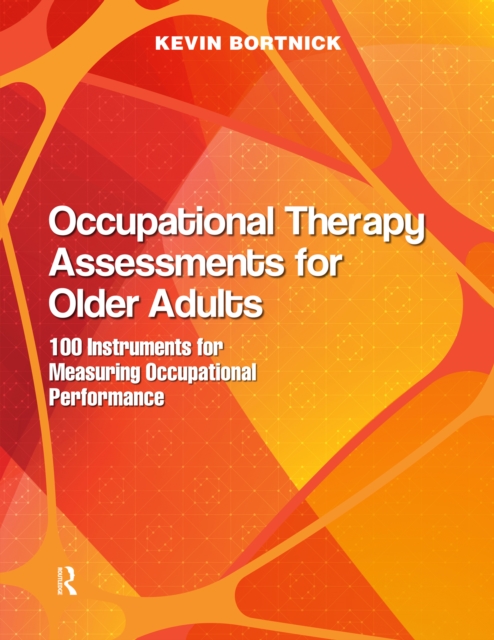
Occupational Therapy Assessments for Older Adults
The role of measurement and the benefits of outcome measures are defined as important tools used to document change in one or more constructs over time, help to describe a client's condition, formulate a prognosis, as well as to evaluate the effects of occupational therapy intervention.
Occupational Therapy Assessments for Older Adults: 100 Instruments for Measuring Occupational Performance
presents over 100 outcome measures in the form of vignettes that encompass a brief description of each instrument, a review of its psychometric properties, its advantages and disadvantages, administration procedures, permissions to use, author contact information, as well as where and how to procure the instrument.
Occupational Therapy Assessments for Older Adults
by Dr. Kevin Bortnick narrows down the list of possible choices for the occupational therapy student or clinician to only those with an amount of peer review, bibliographic citations, as well as acceptance within the profession. The text also includes research-based information with text citations and has over 100 tables, diagrams, and figures.
Included in the review of each outcome measure:
Description: A brief record of the measure.
Psychometrics: A review of the level of research evidence that either supports or does not support the instrument, including such items as inter-rater, intra-rater, and test-retest reliabilities, as well as internal consistencies and construct validities among others.
Advantages: Synopsis of the benefits of using the measure over others including its unique attributes.
Disadvantages: A summary of its faults. For example, the amount of research evidence may be limited or the measure may be expensive.
Administration: Information regarding how to administer, score, and interpret results.
Permissions: How and where to procure the instrument, such as websites where it may be purchased or journal articles or publications that may contain the scale.
Summary: A brief summation of important information.
Occupational Therapy Assessments for Older Adults: 100 Instruments for Measuring Occupational Performance
encourages occupational therapy and occupational therapy assistants to expand their thinking about the use of appropriate outcome measures with older adult populations. Using the appropriate outcome measure based on evidence can aid in the promotion of health, well-being, and participation of clients.
eBook


Physicians’ perspectives on family caregivers’ roles in elderly cancer patients’ therapies: a qualitative, interview-based study
Purpose
Clinical communication and facilitating informed and sound medical decisions become challenging as patients age and suffer from age-associated impairments. Family caregivers are perceived as essential actors in addressing these challenges. Here, we explore physicians’ perspectives on family caregivers’ roles and their involvement in consultations and therapy decision-making situations of elderly cancer patients.
Methods
We examined 38 semi-structured interviews with physicians from different specialities (oncologists, non-oncology specialists, and general practitioners) in Germany who treated elderly cancer patients. Data were analyzed using reflexive thematic analysis.
Results
We identified five general and distinct perspectives on the involvement of family caregivers in the therapy process. Family caregivers are seen as (1) translators of medical information; (2) providers of support for the patient; (3) providers of information about the patient; (4) stakeholders with relevant points of view regarding the treatment decision; or (5) individuals who have a disruptive influence on the consultation. The interviewed physicians rarely involved family caregivers closely in consultations.
Conclusions
Although physicians frequently attribute supportive roles to family caregivers, they rarely include them in consultations. Previous studies have found that a triadic setting is often better suited to agreeing upon a patient-centered and needs-based treatment decision for older cancer patients. We infer that physicians too rarely recognize the potential importance of family caregivers. Educators should further integrate family caregiver involvement and its implications in general medical education and professional training.
Journal Article


A framework for clinical care pathway renewal: an example from inflammatory bowel disease
Background
Clinical care pathways (CCPs) contribute to standardized, high-quality care and reduce variation in healthcare delivery. However, CCPs must be regularly reviewed and updated to reflect current evidence-based clinical practice guidelines. In the literature, the development and implementation of CCPs is well described, but there is little to guide the process for renewal of CCPs as new evidence becomes available.
Methods
We sought to develop a recurrent framework for CCP renewal and apply this to provincial established CCPs for inflammatory bowel disease (IBD). The proposed framework was guided by a review matrix stratified based on two factors: risk to change and clinical impact of the CCPs. An in-person CCP workshop was conducted to facilitate advisor engagement, establish consensus on the review process, and apply the review matrix to existing IBD CCPs. Attendees, including gastroenterologists, nurses, pharmacists, colorectal surgeons, and a family physician, were invited to offer feedback on the proposed framework and vote on the definitions associated with each level of the matrix. They then applied the framework to existing CCPs in two voting rounds.
Results
A proposed framework for CCP renewal was drafted by a multidisciplinary leadership group and presented to 22 IBD stakeholders at the in-person workshop. After a discussion, attendees agreed the matrix should include four levels, based on either high or low risk to change and high or low clinical impact. Risk to change was defined as how quickly new evidence would evolve and render the CCP out of date, and clinical impact was defined as how important the CCP is to quality IBD care. Using the revised review matrix, the attendees were able to reach agreement regarding the level to be assigned to each existing CCP.
Conclusions
The framework, based on risk to change and clinical impact is a valuable starting point to standardize the process of updating and renewing clinical pathways. Revising CCPs using our proposed framework ensures pathways are up-to-date and available to assist healthcare professionals in clinical decision-making. This framework can be adapted and customized to suit CCPs across healthcare disciplines and to facilitate the establishment of a renewal process.
Journal Article


Evaluating the Association of Ki-67 with Oncotype DX Recurrence Score in Early-Stage ER-Positive/HER2-Negative Breast Cancer
Background/Objectives: Ki-67 is widely used as an immunohistochemical marker of tumor proliferation in hormone receptor-positive (HR-positive), HER2-negative breast cancer, but its interpretation is limited by variability and uncertain concordance with genomic assays. The Oncotype DX® Recurrence Score (RS) is a validated multigene assay with established prognostic and predictive utility. This study evaluated the relationship between Ki-67 and RS in clinical practice. Methods: We retrospectively analyzed women in Greece with early-stage estrogen receptor-positive, HER2-negative breast cancer without distant metastasis (pM0) who underwent Oncotype DX testing between 2020 and 2023. Eligible patients were node-negative or postmenopausal with node-positive disease. RS was categorized as low (0–25) or high (>25). Ki-67 was assessed using binary (<20% vs. ≥20%) and three-tier (≤5%, >5–<30%, ≥30%) classifications. Associations were analyzed using correlation, concordance, and non-parametric methods. Results: Among 2967 patients, the median RS was 16, with similar distributions across nodal subgroups. Ki-67 and RS demonstrated a modest positive correlation as continuous variables (R = 0.30, p < 0.001). After stratification, associations with RS were observed only in tumors with high Ki-67 expression, whereas no correlation was detected in low or intermediate groups. RS distributions differed significantly across Ki-67 strata. Overall concordance between Ki-67-based proliferation categories and RS-based genomic risk was 56.2%, with discordant cases in both directions. Conclusions: Ki-67 shows a modest association with Oncotype DX RS, but substantial discordance indicates Ki-67 should not substitute genomic testing in HR-positive/HER2-negative early breast cancer.
Journal Article

Acceptance of a digital therapy recommender system for psoriasis
Background
About 2% of the German population are affected by psoriasis. A growing number of cost-intensive systemic treatments are available. Surveys have shown high proportions of patients with moderate to severe psoriasis are not adequately treated despite a high disease burden. Digital therapy recommendation systems (TRS) may help implement guideline-based treatment. However, little is known about the acceptance of such clinical decision support systems (CDSSs). Therefore, the aim of the study was to access the acceptance of a prototypical TRS demonstrator.
Methods
Three scenarios (potential test patients with psoriasis but different sociodemographic and clinical characteristics, previous treatments, desire to have children, and multiple comorbidities) were designed in the demonstrator. The TRS demonstrator and test patients were presented to a random sample of 76 dermatologists attending a national dermatology conference in a cross-sectional face-to-face survey with case vignettes. The dermatologist were asked to rate the demonstrator by system usability scale (SUS), whether they would use it for certain patients populations and barriers of usage. Reasons for potential usage of the TRS demonstrator were tested via a Poisson regression with robust standard errors.
Results
Acceptance of the TRS was highest for patients eligible for systemic therapy (82%). 50% of participants accepted the system for patients with additional comorbidities and 43% for patients with special subtypes of psoriasis. Dermatologists in the outpatient sector or with many patients per week were less willing to use the TRS for patients with special psoriasis-subtypes. Dermatologists rated the demonstrator as acceptable with an mean SUS of 76.8. Participants whose SUS was 10 points above average were 27% more likely to use TRS for special psoriasis-subtypes. The main barrier in using the TRS was time demand (47.4%). Participants who perceived time as an obstacle were 22.3% less willing to use TRS with systemic therapy patients. 27.6% of physicians stated that they did not understand exactly how the recommendation was generated by the TRS, with no effect on the preparedness to use the system.
Conclusion
The considerably high acceptance and the preparedness to use the psoriasis CDSS suggests that a TRS appears to be implementable in routine healthcare and may improve clinical care. Main barrier is the additional time demand posed on dermatologists in a busy clinical setting. Therefore, it will be a major challenge to identify a limited set of variables that still allows a valid recommendation with precise prediction of the patient-individual benefits and harms.
Journal Article
The quality of German - language patient decision aids for oncological patients on the internet
Background
Previous studies have already shown that decision aids are a suitable tool for patient decision-making. The aim of this work is to conduct an online search for freely available, German-language patient decision aids (PDAs) for cancer patients, followed by an assessment of their quality. For this purpose, a rating tool that is as manageable as possible was developed on the basis of already existing quality criteria.
Methods
A simulated patient online search was conducted via the four most frequently used search engines in Germany. A quality assessment tool was created utilizing international and national guidelines, with a focus on practicality and manageability. Subsequently, the identified PDAs were rated by 4 raters based on the rating tool.
Results
The number of German-language oncology PDAs is low (n = 22 of 200 URLs) with limited variability regarding rare cancers. Most originate from non-profit organizations. The overall quality is low, as indicated by an average of 57.52% of the maximum evaluation points of the developed quality assessment tool. Reference values used to assess quality were related to e.g. support/effectiveness, adaptation, layout, etc. No qualitative differences were found regarding different publishers. Quality differed between PDAs of different length, with longer PDAs achieving better results.
Conclusion
Overall, the supply and quality of German-language PDAs is not satisfactory. The assessment tool created in this study provides a solid, but more manageable basis, for developing and identifying high-quality PDAs.
Practice implications
PDAs should be increasingly used by physicians in practice. For this, a quick qualitative assessment of PDAs in everyday life must be possible. Future research has to investigate especially the aspect of the length of a PDA in more detail.
Journal Article