
Catalogue Search | MBRL


Are you sure you want to remove the book from the shelf?

{{itemTitle}}
976
result(s) for
"thin sections"
Sort by:
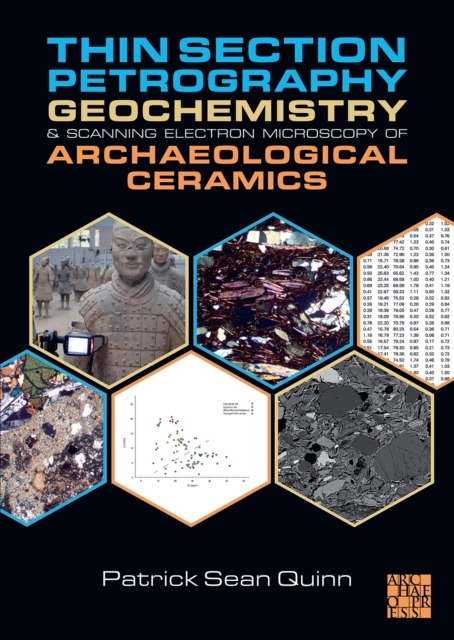
Thin Section Petrography, Geochemistry and Scanning Electron Microscopy of Archaeological Ceramics
Thin section petrography, geochemistry, scanning electron microscopy and X-ray diffraction are key scientific methods used to investigate the raw materials, origins and production technology of archaeological pottery, ceramic building materials, ancient refractories and plaster. Using over 400 colour figures of a diverse range of artefact types and archaeological periods from 50 countries worldwide, this book outlines the mineralogical, chemical and microstructural composition of ancient ceramics and provides comprehensive guidelines for their scientific study within archaeology. The core of the book is dedicated to the versatile approach of ceramic petrography. This is complimented by a detailed account of the principles of bulk instrumental geochemistry, as well as the SEM microanalysis and XRD characterisation of ceramics. The book is intended as a reference manual for research as well as a course text for specialist training on scientific ceramic analysis.
eBook
Atlas of rock-forming minerals in thin section
'Hurray for Mackenzie and Guilford for at last we have a pictorial guide to the rock-forming minerals! . . . such feasts of colour in mineralogy books are rare . . . an admirable guide'New Scientist
eBook

Three‐dimensional digital image construction of metaxylem vessels in root tips of Zea mays subsp. mexicana from thin transverse sections
Premise Young plant roots share a common architecture: a central vascular cylinder surrounded by enveloping cylinders of ground and dermal tissue produced by an apical promeristem. Roots with closed apical organization can be studied to explore how ontogeny is managed. The analysis of transverse and longitudinal sections has been the most useful approach for this, but suffers from limitations. We developed a new method that utilizes digital photography of transverse sections and three‐dimensional (3D) computer virtual reconstructions to overcome the limitations of other techniques. Methods Serial transverse sections of teosinte root tips (Zea mays subsp. mexicana) were used to construct longitudinal images, 3D images, and an animated 3D model. The high‐resolution, high‐contrast, and low‐distortion sectioning method developed previously by the authors enabled high‐quality virtual image construction with the aid of a standard laptop computer. Results The resulting 3D images allowed greater insight into root tissue ontogeny and organization, especially specific cellular structures such as histogen layers, xylem vessels, pericycle, and meristematic initials. Discussion This new method has advantages over confocal laser scanning microscopy and magnetic resonance imaging for visualizing anatomy, and includes a procedure to correct for sectioning distortion. An additional advantage of this method, developed to produce better knowledge about the developmental anatomy of procambium in roots, is its applicability to a wide range of anatomical subjects.
Journal Article
Surgical Repair and Detection of Cerebrospinal Fluid Rhinorrhea using Magnetic Resonance Cisternography and Skull Base Coronal Thin-section Computed Tomography Scan
INTRODUCTION Cerebrospinal fluid (CSF) rhinorrhea is a common condition managed by neurosurgeons. The accurate identification of the site of leak plays a key role in facilitating successful surgical repair. We reported two surgery-proven cases of CSF rhinorrhea examined by magnetic resonance (MR) cisternography (Siemens, Berlin, Germany) and skull base coronal thin-section computed tomography (CT) scan (Siemens, Berlin, Germany) before surgical treatment.
Journal Article

MICROMORPHOLOGICAL CHARACTERIZATION OF SALT AFFECTED SOILS OF ALNAJMI AGRICULTURAL PROJECT IN MUTHANNA GOVERNORATE OF IRAQ
Alnajmi Agricultural project, Muthanna, Iraq, featured with wide salt affected soils, although it is considered as a significant project for irrigated agriculture. Salt affected soils in this project were studied in different methodologies. Micromorphology descriptive study was conducted to get more information about the salinization process in this project. Eight pedons out of twenty-five ones were selected to be examined micromorphologically. Six of these pedons were salt affected, while the other two were none salt affected soils. As a comparison among those eight pedons, saline soils showed different features related to microstructure and porosity, besides coatings as salwans (salt cutans) and calcitans (carbonate cutans). Paleosalinization process showed clear salwans in examined soils, while recently salinized soils showed weak features of salt coatings. Carbonate coatings were found in all samples due to the nature of the soil formation in arid and semi-arid regions. None salt affected soils did not show salt coatings, while they showed carbonate minerals coatings.
Journal Article

Visual analysis of deep learning semantic segmentation applied to petrographic thin sections
Object detection methods based on deep learning have significantly reduced time-consuming tasks. Semantic segmentation has shown remarkable progress in the study of rocks, especially when applied to petrographic thin sections. Despite the development of various models for specific applications in this field with promising results, their widespread adoption remains limited. This hesitation is largely due to a lack of user confidence stemming from the absence of explainability in the outcomes provided by these models. This study explores the explainability of the state-of-the-art YOLOv11 model in detecting andalusite, biotite, and grains with oolitic textures. We trained three models using plane-polarized-light thin-section microphotographs of the selected targets. Subsequently, we applied color and singular value perturbations to the annotated images using color masks and analyzed the model’s inference through connected region heatmaps. Our findings suggest that the trained models prioritize low-frequency attributes like shape, predominant colors, and contrast over the studied targets’ characteristic tones. These insights contribute to the practical application of deep learning for detecting and segmenting grains and minerals in thin sections.
Journal Article


U-Pb zircon dating of ash fall deposits from the Paleozoic Parana Basin of Brazil and Uruguay; a reevaluation of the stratigraphic correlations
Ash fall layers and vitroclastic-carrying sediments distributed throughout the entire Permian stratigraphic range of the Parana Basin (Brazil and Uruguay) occur in the Tubarao Supergroup (Rio Bonito Formation) and the Passa Dois Group (Irati, Estrada Nova/Teresina, Corumbatai, and Rio do Rasto Formations), which constitute the Gondwana 1 Supersequence. U-Pb zircon ages, acquired by SHRIMP and isotope-dissolution thermal ionization mass spectrometer (ID-TIMS) from tuffs within the Mangrullo and Yaguari Formations of Uruguay, are compatible with a correlation with the Irati and parts of the Teresina and Rio do Rasto Formations, respectively, of Brazil. U-Pb zircon ages suggest maximum depositional ages for the samples: (1) Rio Bonito Formation: ages ranging from 295.8±3.1 to 304.0±5.6 Ma (Asselian, lowermost Permian), consistent with the age range of the Protohaploxypinus goraiensis subzone; (2) Irati Formation: ages ranging from 279.9±4.8 to 280.0±3.0 Ma (Artinskian, Middle Permian), consistent with the occurrence of species of the Lueckisporites virkkiae zone; (3) Rio do Rasto Formation: ages ranging from 266.7±5.4 to 274.6±6.3 Ma (Wordian to Roadian, Middle Permian). All the SHRIMP U-Pb zircon ages are consistent with their superimposition order in the stratigraphy, the latest revisions to the Permian timescale (International Commission of Stratigraphy, 2018 version), and the most recent appraisals of biostratigraphic data. The ID-TIMS U-Pb zircon ages from the Corumbatai Formation suggest that U-Pb ages may be >10% younger than interpreted biostratigraphic ages.
Journal Article

Laboratory True Triaxial Hydraulic Fracturing of Granite Under Six Fluid Injection Schemes and Grain-Scale Fracture Observations
Laboratory hydraulic fracturing tests on cubic granite specimens with a side length of 100 mm were performed under true triaxial stress conditions combined with acoustic emission monitoring. Six different injection schemes were applied to investigate the influence of the injection scheme on hydraulic performance and induced seismicity during hydraulic fracturing. Three of these schemes are injection rate controlled: constant rate continuous injection (CCI), stepwise rate continuous injection (SCI), and cyclic progressive injection (CPI); the other three are pressurization rate controlled: stepwise pressurization (SP), stepwise pulse pressurization (SPP) and cyclic pulse pressurization (CPP). The test results show that the SPP scheme achieves the highest increase in injectivity among the six schemes. The CPI scheme generates the lowest induced seismicity while the improvement in injectivity is the least pronounced. The CPP scheme allows increasing injectivity and decreasing induced seismicity, and is suggested as a promising alternative injection scheme for field applications. Thin section microscopic observations of fractured specimens show that intragranular fractures splitting microcline, orthoclase and quartz grains dominate the hydraulic fractures independent of the injection scheme. The SPP scheme creates the largest fracture length, which explains the highest injectivity value among all schemes. Tests with relatively low magnitude of maximum AE amplitude correspond to short fracture length and small portions of intragranular fractures in microcline grains. Quartz grains are more fractured than microcline and orthoclase grains, and quartz chips (natural proppants) are frequently observed adjacent to hydraulic fractures. The laboratory test results show the potential for hydraulic fracture growth control in field applications by advanced fluid injection schemes, i.e. cyclic pulse pressurization of granitic rock mass.
Journal Article