
Catalogue Search | MBRL


Are you sure you want to remove the book from the shelf?

{{itemTitle}}
166,457
result(s) for
"traditional"
Sort by:
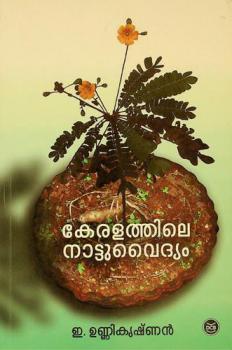
Kēraḷattile nāṭṭuvaidyaṃ : oru paristhitināṭṭar̲iv paṭhanaṃ
Folk medical practices of Kerala, an ethno-anthropological study.
Book

Healing elements
Tibetan medicine has come to represent multiple and sometimes conflicting agendas. On the one hand it must retain a sense of cultural authenticity and a connection to Tibetan Buddhism; on the other it must prove efficacious and safe according to biomedical standards. Recently, Tibetan medicine has found a place within the multibillion-dollar market for complementary, traditional, and herbal medicines as people around the world seek alternative paths to wellness. Healing Elements explores how Tibetan medicine circulates through diverse settings in Nepal, China, and beyond as commercial goods and gifts, and as target therapies and panacea for biophysical and psychosocial ills. Through an exploration of efficacy – what does it mean to say Tibetan medicine \"works\"? – this book illustrates a bio-politics of traditional medicine and the meaningful, if contested, translations of science and healing that occur across distinct social ecologies.
eBook

Healing with poisons : potent medicines in medieval China
\"Open access edition: DOI 10.6069/9780295749013 At first glance, medicine and poison might seem to be opposites. But in China's formative era of pharmacy (200-800 CE), poisons were strategically employed as healing agents to cure everything from abdominal pain to epidemic disease. Healing with Poisons explores the ways physicians, religious figures, court officials, and laypersons used toxic substances to both relieve acute illnesses and enhance life. It illustrates how the Chinese concept of du-a word carrying a core meaning of \"potency\"-led practitioners to devise a variety of methods to transform dangerous poisons into effective medicines. Recounting scandals and controversies involving poisons from the Era of Division to the Tang, historian Yan Liu considers how the concept of du was central to how the people of medieval China perceived both their bodies and the body politic. He also examines the wide range of toxic minerals, plants, and animal products used in classical Chinese pharmacy, including everything from the herb aconite to the popular recreational drug Five-Stone Powder. By recovering alternative modes of understanding wellness and the body's interaction with foreign substances, this study cautions against arbitrary classifications and exemplifies the importance of paying attention to the technical, political, and cultural conditions in which substances become truly meaningful. Healing with Poisons is freely available in an open access edition thanks to TOME (Toward an Open Monograph Ecosystem) and the generous support of the University of Buffalo\"-- Provided by publisher.
BOOK

Midwives and Mothers
The World Health Organization is currently promoting a policy of replacing traditional or lay midwives in countries around the world. As part of an effort to record the knowledge of local midwives before it is lost, Midwives and Mothers explores birth, illness, death, and survival on a Guatemalan sugar and coffee plantation, or finca, through the lives of two local midwives, Doña Maria and her daughter Doña Siriaca, and the women they have served over a forty-year period.By comparing the practices and beliefs of the mother and daughter, Sheila Cosminsky shows the dynamics of the medicalization process and the contestation between the midwives and biomedical personnel, as the latter try to impose their system as the authoritative one. She discusses how the midwives syncretize, integrate, or reject elements from Mayan, Spanish, and biomedical systems. The midwives’ story becomes a lens for understanding the impact of medicalization on people’s lives and the ways in which women’s bodies have become contested terrain between traditional and contemporary medical practices. Cosminsky also makes recommendations for how ethno-obstetric and biomedical systems may be accommodated, articulated, or integrated. Finally, she places the changes in the birthing system in the larger context of changes in the plantation system, including the elimination of coffee growing, which has made women, traditionally the primary harvesters of coffee beans, more economically dependent on men.
eBook


TCM: Made in China
Although modern medicine is established in Asia, traditional medicine also plays a big role in people's healthcare — and is gaining in popularity in other countries too.
Journal Article


Effects of traditional Chinese medicine on outcomes and costs of dementia care: results from a retrospective real-world study
Objectives
This study aims to assess the impact of Traditional Chinese Medicine (TCM) on dementia patients, utilizing real-world data. Specifically, it seeks to evaluate how TCM influences clinical outcomes by examining changes in the Clinical Dementia Rating (CDR) and Mini-Mental State Examination (MMSE) scores, as well as its effect on medical expenses over a two-year period. Data from a multi-center research database spanning from 2004 to 2021 will be used to achieve these objectives, addressing the current gap in empirical data concerning intuitive outcomes and cognitive function assessments.
Methods
Propensity score matching was adopted to improve comparability among the intervention and control groups. Due to repeated dependent variable measurements, the generalized estimating equation was used to control for socio-demographic characteristics, regional characteristics, and Western medicine treatments for dementia.
Results
After propensity score matching, a total of 441 research subjects were included: 90 in the TCM intervention group and 351 in the non-TCM intervention group. The results of multivariate regression analysis showed that compared with the non-TCM intervention group, the MMSE scores in the TCM intervention group increased by 0.608 points each year. The annual change in CDR scores in the TCM intervention group was 0.702 times that of the non-TCM utilization group. After TCM intervention, annual outpatient expenses increased by US$492.2, hospitalization expenses increased by US$324.3, and total medical expenses increased by US$815.9, compared with the non-intervention group.
Conclusions
TCM interventions significantly decelerate cognitive decline in dementia patients, evidenced by slower reductions in MMSE scores and mitigated increases in CDR scores. However, these benefits are accompanied by increased medical expenses, particularly for outpatient care. Future healthcare strategies should balance the cognitive benefits of TCM with its economic impact, advocating for its inclusion in dementia care protocols.
Journal Article


Therapeutic potential of ayahuasca in grief: a prospective, observational study
RationaleRecent studies have assessed the therapeutic potential of ayahuasca for the treatment of depression with promising preliminary results.ObjectivesHere, we examine the course of grief over 1 year of follow-up in a bereaved sample that attended a center in Peru to participate in indigenous Shipibo ayahuasca ceremonies. We also explore the roles of experiential avoidance and decentering as mechanisms of change.MethodsBereaved participants who attended the ayahuasca center responded to an online survey that included the Texas Revised Inventory of Grief, Symptom Assessment-45, WHO Quality of Life-Bref, Acceptance and Action Questionnaire, and Decentering. Baseline assessment was completed by 50 individuals (T0). Of these, 39 completed the post-assessment at 15 days (T1), 31 at 3 months (T2), 29 at 6 months (T3), and 27 at 12 months (T4) after leaving the retreat. Pearson’s analysis was performed to examine the relationship between the severity of grief and mechanisms of change during the period of T0 and T1.ResultsA significant decrease in Texas Revised Inventory was observed at all time points (T1: Cohen’s d = 0.84; T2: Cohen’s d = 1.38; T3: Cohen’s d = 1.16; T4: Cohen’s d = 1.39). We found a relationship between experiential avoidance (r = 0.55; p < .01), decentering (r = − 0.47; p < .01), and a reduction in the severity of grief.ConclusionsOur results suggest that the ceremonial use of ayahuasca has therapeutic value by reducing the severity of grief. Acceptance and decentering are both psychological processes that mediate the improvement of grief symptoms.
Journal Article