
Catalogue Search | MBRL


Are you sure you want to remove the book from the shelf?

{{itemTitle}}
42
result(s) for
"unified Germany"
Sort by:

Einstein : the man, the genius, and the theory of relativity
\"Albert Einstein is synonymous with genius. From his remarkable theory of relativity and the famous equation E=mc², to his concept of a unified field theory, no one else has contributed as much to science in the last 150 years. Published to commemorate the centenary of Einstein developing his theory of general relativity, Einstein : the Life of a Genius reveals the man behind the science, from his early years and experiments in Germany and his struggle to find work, to his marriages and children, his role in the development of the atomic bomb and his work for civil rights groups in the United States. Drawing on personal memorabilia belonging to Einstein, this book also includes reproductions of documents that reveal more than this scientist's groundbreaking theories\"--Page 4 of cover.
Book
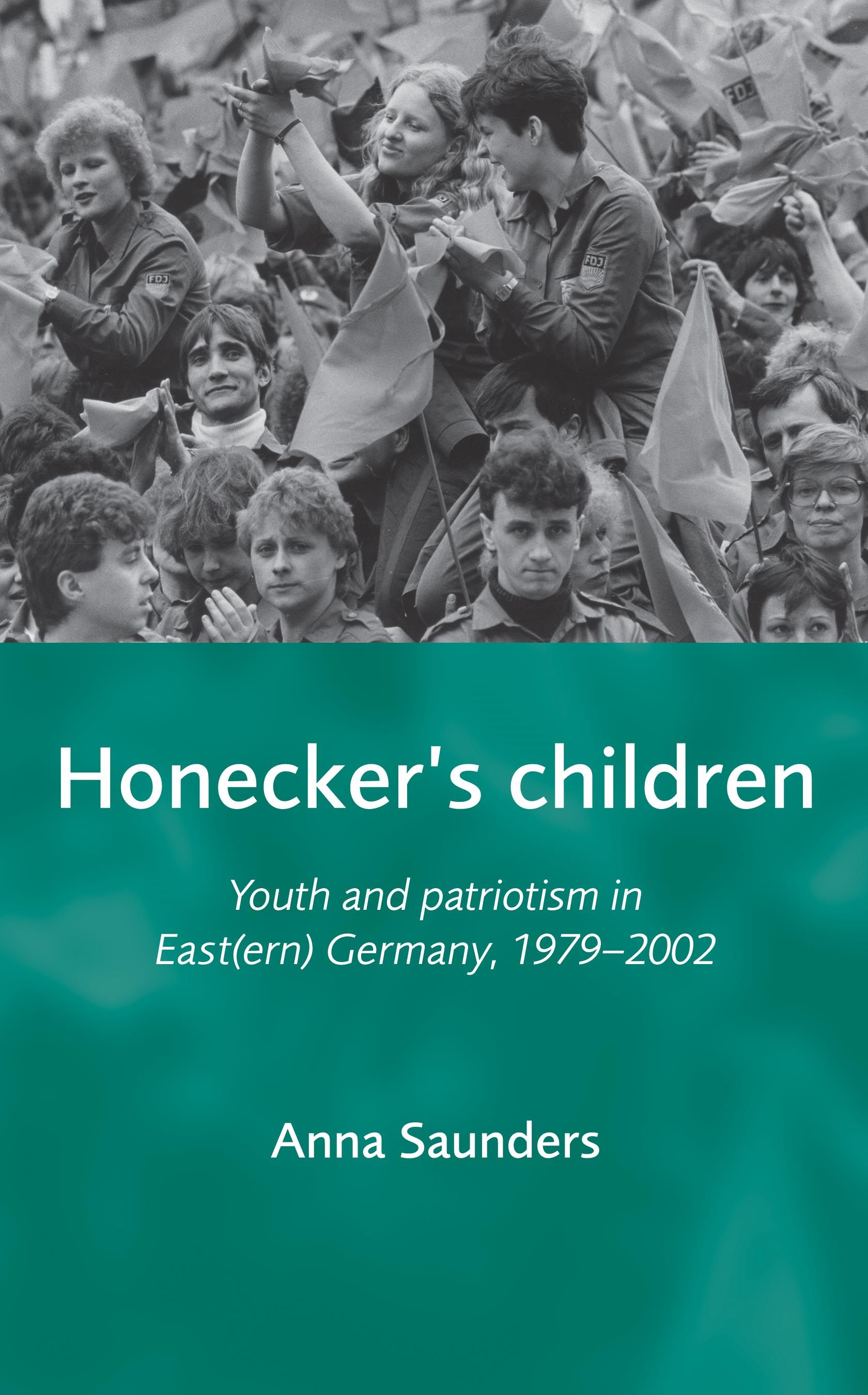
Honecker's Children
During the final decade of the German Democratic Republic (GDR), young citizens found themselves at the heart of a rigorous programme of socialist patriotic education, yet following the fall of the Berlin Wall, the emphasis of official state rhetoric, textbooks and youth activities changed beyond recognition. For the young generation growing up during this period, ‘normality’ was turned on its head, leaving a sense of insecurity and inner turmoil.Using a combination of archival research and interviews, together with educational materials and government reports, this book examines the relationship between young people and their two successive states in East(ern) Germany between 1979 and 2002. This unusual time-span straddles the 1989/1990 caesura which often delimits historical studies, and thus enables not only a detailed examination of GDR socialisation, but crucially also its influence in unified Germany. Anna Saunders explores the extent to which a young generation’s loyalties can be officially regulated in the face of cultural and historical traditions, changing material conditions and shifting social circumstances, and finds GDR socialisation to be influential to post-unification loyalties through its impact on the personal sphere, rather than through the official sphere of ideological propaganda. At a time of globalisation, this lucid study not only provides unique insight into the functioning of the GDR state and its longer-term impact, but also advances our broader understanding of the ways in which collective loyalties are formed. It will be of particular interest to those in the fields of German History and Politics, European Studies and Sociology.
eBook

Honecker's Children
During the final decade of the German Democratic Republic (GDR), young citizens found themselves at the heart of a rigorous programme of patriotic education, incorporating school lessons, extra-curricular activities, ritual ceremonies and organised holidays. As the second generation born in the GDR, they knew nothing other than the ‘normality’ of German division. However, following the fall of the Berlin Wall, they not only became citizens of a new state, but the emphasis of official state rhetoric, textbooks and free-time activities changed beyond recognition; young soldiers were expected to swear an oath of loyalty to their former enemy, loyalists were denounced as opportunists or informers, and rebels became heroes. For this young generation, ‘normality’ was turned on its head, leaving a sense of insecurity and inner turmoil. Using a combination of archival research and interviews, together with educational materials and government reports, this book examines the relationship between young people and their two successive states in East(ern) Germany between 1979 and 2002. This unusual time-span straddles the 1989/1990 caesura which so often delimits historical studies, and thus enables not only a detailed examination of GDR socialisation, but crucially also its influence in unified Germany, and the extent to which a young generation’s loyalties can be officially regulated in the face of cultural and historical traditions, changing material conditions and shifting social circumstances. In this study, Anna Saunders highlights the nature of the GDR as a state where the divides between state and society, as well as dissent and conformity, were less distinct than is frequently asserted. Her original research finds GDR socialisation to be influential to post-unification loyalties through its impact on the personal sphere, rather than through the ideological propaganda of socialist patriotic education. At a time of globalisation and European expansion, this lucid study not only provides unique insight into the functioning of the GDR state and its longer-term impact, but also advances our broader understanding of the ways in which collective loyalties are formed. It will be of particular interest to those in the fields of German History and Politics, European Studies and Sociology.
eBook

A \Usable\ Past at Last? The Politics of the Past in United Germany
The two decades since unification have witnessed considerable changes in German collective memory. Whereas views about the place that the Nazi past should occupy in Germany's historical consciousness were still very polarized before the fall of the Wall, developments since unification have resulted in a past that is much more accommodating and allows an easier identification with the German nation. A more institutionalized and internationalized approach to the Nazi past, which incorporates the memory of German suffering, is increasingly complemented by a focus on positive aspects of German history, like the successes of the Bonn Republic, the peaceful East German revolution of 1989, and unification in 1990.
Journal Article
Policy Transfer in the Unified Germany: From Imitation to Feedback Loops
Policy transfer was a key element in the unification of both German states. Although a policy of \"no experiments\" initially prevailed, it proved to have multidimensional consequences that varied across policy sectors and included imitation, adaptation, and limited innovation. Later, triadic forces of unification, Europeanization, and globalization pressured and enabled a new wave of reforms. Depending on the policy area (e.g., welfare policy, municipal charters, education), these forces acted as a catalyst for reform, predicted developments, and exposed diffusion patterns in unified Germany, at times by resurrecting old ideas to new prominence.
Journal Article
Gendering Federalism—Federalizing Gender: Women's Agencies and Policies in German Multilevel Governance
Attempts to restructure German federalism in the aftermath of unification, under the auspices of increasing Länder autonomy, might have ambivalent effects on gender policies and women's policy agencies. This article addresses how federalism affects gender equality politics, focusing on three contested issues: the turn from a strongly cooperative to a more competitive federalism; a weakening of the \"steering capacity\" of national level politics vis-à-vis the Länder through recent reforms; and the lack of \"throughput\" of EU policies to the state and regional levels.
Journal Article
Be Careful What You Pray for: Employment Profiles among East and West Germans
Reflections on innere Einheit since 1990 have been dominated by talk of \"winner's and losers,\" but unification cannot be construed as a zero-sum game. Disparate economic structures are to blame for the emergence of East-West Parallelgesellschaften, although neither population \"got what it prayed for.\" Both have experienced dramatic changes in employment and social security, a looming demographic deficit, and cutbacks in public services. While easterners encountered significant disadvantages during the first 10 years of unity, they have already emerged from the tunnel of structural adjustment that westerners have only recently entered—and are thus better prepared to face challenges posed by an increasingly neo-liberal economic order.
Journal Article
The Integration of Eastern German Political Elites since 1989
When Angela Merkel became chancellor, it may have seemed that easterners were becoming well integrated into united Germany's national political leadership. Upon closer examination, very few national-level political leaders have come from the east. What explains the lack of integration and influence of eastern Germans in national politics? One way to answer that question is to consider the few easterners who have risen to the top of Germany's political institutions, to identify whether particular factors have contributed to or impeded their successes.
Journal Article
Germany's EU Policy: The Domestic Discourse
The positioning of Germany in the process of European integration is best explained by the historical and cultural frames of politics. Leadership change in government 1998 and the domestic debate about the Lisbon Treaty of the EU in 2009 are test cases for Germany's new approach to Europe. The domestic debates on European integration show that political decisions are framed within the context of the EU institutions, not against them. Compromise is a way of life in the EU, and Germany's leadership is shaping integration as much as it is shaped by Europe. Twenty years after German unification the Euro-polity is firmly entrenched in German political life.
Journal Article