
Catalogue Search | MBRL


Are you sure you want to remove the book from the shelf?

{{itemTitle}}
1,479
result(s) for
"united front"
Sort by:


War and the Crisis of Youth in Sierra Leone
The armed conflict in Sierra Leone and the extreme violence of the main rebel faction - the Revolutionary United Front (RUF) - have challenged scholars and members of the international community to come up with explanations. Up to this point, though, conclusions about the nature of the war are mainly drawn from accounts of civilian victims and commentators who had access to only one side of the war. The present study addresses this currently incomplete understanding of the conflict by focusing on the direct experiences and interpretations of protagonists, paying special attention to the hitherto neglected, and often underage, cadres of the RUF. The data presented challenges the widely canvassed notion of the Sierra Leone conflict as a war motivated by 'greed, not grievance'. Rather, it points to a rural crisis expressed in terms of unresolved tensions between landowners and marginalized rural youth, further reinforced and triggered by a collapsing patrimonial state.
eBook


The Gentlemen and the Roughs
pFinalist for the 2011 Gilder Lehrman Lincoln Prize \"A seminal work. . . . One of the best examples of new, sophisticated scholarship on the social history of Civil War soldiers.\" -The Journal of Southern History \"Will undoubtedly, and properly, be read as the latest word on the role of manhood in the internal dynamics of the Union army.\" -Journal of the Civil War Era During the Civil War, the Union army appeared cohesive enough to withstand four years of grueling war against the Confederates and to claim victory in 1865. But fractiousness bubbled below the surface of the North's presumably united front. Internal fissures were rife within the Union army: class divisions, regional antagonisms, ideological differences, and conflicting personalities all distracted the army from quelling the Southern rebellion. In this highly original contribution to Civil War and gender history, Lorien Foote reveals that these internal battles were fought against the backdrop of manhood. Clashing ideals of manliness produced myriad conflicts, as when educated, refined, and wealthy officers (\"gentlemen\") found themselves commanding a hard-drinking group of fighters (\"roughs\")-a dynamic that often resulted in violence and even death. Based on extensive research into heretofore ignored primary sources, The Gentlemen and the Roughs uncovers holes in our understanding of the men who fought the Civil War and the society that produced them./p
eBook


The New Development of the Party's United Front Theory Based on Big Data Analysis
United front has always been an important line of work of the Party and an important magic weapon for the Party to unite the people and lead them to victory in the revolutionary war and advance the construction, reform and development of new China. With the development of different historical periods, the party's united front theory has been constantly enriched and perfected. Big data analysis shows that entering a new era, the realization of the \"two centenary goals\" and the Chinese Dream requires further consolidation and development of the united front, and the Party Central Committee with Xi Jinping as its core has also made a series of new strategic arrangements for the united front work, and the Party's united front theory has gained new development in the new era. United front work has always been an important work of the party. Consolidating and developing the broadest united front have always been an important line of the party's policy. The united front theory of the Party, based on the basic principles of Marxism, was founded in the Second Sino-Japanese War period in combination with China's revolutionary practice. It's gradually enriched and developed in combination with the different practices and tasks of each historical period. It has become an important ideological guide for the Party to lead the people to win revolutionary victory, speed up the building of socialism with Chinese characteristics, unite the people of all ethnic groups and lead them to realize the Chinese dream of great rejuvenation[1-2].
Journal Article


The Institutional Foundation of Countermobilization: Elites and Pro-Regime Grassroots Organizations in Post-Handover Hong Kong
Countermobilization has been a common strategy for autocrats to counteract the threat of opposition. Although the use of countermobilization has drawn scholarly attention, research on the mechanisms that enable countermobilization remains limited. This article underscores the role of political institutions in allowing autocrats to carry out countermobilization through incentivizing elites to serve as a bridge between the state and the masses. Focusing on the case of Hong Kong, where pro-government countermobilization is rising along with pro-democracy challenges against the hybrid regime, the article argues that countermobilization is enabled because societal elites are incentivized through political institutions to organize the masses and develop mobilization capacity through grassroots organizations. Using original elite biographical data and organizational data, the article shows that elites with more ties with grassroots organizations are more likely to remain in office in the Chinese People's Political Consultative Conference. The findings offer an institutionalist explanation of how authoritarian rulers enact countermobilization by leveraging elite intermediaries and their grassroots networks. In this light, political institutions can serve as a conduit for the state to extend social control.
Journal Article

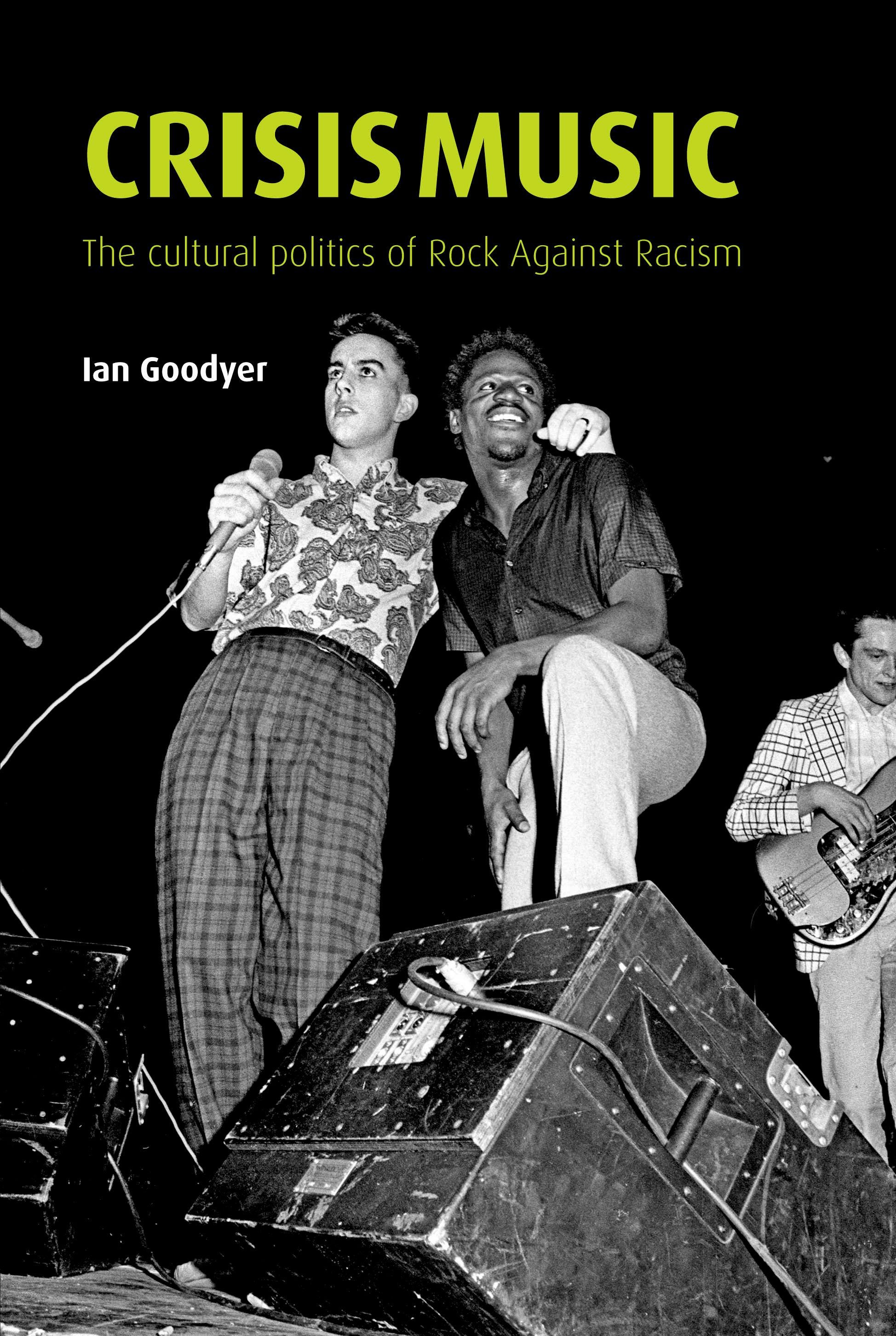
Crisis music
Marching to the beat of punk rock and reggae, Rock Against Racism was a mass movement built in opposition to racism and fascism in 1970s Britain. At a time of severe economic and social crises, RAR, alongside the Anti-Nazi League, organised one of the biggest and most effective political and cultural mobilisations of the post-war period.Expressing itself through spectacular carnivals, concerts, marches and innovative forms of design and communication, RAR combined hard-headed political organisation with the optimism and energy of radical youth culture.Drawing on interviews with activists, supporters and critics, and based on the latest research, Crisis music explores the nature of this ground-breaking politico-cultural phenomenon. The author explains why RAR seized upon the power and passion of punk and reggae, and how this has helped to shape the boundaries of modern popular music. He also offers, for the first time, a clear picture of the relationship between RAR and its main political sponsor, the Socialist Workers Party. Crisis music discusses RAR’s place within the left’s often-troubled encounters with popular culture, and draws comparisons with other music-based movements and campaigns, such as the post-war folk revival and Live 8.This book casts light on numerous current debates: about ‘celebrity politics’ and the role of musicians as political spokespeople, for instance, and the links between ethnicity, popular culture and politics. It will be of value to students and researchers in cultural studies, politics and labour history, and to anyone interested in the role of culture in political activity.
eBook