
Catalogue Search | MBRL


Are you sure you want to remove the book from the shelf?

{{itemTitle}}
53,916
result(s) for
"united states and canada"
Sort by:


Lessons Learned from a Decade of Investigations of Shiga Toxin–Producing Escherichia coli Outbreaks Linked to Leafy Greens, United States and Canada
Shiga toxin-producing Escherichia coli (STEC) cause substantial and costly illnesses. Leafy greens are the second most common source of foodborne STEC O157 outbreaks. We examined STEC outbreaks linked to leafy greens during 2009-2018 in the United States and Canada. We identified 40 outbreaks, 1,212 illnesses, 77 cases of hemolytic uremic syndrome, and 8 deaths. More outbreaks were linked to romaine lettuce (54%) than to any other type of leafy green. More outbreaks occurred in the fall (45%) and spring (28%) than in other seasons. Barriers in epidemiologic and traceback investigations complicated identification of the ultimate outbreak source. Research on the seasonality of leafy green outbreaks and vulnerability to STEC contamination and bacterial survival dynamics by leafy green type are warranted. Improvements in traceability of leafy greens are also needed. Federal and state health partners, researchers, the leafy green industry, and retailers can work together on interventions to reduce STEC contamination.
Journal Article


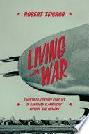
Living with war : twentieth-century conflict in Canadian and American history and memory
\"Canada and the United States: we think of one as a peaceable kingdom, the other as a warrior nation. But do our expectations about each country's attitudes to war and peace match the realities? In Living with War, Robert Teigrob examines how war is experienced and remembered on both sides of the 49th parallel. Surveying popular and scholarly histories, films and literature, public memorials, and museum exhibits in both countries, he comes to some startling conclusions. Americans may seem more patriotic, even jingoistic, but they are also more willing to debate the pros and cons of their military actions. Canadians, though more diffident in their public displays of patriotism, are more willing than their southern neighbors to accept the official narrative that depicts just wars fought in the service of a righteous cause. A provocative book that complements critiques of contemporary Canadian militarism such as Warrior Nation, Living with War offers an intriguing look at the relationship with the military past on both sides of the border.\"-- Provided by publisher.
Book

Natural Allies
No two nations have exchanged natural resources, produced
transborder environmental agreements, or cooperatively altered
ecosystems on the same scale as Canada and the United States.
Environmental and energy diplomacy have profoundly shaped both
countries' economies, politics, and landscapes for over 150 years.
Natural Allies looks at the history of US-Canada relations
through an environmental lens. From fisheries in the late
nineteenth century to oil pipelines in the twenty-first century,
Daniel Macfarlane recounts the scores of transborder environmental
and energy arrangements made between the two nations. Many became
global precedents that influenced international environmental law,
governance, and politics, including the Boundary Waters Treaty, the
Trail Smelter case, hydroelectric megaprojects, and the Great Lakes
Water Quality Agreements. In addition to water, fish, wood,
minerals, and myriad other resources, Natural Allies details the
history of the continental energy relationship - from electricity
to uranium to fossil fuels -showing how Canada became vital to
American strategic interests and, along with the United States, a
major international energy power and petro-state. Environmental and
energy relations facilitated the integration and prosperity of
Canada and the United States but also made these countries
responsible for the current climate crisis and other unsustainable
forms of ecological degradation. Looking to the future, Natural
Allies argues that the concept of national security must be
widened to include natural security - a commitment to public,
national, and international safety from environmental harms,
especially those caused by human actions.
eBook

Reading between the borderlines : cultural production and consumption across the 49th parallel
\"Is Superman Canadian? Who decides, and what is at stake in such a question? How is the Underground Railroad commemorated differently in Canada and the United States, and can those differences be bridged? How can we acknowledge properly the Canadian labour behind Hollywood filmmaking, and what would that do to our sense of national cinema? Reading between the Borderlines grapples with these questions and others surrounding the production and consumption of literary, cinematic, musical, visual, and print culture across the Canada-US border. Discussing a range of popular as well as highbrow cultural forms, this collection investigates patterns of cross-border cultural exchange that become visible within a variety of genres, regardless of their place in any arbitrarily devised cultural hierarchy. The essays also consider the many interests served, compromised, or negated by the operations of the transnational economy, the movement of culture's \"raw material\" across nation-state borders in literal and conceptual terms, and the configuration of a material citizenship attributed to or negotiated around border-crossing cultural objects. Challenging the oversimplification of cultural products labelled either \"Canadian\" or \"American,\" Reading between the Borderlines contends with the particularities and complications of North American cultural exchange, both historically and in the present.\"-- Provided by publisher.
BOOK

Pacific connections
In the late nineteenth century the borderlands between the United States, the British Empire in Canada, and the Asia-Pacific Rim emerged as a crossroads of the Pacific world. In Pacific Connections, Kornel Chang tells the dramatic stories of the laborers, merchants, smugglers, and activists who crossed these borders into the twentieth century, and the American and British empire-builders who countered them by hardening racial and national lines. But even as settler societies attempted to control the processes of imperial integration, their project fractured under its contradictions. Migrant workers and radical activists pursued a transnational politics through the very networks that made empire possible. Charting the U.S.-Canadian borderlands from above and below, Chang reveals the messiness of imperial formation and the struggles it spawned from multiple locations and through different actors across the Pacific world. Pacific Connections is the winner of the Outstanding Book in History award from the Association for Asian American Studies and is a finalist for the John Hope Franklin Book Prize from the American Studies Association.
eBook


Canada Among Nations, 2006
Contributors include Marie Bernard-Meunier (Atlantik Brücke), David Black (Dalhousie), Adam Chapnick (Toronto), Ann Denholm Crosby (York), Roy Culpeper (The North-South Institute), Christina Gabriel (Carleton), John Kirton (Toronto), Wenran Jiang (Alberta), David Malone (Foreign Affairs Canada), Nelson Michaud (École nationale d'administration publique), Isidro Morales (School for International Service), Christopher Sands (Center for Strategic and International Studies), Daniel Schwanen (The Centre for International Governance Innovation), Yasmine Shamsie (Wilfrid Laurier), Elinor Sloan (Carleton), Andrew F. Cooper (The Centre for International Governance Innovation), and Dane Rowlands (The Norman Paterson School of International Affairs)
eBook