
Catalogue Search | MBRL


Are you sure you want to remove the book from the shelf?

{{itemTitle}}
717
result(s) for
"us-china relations"
Sort by:

U.S. power in international higher education
2021 ASHE/CIHE Award for Significant Research on International Higher EducationU.S. Power in International Higher Education explores how internationalization in higher education is not just an educational endeavor, but also a geopolitical one. By centering and making explicit the role of power, the book demonstrates the United States's advantage in international education as well as the changing geopolitical realities that will shape the field in the future. The chapter authors are leading critical scholars of international higher education, with diverse scholarly ties and professional experiences within the country and abroad. Taken together, the chapters provide broad trends as well as in-depth accounts about how power is evident across a range of key international activities. This book is intended for higher education scholars and practitioners with the aim of raising greater awareness on the unequal power dynamics in internationalization activities and for the purposes of promoting more just practices in higher education globally.
eBook

U. S. Power in International Higher Education
No detailed description available for \"U.S. Power in International Higher Education\".
eBook
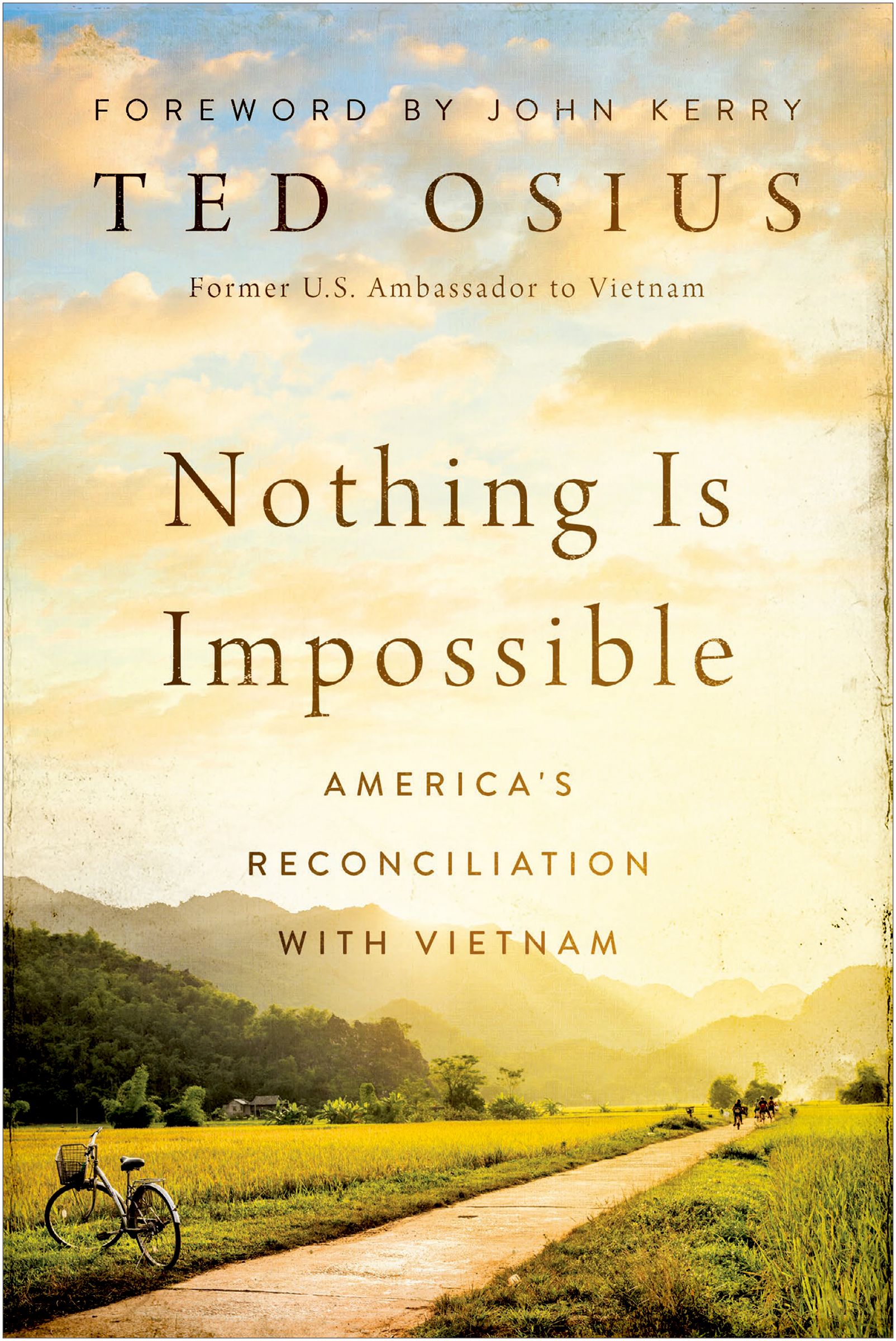
Nothing is Impossible
Today Vietnam is one of America's strongest international partners, with a thriving economy and a population that welcomes American visitors. How that relationship was formed is a twenty-year story of daring diplomacy and a careful thawing of tensions between the two countries after a lengthy war that cost nearly 60,000 American and more than two million Vietnamese lives. Ted Osius, former ambassador during the Obama administration, offers a vivid account, starting in the 1990s, of the various forms of diplomacy that made this reconciliation possible. He considers the leaders who put aside past traumas to work on creating a brighter future, including senators John McCain and John Kerry, two Vietnam veterans and ideological opponents who set aside their differences for a greater cause, and Pete Peterson-the former POW who became the first U.S. ambassador to a new Vietnam. Osius also draws upon his own experiences working first-hand with various Vietnamese leaders and traveling the country on bicycle to spotlight the ordinary Vietnamese people who have helped bring about their nation's extraordinary renaissance. With a foreword by former Secretary of State John Kerry, Nothing Is Impossible tells an inspiring story of how international diplomacy can create a better world.
eBook

Data Flows Meet Great Power Politics: The Emerging Digital Security Dilemma Between China and the US
This article employs security dilemma theory to probe the geopolitical implications of state intervention in the digital realm. Its central argument is that with cross-border data flows being conducive to subversive actions, governments have grown wary of rival states leveraging control over data flows to advance strategic objectives. Therefore, when a government tightens its domestic regulation over data flows, its actions could trigger a spiral of suspicions and countermeasures with other states. Such a security dilemma fosters the technology rivalry between China and the United States. As Beijing became sensitive to unrestricted flows of information and data, it set out to exert tighter control over data flows within and across Chinese borders. But Beijing’s move aggravated US perceptions of subversive threats, prompting Washington to try to drive Chinese entities out of the US-centric technology ecosystem. Not surprisingly, Washington’s actions signaled hostile intent to China, which in turn decided to build alternative digital infrastructures. Given that state intervention in the digital realm could exacerbate great power rivalry, Web 3.0 will likely perpetuate security dilemma dynamics by shifting the battlefield from corporate platforms to protocol layers, from data ownership to infrastructure sovereignty.
Journal Article

The geopolitics of COVID-19: US-China rivalry and the imminent Kindleberger trap
Purpose The spread of COVID-19 is not just a health crisis. The pandemic has taken a geopolitical dimension. The health crisis amplified the competitive dynamics between the USA and China, affected the provision of global public goods and injected instability into the global order. In line with the geopolitical zero-sum thinking, both the USA and China have sought to capitalize on the crisis to boost their international profile. Instead of working together to mitigate the health and economic impacts of COVID-19, the two powers fear that the other will exploit the current situation to accrue political, economic or military gains that will give it an edge after the pandemic subsides. The spread of COVID-19 has set off a \"battle of narratives,\" in which China and the USA are accusing each other of failing to rise to the challenge. The world seems to be falling into a \"Kindleberger Trap,\" in which the established power is unable to lead while the rising power is unwilling to assume responsibility. The COVID-19 crisis is occurring amid the collapse of global cooperation. The USA, the traditional leader of international collective efforts in times of crisis, has abandoned its role entirely. The lack of leadership at the global level during an international crisis may cause the breakdown of the international order. Design/methodology/approach This paper examines the US-China competitive dynamics through the lens of the work of Charles Kindleberger, which both liberals and realists regard as foundational when examining the dynamics of global crisis management. This paper also uses the meta-geopolitics framework to determine the ability of both China and the USA to respond to the current COVID-19 crisis and its implications for their power and standing in the international system. Findings This paper concludes that the only way to escape the Kindleberger trap is \"to embed Sino-American relations in multilateralism.\" Originality/value As rivals, both the USA and China are seeking to capitalize on the crisis to boost their international profile. This paper probes how China and the USA navigated the ongoing COVID-19 crisis to determine whether or not they are currently in a \"Kindleberger Trap,\" using elements of the meta-geopolitics framework of analysis, namely, health issues, domestic politics, economics, science and international diplomacy. Using the meta-geopolitics framework will help us determine the ability of both China and the USA to respond to the current COVID-19 crisis and the implications of that on their power and standing in the international system.
Journal Article
The United States–China Trade War: Timeline, Consequences, and Prospects for the US Economy. An Analysis Based on the Textile Industry
In this paper, we investigate the scale of the drop in American imports after it imposed punitive tariffs on Chinese goods. Our analysis spans the whole period of Donald Trump’s presidency (January 2017 – January 2021). In contrast to existing studies, which are mainly devoted to the impact of reduced trade flows on the key macroeconomic indicators, we focus on the specific market of textile products, which was among the most affected by the protectionism measures. The quantitative analysis allows us to conclude that the imposed duties severely hit the textile industry, bringing a noticeable drop in US imports of selected groups of products from China. Furthermore, the review of long‑term consequences indicates that the ongoing trade war has not only adversely affected the macroeconomic fundamentals of the US economy, but it is also likely to have a long‑lasting impact on global supply and production chains.
Journal Article

Hollywood in China: How American Popular Culture Shapes Chinese Views of the “Beautiful Imperialist” – An Experimental Analysis
While most mainland Chinese today have extremely few direct contacts with either America or Americans, their indirect contacts with both, via globalized American popular culture, are increasing rapidly. Do daily parasocial contacts with American celebrities shape Chinese views of America? Based on two experimental studies, this paper argues that even indirect, subconscious exposure to American celebrities via popular magazine covers shapes Chinese views of America. However, the impact of that exposure depends upon both the specific nature of the bicultural exposure and the psychological predispositions of the Chinese involved. Not all Chinese are alike, and their personality differences shape whether they experience American popular culture as enriching or threatening, leading to integrative and exclusionary reactions, respectively. 尽管绝大多数现代中国人从来没有和美国或美国人有过直接的接触, 但是, 在日益加剧的全球化的大背景下, 中国人接触美国流行文化的机会却无处不在。美国的流行文化会影响中国人对美国的看法吗? 本文以流行杂志封面的中、美明星人物为启动中、美, 结果发现, 大众杂志封面上的美国明星可以影响中国人对美国人的看法, 但是只有当美国明星人物出现在中国杂志封面上时, 这种影响才会发生。并且, 这种影响因人而异: 只有高民族自恋的人才会将美国流行文化看作威胁, 而低民族自恋的人却把美国流行文化视为有益, 并分别导致排斥性或包容性的反应。
Journal Article

A Struggle for Leadership Recognition: The AIIB, Reactive Chinese Assertiveness, and Regional Order
The aim of this paper is to contribute to the ongoing debate about \"Chinese assertiveness\". The paper dissects the central articles on the topic and evaluates their conceptual and theoretical insights. It ascertains that the concept of assertiveness is poorly substantiated; that proponents of \"Chinese assertiveness\" largely claim that it derives from structural factors that produced effects in Chinese foreign policy behavior prior to the US pivot to Asia; and ultimately, that critical accounts, since they reject the very concept, lack theories that can explain Chinese assertiveness. This article attempts to address these shortcomings. First, the article reconceptualizes assertiveness and connects it to grand strategy change. Second, this change is reactive and occurs after, not prior to the US pivot. Third, in order to provide greater theoretical adequacy, this article combines material factors with institutional factors and show how they dialectically interact with status aspiration, as part of the struggle for the positional good of leadership. To show the conceptual and theoretical plausibility of the argument, the paper outlines the dialectical interplay between positional barriers in the ADB and the US pivot to Asia, on the one hand, and reactive Chinese assertiveness and the AIIB, on the other.
Journal Article
The Ascendancy of Regional Powers in Contemporary US-China Relations: Rethinking the Great Power Rivalry (2023)
Kari Roberts and Saira Bano (editors), together with their book contributors, tackle a timely and pressing area of concern in The Ascendancy of Regional Powers in Contemporary United States (US)-China Relations. The work delves into the shifting dynamics of international politics, particularly the growing influence of regional powers within the framework of the US-China rivalry. Through a comprehensive analysis and compendium of works from esteemed experts in their respective fields, the book contemplates and explores how middle and emerging powers, such as India, Japan, Australia, and other key regional states and players are increasingly contesting the contours of global geopolitics. The book, thereby, challenges and calls for a revisit of the classically accepted ‘great power’ framework of international relations.
Journal Article

The moral filter of patriotic prejudice
About one in six Asian Americans have fallen victim to anti-Asian racism during the COVID-19 pandemic [J. Lee, K. Ramakrishnan, aapidata.com/blog/discriminationsurvey-2022/]. By examining anti-Asian racism in the United States primarily as a domestic issue, most prior studies have overlooked the connections between shifting US-China relations and Americans’ prejudices against the Chinese in China and, by extension, East Asian Americans. This study investigates the patterns and perceptual bases of nationality-based prejudices against Chinese amid the COVID-19 pandemic in the United States. Our nationally representative online survey experiment reveals that Americans assess a hypothetical Chinese person in China as inferior in multiple social and psychological characteristics to an otherwise identical Japanese person in Japan or East Asian American. Furthermore, subjects who perceive China as more threatening to America’s national interests assess Chinese more negatively, especially in terms of trustworthiness and morality, suggesting that perceived China threats propel Americans’ negative stereotypes about Chinese. A contextual analysis further indicates that counties with a higher share of Trump voters in 2016 tend to perceive all East Asian–origin groups similarly as a racial outgroup. By contrast, residents in predominantly Democrat-voting counties tend to perceive Chinese in China more negatively relative to Asian Americans, despite broadly viewing East Asians more favorably. Overall, this study underscores the often-overlooked relationships between the prevailing anti-Asian sentiments in the United States and the US-China geopolitical tensions and America’s domestic political polarization.
Journal Article