
Catalogue Search | MBRL


Are you sure you want to remove the book from the shelf?

{{itemTitle}}
17,772
result(s) for
"use of force"
Sort by:

The Global Police State
As the world becomes ever more unequal, people become ever more 'disposable'. Today, governments systematically exclude sections of their populations from society through heavy-handed policing. But it doesn't always go to plan. William I. Robinson exposes the nature and dynamics of this out-of-control system, arguing for the urgency of creating a movement capable of overthrowing it.
The global police state uses a variety of ingenious methods of control, including mass incarceration, police violence, US-led wars, the persecution of immigrants and refugees, and the repression of environmental activists. Movements have emerged to combat the increasing militarization, surveillance and social cleansing; however many of them appeal to a moral sense of social justice rather than addressing its root - global capitalism.
Using shocking data which reveals how far capitalism has become a system of repression, Robinson argues that the emerging megacities of the world are becoming the battlegrounds where the excluded and the oppressed face off against the global police state.
eBook

The Deadly Force Script
How many times have you read a news story about someone being shot by the police while reaching for their waistband?Or about an officer who testified at trial that the person he shot during a physical struggle had superhuman strength or a thousand-yard stare in his eyes?.
eBook
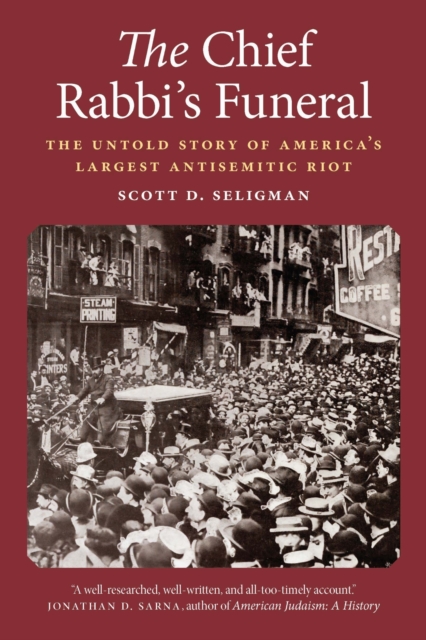
The Chief Rabbi's Funeral: The Untold Story of America's Largest Antisemetic Riot
2024 American Book Fest Award Finalist in U.S. History Gold Medal in History for the 2024 Reader Views Literary Awards Regional: North-East Winner for the 2024 Reader Views Literary Awards On July 30, 1902, tens of thousands of mourners lined the streets of New York's Lower East Side to bid farewell to the city's chief rabbi, the eminent Talmudist Jacob Joseph. All went well until the procession crossed Sheriff Street, where the six-story R. Hoe and Company printing press factory towered over the intersection. Without warning, scraps of steel, iron bolts, and scalding water rained down and injured hundreds of mourners, courtesy of antisemitic factory workers. The police compounded the attack when they arrived on the scene; under orders from the inspector in charge, who made no effort to distinguish aggressors from victims, officers began beating up Jews, injuring dozens. To the Yiddish-language daily Forverts (Forward), the bloody attack on Jews was not unlike those that many Russian Jews remembered bitterly from the old country. But this was America, not Russia, and the Jewish community wasn't going to stand for such treatment. Fed up with being persecuted, New York's Jews, whose numbers and political influence had been growing, set a pattern for the future by deftly pursuing justice for the victims. They forced trials and disciplinary hearings, accelerated retirements and transfers within the corrupt police department, and engineered the resignation of the police commissioner. Scott D. Seligman's The Chief Rabbi's Funeral is the first book-length account of this event and its aftermath.
eBook

Torture in the National Security Imagination
Reassessing the role of torture in the context of police
violence, mass incarceration, and racial capitalism
At the midpoint of a century of imperial expansion, marked on
one end by the Philippine-American War of 1899-1902 and on the
other by post-9/11 debates over waterboarding, the United States
embraced a vision of \"national security torture,\" one contrived to
cut ties with domestic torture and mass racial terror and to
promote torture instead as a minimalist interrogation tool.
Torture in the National Security Imagination argues that
dispelling this vision requires a new set of questions about the
everyday work that torture does for U.S. society.
Stephanie Athey describes the role of torture in the
proliferation of a U.S. national security stance and imagination:
as U.S. domestic tortures were refined in the Philippines at the
turn of the twentieth century, then in mid-century
counterinsurgency theory and the networks that brought it home in
the form of law-and-order policing and mass incarceration.
Drawing on examples from news to military reports, legal
writing, and activist media, Athey shows that torture must be seen
as a colonial legacy with a corporate future, highlighting the
centrality of torture to the American empire-including its role in
colonial settlement, American Indian boarding schools, and police
violence. She brings to the fore the spectators and commentators,
the communal energy of violence, and the teams and target groups
necessary to a mass undertaking (equipment suppliers, contractors,
bureaucrats, university researchers, and profiteers) to demonstrate
that, at base, torture is propelled by local social functions,
conducted by networked professional collaborations, and publicly
supported by a durable social imaginary.
eBook
Beyond Zimbardo : the Stanford prison experiment
The Stanford Prison Experiment, arguably one of the most controversial experiments of the 20th century, has polarised opinions for over 50 years: To its supporters, the transformation of perfectly decent college students into brutal guards or compliant prisoners demonstrated the power of situations to determine behaviour. To its detractors, the study is a perfect storm of unethical behaviours and outrageous researcher interventions that created what Le Texier concluded was \"an incredibly flawed study\". Now one of the UK's most celebrated psychologists, Professor Stephen Reicher, has taken a new look at this classic study and in this film he argues we need to go Beyond Zimbardo to understand the true significance of the SPE.
Streaming Video

A critical analysis on the use of force by law enforcement officials in a correctional setting—an expert witness account
Police brutality has become a contentious topic in both printed and social media. This has been fuelled by incidents in the United States where police officers were accused of torturing civilians during arrests. The purpose of this study is to provide an expert witness account of the use of force by law enforcement officials in a correctional setting. The study evaluates the effectiveness of the force factor analysis (resistance vs. sequential levels) that is used internationally to measure the appropriate force allowed in each situation. It further measures the force factor analysis against the different regulatory frameworks that provide oversight of the use of force by law enforcement agencies. A hermeneutics strategy was used to construct a criminological view of the incident. An inductive conventional content analytical approach was used for the subjective interpretation of text data content through the systematic classification process of coding and identifying themes or patterns. The finding indicates that the Resistance Force Comparative Scale is only effective if consideration is given to other environmental dynamics that have an impact on the situation at hand. The effects of prisoner resistance on the severity of force used by correctional staff members are explored, along with implications and recommendations.
Journal Article

Improving access to justice for women who kill their abusers: Practitioner insights and experiences
Over the past decade, Australia has made significant reforms aimed at improving legal understandings of intimate partner violence, women's use of force and their access to self-defence. While some courts have recognised the cumulative effects of coercive control and social entrapment on women's responses, significant problems remain that deny many women access to justice. This article presents findings from a Victorian pilot study involving interviews with lawyers and experts who work with victim-survivors in these cases. Despite the existence of legislative provisions encouraging decision-makers to utilise the family violence evidence provisions and draw on a broader range of experts with family violence expertise, results revealed that a number of interviewees had limited knowledge of these provisions, and psych- based experts are still being used in the majority of cases. Surprisingly, while psych-based expertise was seen as helpful, interviewees were aware of the limits of this expertise with some seeing this as due to the limited authority afforded family violence experts/expertise by the courts. We conclude with recommendations for building the workforce and capacity of experts to work in this area and targeted training to skill up practitioners to more effectively utilise family violence experts in conjunction with the family violence evidence provisions throughout the whole court process.
Journal Article

The Impact of State Laws on Officer-Involved Deaths (OIDs)
Objective: to study issues related to the illegal use of force by law enforcement officers against detainees, as well as to identify the impact of state laws on the rate of officer-involved deaths.Methods: the article uses the universal dialectical method of cognition, as well as general (analysis, synthesis, induction, deduction) and specific scientific research methods (formal-legal method).Results: while the public debates whether law enforcement has a problem with mis- or over-using force, the field lacks critical information concerning how often officers use force when interacting with citizens. Moreover, researchers have not examined how differences in how states restrict officers' ability to use force affect the frequency of force used. Consequently, the various reforms proposed have little evidence supporting them. Using data from Mapping Police Violence combined with census data, the authors examined the impact of the incorporation of U.S. Supreme Court jurisprudence and the overall restrictiveness each state placed on law enforcement's ability to use force when making an arrest and what constituted reasonable force within each state. It was found that the state's population size and violent crime rate were strong predictors of the number and rate of officer-involved deaths.Scientific novelty: The study showed that the incorporation of SCOTUS decisions within state laws, or the restrictiveness of state laws concerning how officers use force during an arrest, how officers use force to protect themselves or others, or the use of deadly force affect the number of officer-involved deaths that occur per year, nor the rate of officer-involved deaths per 100,000 residents per year. The bivariate analyses indicated that state laws concerning how officers use force may affect OIDs, but the inclusion of other relevant factors about the states in the multivariate analyses reduced those effects. Further, the state laws in question may not be the appropriate point to affect behavior. At this point, there has been comparatively less attention paid to state-level issues of what constitutes the reasonable suspicion necessary to begin an interaction through a Terry stop or issues where officers' behavior may have inadvertently escalated the situation to the point of using force.Practical significance: the main provisions and conclusions of the article can be used in scientific, pedagogical and law enforcement activities when considering issues related to the impact of state laws on officer-involved deaths.
Journal Article

Correlates of subject(ive) resistance in police use-of-force situations
Purpose
In most jurisdictions, resistance is the primary legal justification for police use of force. Identifying the correlates of resistance helps to anticipate non-compliance, increase officer safety, and maintain low rates of use of force. Following previous research on subject demeanor, the purpose of this paper is to argue that the presence of resistance is determined subjectively, based on an individual’s interpretation of a situation.
Design/methodology/approach
Binary and multinomial logistic regression models were used to analyze resistance reported in 878 interventions involving police use of force in a large Canadian city. A four-category measure similar to those commonly found in previous studies was used to build dependent variables and a series of 14 behaviors based on the actions of a subject was used as a predictor of reported resistance.
Findings
As expected, subject behavior was found to be a significant predictor of reported resistance. Officer and citizen characteristics (gender, race, age/experience) were weakly related to the outcome. Models were found to offer considerably better predictions when situational factors were included.
Originality/value
Perceptions of resistance were found to be influenced by a variety of factors, including, but not limited to, the subject’s actions.
Journal Article
PBS newshour. Why the promise of police body cameras is falling well short of expectations
The use of police body cameras has become much more widespread in recent years with the hope that they will curb police violence and improve accountability. But a new investigation by ProPublica and The New York Times Magazine found it can often take months or years before the video is released, if at all. William Brangham discussed more with Eric Umansky of ProPublica.
Streaming Video