
Catalogue Search | MBRL


Are you sure you want to remove the book from the shelf?

{{itemTitle}}
18,514
result(s) for
"visual therapy"
Sort by:
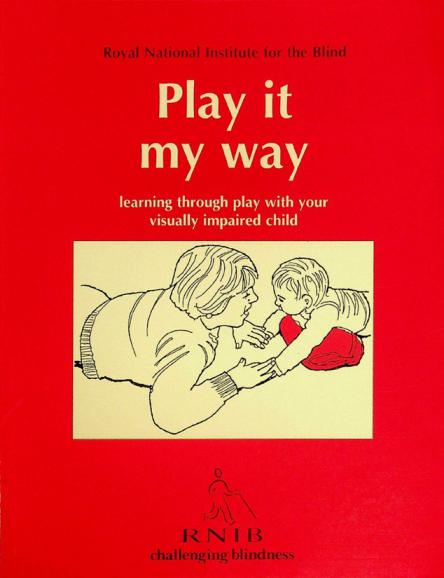
Play it my way : learning through play with your visually impaired child
Parents who are bringing up a visually impaired child should find many ideas in this book. The activities suggested are easy to carry out at home since many encourage imaginative use of everyday items to help visually impaired children find out more about the world around them.

An Eye Movement Monitoring Tool: Towards a Non-Invasive Device for Amblyopia Treatment
Amblyopia, commonly affecting children aged 0–6 years, results from disrupted visual processing during early development and often leads to reduced visual acuity in one eye. This study presents the development and preliminary usability assessment of a non-invasive ocular monitoring device designed to support oculomotor engagement and therapy adherence in amblyopia management. The system incorporates an interactive maze-navigation task controlled via gaze direction, implemented during monocular and binocular sessions. The device tracks lateral and anteroposterior eye movements and generates visual reports, including displacement metrics and elliptical movement graphs. Usability testing was conducted with a non-probabilistic adult sample (n = 15), including individuals with and without amblyopia. The System Usability Scale (SUS) yielded an average score of 75, indicating good usability. Preliminary tests with two adults diagnosed with amblyopia suggested increased eye displacement during monocular sessions, potentially reflecting enhanced engagement rather than direct therapeutic improvement. This feasibility study demonstrates the device’s potential as a supportive, gaze-controlled platform for visual engagement monitoring in amblyopia rehabilitation. Future clinical studies involving pediatric populations and integration of visual stimuli modulation are recommended to evaluate therapeutic efficacy and adaptability for early intervention.
Journal Article

Wavefront sensing for objective assessment of vision therapy efficacy: Preliminary results
The aim of this study was to use wavefront sensing to objectively evaluate the effects of vision therapy in subjects with insufficiency (AI) and infacility of accommodation (AINF). Aberrometry was performed with a Shack-Hartmann wavefront aberrometer for different accommodative stimuli in one subject with AI and one with AINF before and after treatment with vision therapy (VT). A control subject received a placebo treatment. Real-time accommodative response, accommodation and disaccommodation reaction time, accommodative microfluctuations and root mean square of higher order aberrations were compared before and after VT/placebo. VT was effective and wavefront sensing can be used to detect AI and AINF and evaluate these subjects during VT.
Journal Article

Sensory–Cognitive Profiles in Children with ADHD: Exploring Perceptual–Motor, Auditory, and Oculomotor Function
Objective: This observational cross-sectional study aimed to comprehensively evaluate sensory–cognitive performance in children diagnosed with Attention-Deficit/Hyperactivity Disorder (ADHD), with a focus on auditory processing, visual–perceptual abilities, visual–motor integration, and oculomotor function. The study further examined how hyperactivity, age, and gender may influence these domains. Methods: A total of 70 non-medicated children with clinically diagnosed ADHD (mean age = 9.1±2.4 years; 67.1% male), all with normal visual acuity, were assessed using four standardized instruments: the Test of Auditory Processing Skills, Third Edition (TAPS-3), the Test of Visual Perceptual Skills, Fourth Edition (TVPS-4), the Beery–Buktenica Developmental Test of Visual–Motor Integration, Sixth Edition (VMI-6), and the Developmental Eye Movement (DEM) Test. Statistical analyses included one sample and independent samples t-tests, one-way ANOVA, and Pearson correlation coefficients. Results: Participants demonstrated significantly above-average performance in auditory processing (TAPS-3: μ=108.4, std=7.8), average visual–perceptual abilities (TVPS-4: μ=100.9, std=7.2), slightly below-average visual–motor integration (VMI-6: μ=97.1, std=9.0), and marked deficits in oculomotor efficiency (DEM ratio: μ=87.3, std=18.1). Statistically significant differences were observed across these domains (t-values ranging from 2.9 to 7.2, p<0.01). Children with hyperactive-impulsive presentations exhibited lower horizontal DEM scores (μ=73.4, std=12.3) compared to inattentive counterparts (μ=82.9, std=16.2; p=0.009). Age and sex influenced specific subtest scores, with boys and children aged 8–9 years achieving higher outcomes in word memory (p=0.042) and visual discrimination (p=0.034), respectively. Moderate correlations were identified between auditory and visual–perceptual skills (r=0.32, p=0.007), and between visual–perceptual and oculomotor performance (r=0.25, p=0.035). Conclusions: The findings from this sample reveal a distinct sensory–cognitive profile in children with ADHD, characterized by relatively preserved auditory processing and pronounced oculomotor deficits. These results underscore the value of a multimodal assessment protocol that includes oculomotor and visual efficiency evaluations. The conclusions pertain specifically to the cohort studied and should not be generalized to all populations with ADHD without further validation.
Journal Article

Deciphering the Physical Characteristics of Ophthalmic Filters Used in Optometric Vision Therapy
Background: This paper aimed to measure and characterize eleven monochromatic filters and twenty-two combinations used empirically to treat patients with visual dysfunctions to propose enhanced protocols based on solid evidence. Their wavelength, transmittance, and relative sensitivity were defined on the retinal cone cells. Methods: A double-beam UV-VIS-NIR spectrophotometer, VARIAN brand, Cary 5000 model, owned by the National Center of Metrology, with high precision and accuracy, was used to characterize all filters. Filters were purchased from Optomatters Corporation, Belgium. Results: When two or three filters are combined, their transmittance and relative sensitivity on the retinal cone cells decrease regardless of wavelength. As a result, the efficiency of combined filters may decrease during treatments. Additionally, most filters and combinations, regardless of the wavelength, transmit a considerable percentage of light from the red spectrum. A depressant is the best monochromatic filter, and Upsilon–Neurasthenic is the strongest combination to stimulate blue cone cells. In contrast, Stimulant and Delta–Theta are best for red and green cone cells. Mu–Delta and Mu–Theta can be interchangeable, as well as Alpha–Delta and Alpha–Theta. Conclusions: Results suggest that the current phototherapy treatment protocol must be deeply revised, and the number of filters and combinations should be reduced to reduce costs and time and boost efficiency.
Journal Article

Successful treatment of diplopia using prism correction combined with vision therapy/orthoptics improves health-related quality of life
To track improvement in diplopia symptoms with strabismus-specific health-related quality of life (HRQOL) questionnaire across a treatment consisting of prism correction followed by vision therapy/orthoptics when prism treatment alone has not succeeded.
Forty-eight participants with diplopia and a mean age of 62.45 were asked to complete an Adult Strabismus-20 (AS-20) questionnaire and a Diplopia Questionnaire (DQ) before and after prism correction. Inclusion criteria were diplopia reported on the DQ as \"sometimes\", \"often\" or \"always\" at reading or straight-ahead distance. The prism correction was classified as successful if the participant reported \"never\" or \"rarely\" on the DQ for reading and straight-ahead distance; and unsuccessful if the perceived diplopia worsened or remained the same. For all participants, mean initial AS-20 scores were compared with mean post-prism correction scores, taking into account AS-20 subscales (reading and general functions, and self-perception and interaction). Participants in the failed prism treatment subgroup subsequently underwent a programme of vision therapy wearing their prism correction, the results of which were again determined by participants' responses on the AS-20 questionnaire, completed before and after the vision therapy.
Five of the 48 participants dropped out of the study. Prism correction was classified as successful in 22 of 43 participants (51%), and unsuccessful in 21 (49%). Those participants for whom the prism correction was classified as a success showed a statistically significant improvement (
= 0.01) in both reading and general functions. In the failed treatment subgroup, no significant change in AS-20 score was recorded for any of the domains (
= 0.1). After treatment with vision therapy/orthoptics, however, 13 of the 20 participants in the unsuccessful prism correction subgroup (one of them dropped out the study) achieved binocular vision and statistically significant improvement in reading and general functions (
= 0.01).
Although effective prism correction of diplopia is correlated with enhanced HRQOL, prism correction alone is frequently not sufficient to achieve this objective. In these cases, vision therapy/orthoptics treatment as a coadjutant to prism correction is shown to improve HRQOL.
Journal Article

Vision Therapy: A Primer and Caution for Pediatricians
Vision therapy, also known as behavioral therapy, is theorized by its practitioners to treat a variety of visual disorders, including learning disability in children. However, the utility of vision therapy to treat various learning disabilities is challenged by the American Academy of Pediatrics, American Academy of Ophthalmology, American Association for Pediatric Ophthalmology and Strabismus, and the American Association of Certified Orthoptists. The purpose of this review is to (1) provide an overview of vision therapy, (2) evaluate the evidence for vision therapy, and (3) give practical recommendations for pediatric primary care providers regarding vision therapy. A review of the literature demonstrates evidence that vision therapy is useful in the management of convergence insufficiency only. There is insufficient evidence to recommend in-office vision therapy for the management of other types of strabismus, amblyopia, or learning disability in the pediatric population.
Journal Article
Reversibility of visual field defects through induction of brain plasticity: vision restoration, recovery and rehabilitation using alternating current stimulation
For decades visual field defects were considered irreversible because it was thought that in the visual system the regeneration potential of the neuronal tissues is low. Nevertheless, there is always some potential for partial recovery of the visual field defect that can be achieved through induction of neuroplasticity. Neuroplasticity refers to the ability of the brain to change its own functional architecture by modulating synaptic efficacy. It is maintained throughout life and just as neurological rehabilitation can improve motor coordination, visual field defects in glaucoma, diabetic retinopathy or optic neuropathy can be improved by inducing neuroplasticity. In ophthalmology many new treatment paradigms have been tested that can induce neuroplastic changes, including non-invasive alternating current stimulation. Treatment with alternating current stimulation (e.g., 30 minutes, daily for 10 days using transorbital electrodes and ~10 Hz) activates the entire retina and parts of the brain. Electroencephalography and functional magnetic resonance imaging studies revealed local activation of the visual cortex, global reorganization of functional brain networks, and enhanced blood flow, which together activate neurons and their networks. The future of low vision is optimistic because vision loss is indeed, partially reversible.
Journal Article

A Pilot Nurse-Led Tele-Counseling Intervention to Parents of Children With Cerebral Visual Impairment on Adherence to Eye Activities During COVID-19 Pandemic: A Pre-experimental Study
To assess the impact of a culturally appropriate and theoretically driven nurse-led tele-counseling intervention to parents of children with cerebral visual impairment (CVI) on the adherence to visual therapy advised by the ophthalmologists.
A pre-experimental design was used.
Parents of children with CVI aged 2-9 years were enroled telephonically during the coronavirus disease 2019 (COVID-19) pandemic through the Pediatric Ophthalmology Clinic of a tertiary eye care center. Pre-assessment of participants was done telephonically as per the interview schedule. As per the protocol, the trained nurse-delivered tele-counseling intervention two times weekly for the first 2 weeks and weekly for the next 2 weeks
audio and video two-way tele-interaction with parents. A CVI information booklet was shared with parents
WhatsApp interface and individualized visual therapy was reinforced in accordance with the advice of the treating ophthalmologist. It was based on a thorough review of clinical records of the child, such as a detailed CVI questionnaire, history, and findings of clinical examination and neuro-visual behavior of a child. In addition, parents were encouraged to maintain a diary of the daily sessions of visual therapy and share recorded videos of their training exercises which were then evaluated and discussed with the ophthalmologist for any deviation. Outcome measures included adherence to eye activities for 7-8 sessions per day. Data were analyzed by using SPSS statistics for windows, version 20.
Overall, improvement of adherence to visual therapy was observed among children with CVI (
< 0.0001). Nearly half (47.6%) of participants adhered to 3-4 sessions/day and only 28.6% were adherent to the recommended 7-8 sessions/day.
The pilot study demonstrated the potential of the nurse-led tele-counseling intervention to supplement the ongoing health treatment of patients in improving the adherence to eye activities among parents of children with CVI.
Journal Article

Active Visual Art Therapy in the General Hospital: Facts and Challenges from an Ethical Perspective
For decades, art in its many forms has been used to improve patients’ quality of life and mental health. A growing amount of literature has shown the effectiveness of active visual art therapy (AVAT) on different patient outcomes and highlighted the need for international collaboration and harmonization of research methods. Evidence regarding AVAT inside the general hospital is still limited. This context poses unique challenges in terms of feasibility, heterogeneity, settings, and type of participants, together with significant ethical implications in terms of humanization of care. This narrative review aimed to report the available data on the effectiveness of visual art therapy in the general hospital and discuss them through the lens of the key bioethical principles of autonomy, beneficence, non-maleficence, and justice introduced by Childress and Beauchamp. Current evidence supports the effectiveness of AVAT on children and adult inpatients’ outcomes, particularly in the areas of pain control, anxiety, and depression, therefore supporting the individual’s autonomy and beneficence. With regard to justice and equity, AVAT proved to be a safe and cost-effective adjunct intervention to medical management inside the hospital. A more in-depth understanding of the ethical aspects implied in using AVAT in the general hospital may add a further contribution to the implementation of art interventions in patient-centered care.
Journal Article