
Catalogue Search | MBRL


Are you sure you want to remove the book from the shelf?

{{itemTitle}}
145,683
result(s) for
"watersheds"
Sort by:


Acorns and bitter roots : starch grain research in the prehistoric Eastern Woodlands
People regularly use plants for a wide range of utilitarian, spiritual, pharmacological, and dietary purposes throughout the world. Scholarly understanding of the nature of these uses in prehistory is particularly limited by the poor preservation of plant resources in the archaeological record. In the last two decades, researchers in the South Pacific and in Central and South America have developed microscopic starch grain analysis, a technique for overcoming the limitations of poorly preserved plant material. In Acorns and Bitter Roots , Timothy C. Messner establishes starch grain analysis in the temperate climates of eastern North America using the Delaware River Watershed as a case study for furthering scholarly understanding of the relationship between native people and their biophysical environment in the Woodland Period. Messner’s analysis is based on extensive reviews of the literature on early historic and prehistoric native plant use and the collation of all available archaeobotanical data, a review of which also guided the author in selecting contemporary botanical specimens to identify and in interpreting starch residues recovered from ancient plant-processing technologies. The evidence presented here sheds light on many local ecological and cultural developments as ancient people shifted their subsistence focus from estuarine to riverine settings. These archaeobotanical datasets, Messner argues, illuminate both the conscious and unintentional translocal movement of ideas and ecologies throughout the Eastern Woodlands.
eBook

Integrated pollution prevention and control for the municipal water cycle in a river basin context : validation of the three-step strategic approach
The protection of water resources from deterioration in quality from pollution discharges has become one of the biggest challenge in sustainable water resources management in recent decades. In practice, most countries have adopted pollution control strategies and measures which are based on ‘end-of-pipe’ solutions, i.e. wastewater treatment plants and adjustments to the regulations, including taxes for wastewater discharges (Conventional Strategy). This approach involves very high costs, and it has in many cases has been a complete failure. The research described in this book contributes to the development of sustainable solutions for the previously outlined problem. It is based on the validation of the Three-Step Strategic Approach concept (3-SSA), which includes: 1) prevention or minimisation of waste production; 2) treatment aimed at recovery and reuse of waste components, and 3) polishing of remaining waste by stimulation of natural self-purification of receiving water body. The study on wastewater management in the Upper Cauca river basin (389 km), the second most important river in Colombia, shows overall positive effects of the 3-SSA, in comparison of Conventional Strategy. The Cost Benefit Analysis clearly favoured the 3-SSA, generating a major positive impact on the river water quality at lower cost compared to the Conventional Strategy.
Book


Hydrology and the management of watersheds
\"Hydrology and the Management of Watersheds, Fourth Edition is a major revision and restructuring of this popular text. The content and scope have been improved and condensed, covering basic concepts and the fundamental aspects of hydrology and hydrologic processes, as well as methods and applications for managing watersheds. Examples throughout the book emphasize the use of web sites and access to the internet to acquire data, update methods and models, and to apply the latest technology to cope with issues of land and water use and climatic variability and change.Beyond the university classroom, Hydrology and the Management of Watersheds discusses land and water resource issues with implications for professionals in hydrology and watershed management in the United States, North America and beyond \"-- Provided by publisher.
Book

Remembering the hacienda : religion, authority, and social change in highland Ecuador
From the colonial period through the mid-twentieth century, haciendas dominated the Latin American countryside. In the Ecuadorian Andes, Runa-Quichua-speaking indigenous people-worked on these large agrarian estates as virtual serfs. In Remembering the Hacienda: Religion, Authority, and Social Change in Highland Ecuador, Barry Lyons probes the workings of power on haciendas and explores the hacienda's contemporary legacy. Lyons lived for three years in a Runa village and conducted in-depth interviews with elderly former hacienda laborers. He combines their wrenching accounts with archival evidence to paint an astonishing portrait of daily life on haciendas. Lyons also develops an innovative analysis of hacienda discipline and authority relations. Remembering the Hacienda explains the role of religion as well as the reshaping of Runa culture and identity under the impact of land reform and liberation theology. This beautifully written book is a major contribution to the understanding of social control and domination. It will be valuable reading for a broad audience in anthropology, history, Latin American studies, and religious studies.
eBook


Governing the Nile River Basin
The effective and efficient management of water is a major problem, not just for economic growth and development in the Nile River basin, but also for the peaceful coexistence of the millions of people who live in the region. Of critical importance to the people of this part of Africa is the reasonable, equitable and sustainable management of the waters of the Nile River and its tributaries.
Written by scholars trained in economics and law, and with significant experience in African political economy, this book explores new ways to deal with conflict over the allocation of the waters of the Nile River and its tributaries. The monograph provides policymakers in the Nile River riparian states and other stakeholders with practical and effective policy options for dealing with what has become a very contentious problem-the effective management of the waters of the Nile River. The analysis is quite rigorous but also extremely accessible.
eBook
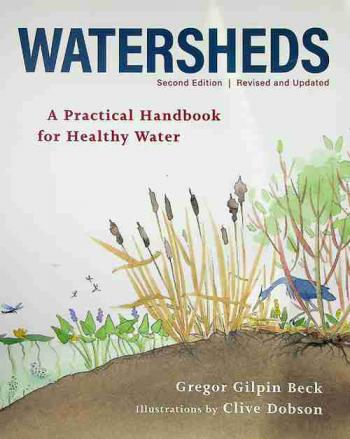
Watersheds : a practical handbook for healthy water
\"Water is our most vital resource, yet few understand even the basics of watershed ecology. This new edition has been updated to reflect growing environmental challenges, such as climate change, the insidious spread of invasive species and the loss of biodiversity. Watersheds: A Practical Handbook for Healthy Water is an engaging and informative introduction to ecology and environmental issues that focus on water-related issues. Well suited for youth or general readers of any age, Watersheds combines a profusion of beautiful illustrations with non-technical and accessible text, making it attractive as well as informative. The book explains ecological principles, environmental challenges, introduces North America's major biological regions, outlines the complexities of water and nutrient cycles and explains the ecology of wetlands and waterways. Watersheds also explains some of the major environmental issues facing North America, including air pollution, water pollution, invasive exotic species, and habitat loss and destruction. Watersheds provides detailed information on: water and nutrient cycles bioregions and aquatic habitats exotic species invasions water and air pollution ecological restoration habitat loss. While Watersheds identifies and explains multiple ecological challenges, the book is engaging, empowering, and positive, providing practical \"How Can I Help?\" sections aimed to inspire participation in efforts to restore watersheds and protect the environment. As the book explains, what's good for one's local watershed is also good for the planet -- so we can all help protect and restore our natural environment.\"-- Provided by publisher.
