
Catalogue Search | MBRL


Are you sure you want to remove the book from the shelf?

{{itemTitle}}
11,210
result(s) for
"wildlife legislation"
Sort by:


Implementing the Endangered Species Act on the Platte Basin Water Commons
Water users of the Platte River Basin have long struggled to share this scarce commodity in the arid high plains, ultimately organizing collectively owned and managed water systems, allocating water along extensive stream systems, and integrating newer groundwater with existing surface-water uses. In 1973, the Endangered Species Act brought a new challenge: incorporating the habitat needs of four species-the whooping crane, piping plover, least tern, and pallid sturgeon-into its water-management agenda. Implementing the Endangered Species Act on the Platte Basin Water Commons tells of the negotiations among the U.S. Department of the Interior, the environmental community, and the states of Wyoming, Colorado, and Nebraska that took place from the mid-1970s to 2006. Ambitious talks among rival water users, environmentalists, state authorities, and the Department of the Interior finally resulted in the Platte River Habitat Recovery Program. Documenting how organizational interests found remedies within the conditions set by the Endangered Species Act, describing how these interests addressed habitat restoration, and advancing sociological propositions under which water providers transcended self-interest and produced an agreement benefiting the environment, this book details the messy process that took place over more than thirty years. Presenting important implications for the future of water management in arid and semi-arid environments, this book will be of interest to anyone involved in water management, as well as academics interested in the social organization of common property.
eBook


Wildlife management and conservation in South Africa: informing legislative reform through expert consultation using the Policy Delphi methodology
South Africa’s wildlife sustainable management requires cohesive, evidence-based policy development that balances conservation goals with socio-economic needs. This study employed the Policy Delphi methodology, based on subsequent questionnaire rounds, to gather expert insights on critical priorities for wildlife-related policy, focusing on four species: lions ( Panthera leo ), elephants ( Loxodonta africana ), rhinos ( Diceros bicornis and Ceratotherium simum ), and leopards ( Panthera pardus pardus ). Experts were divided into panels based on species and areas of expertise: hunting, management, translocation, research, and animal welfare. Through three rounds, which took place from March to July 2024, the study sought to pinpoint South African policy issues needing amendment, addition, or removal, gathering expert opinions to achieve 70% consensus and suggestions for integrating these into policies. A total of 60 experts accepted to participate, 14 compiled all three Delphi questionnaires, while 40 of them contributed to at least one round. In Round 1, 34 experts suggested 523 pertinent issues meeting the study criteria: 260 amendments, 233 additions, and 30 removals. In Round 2, 28 participants considered 363 issues relevant, of which 254 obtained final agreement in Round 3 by 19 experts, divided into 19 thematic categories. Moreover, in Round 3, 617 suggestions for integration into policies were collected. Overall, the analysis underscores that the experts preferred modifying existing policies rather than removing measures, emphasizing the adequacy of the policies with adjustments. The final list of issues confirmed at the end of Round 3 and their categories represent experts’ priorities for the four focus species management reforms in South Africa. Moreover, the insights highlight gaps in South African wildlife legislation, including improved definitions, consideration of local communities, and addressing data deficiencies for evidence-based management and conservation. By identifying key areas for legislative improvement, this study provides a framework for actionable strategies to enhance wildlife policy in South Africa, following the broader aim of protecting wildlife, and with the potential of having an impact beyond national boundaries.
Journal Article


Early warning of trends in commercial wildlife trade through novel machine-learning analysis of patent filing
Unsustainable wildlife trade imperils thousands of species, but efforts to identify and reduce these threats are hampered by rapidly evolving commercial markets. Businesses trading wildlife-derived products innovate to remain competitive, and the patents they file to protect their innovations also provide an early-warning of market shifts. Here, we develop a novel machine-learning approach to analyse patent-filing trends and apply it to patents filed from 1970-2020 related to six traded taxa that vary in trade legality, threat level, and use type: rhinoceroses, pangolins, bears, sturgeon, horseshoe crabs, and caterpillar fungus. We found 27,308 patents, showing 130% per-year increases, compared to a background rate of 104%. Innovation led to diversification, including new fertilizer products using illegal-to-trade rhinoceros horn, and novel farming methods for pangolins. Stricter regulation did not generally correlate with reduced patenting. Patents reveal how wildlife-related businesses predict, adapt to, and create market shifts, providing data to underpin proactive wildlife-trade management approaches.
Hinsley and colleagues explore trends in the global wildlife trade, developing a novel machine-learning approach to analyse patent filing related to important taxa from 1970 to 2020. They found higher per year increases in these taxa compared with background trends, giving insight into how wildlife-related businesses predict, adapt to and create market shifts. These results provide data to underpin proactive wildlife-trade management approaches.
Journal Article

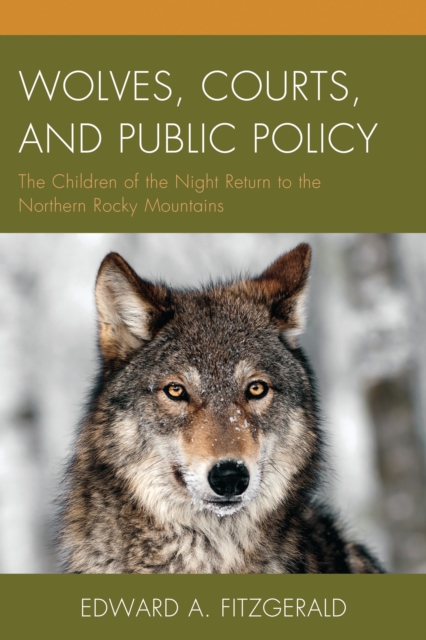
Wolves, courts, and public policy
This book examines the controversial role of the courts in the policymaking process and resolution of public policy conflicts by analyzing the litigation regarding the reintroduction and recovery of the wolf in the Northern Rocky Mountains.
eBook

Confounding Rules Can Hinder Conservation: Disparities in Law Regulation on Domestic and International Parrot Trade within and among Neotropical Countries
Wildlife trade is a major driver of biodiversity loss worldwide. To regulate its impact, laws and regulations have been implemented at the international and national scales. The Convention on International Trade in Endangered Species of Wild Fauna and Flora (CITES) has regulated the international legal trade since 1975. However, an important volume of illegal trade—mainly within countries—continues to threaten several vertebrate groups, which could be due to a lack of specific legislation or enforcement of existing regulations. Our aim was to gain a more accurate picture of poaching and legal possession of native parrots as pets in the Neotropics, where illegal domestic trade is currently widespread. We conducted a systematic search of the laws of each of the 50 countries and overseas territories, taking into account their year of implementation and whether the capture, possession and/or sale of parrots is permitted. We compared this information with legal exports reported by CITES to assess differences between the enforcement of international and national trade regulations. We found that only two countries (Guyana and Suriname) currently allow the capture, trade and possession of native parrots, while Peru allowed international legal trade until recently. The other countries have banned parrot trade from years to decades ago. However, the timing of implementation of international and national trade regulations varied greatly between countries, with half of them continuing to export parrots legally years or decades after banning domestic trade. The confusion created by this complex legal system may have hindered the adoption of conservation measures, allowing poaching, keeping and trade of protected species within and between neighboring countries. Most countries legally exported Neotropical parrot species which were not native to those countries, indicating that trans-border smuggling often occurred between neighboring countries prior to their legal exportations, and that this illicit activity continues for the domestic trade. Governments are urged to effectively implement current legislation that prohibits the trapping and domestic trade of native parrots, but also to develop coordinated alliances and efforts to halt illegal trade among them. Otherwise, illegal trade will continue to erode the already threatened populations of a large number of parrot species across the Neotropics.
Journal Article

On the tail of two species: The changing place of the peregrine falcon in society
Wildlife conservation can become contentious when human interests are impinged. For peregrine falcons (Falco peregrinus) in the United Kingdom, their iconic status as a protected species is contested by pigeon racers and falconers restrained by strict wildlife policies. However, even entrenched conservation policies can shift, sparking controversy. This paper seeks to understand the conditions leading to recent conservation policy shifts and conflicts. Through archival research and discourse analysis of falconry and pigeon racers' rhetoric, I review the development of 150 years of UK wildlife legislation and politics surrounding peregrines, situating present‐day conflict within long‐standing tensions between competing interests. In doing so, I demonstrate how contrasting ideologies of the raptors existed simultaneously between groups. Each vied for dominance and influenced policies over time, with the ideologies of ‘winners’ suppressing that of the ‘losers’ to become the norm. This historical approach highlights the key role global events like war played in overpowering the dominance of protective ideologies towards peregrines domestically, allowing peregrine culls and capture to become socially permissible. Conversely, post‐War environmental movements originating in the United States suppressed falconry's extractive relationships with peregrines in the United Kingdom, entrenching ecological priorities as a norm still conventional today. I argue that wildlife protection is contested because cultural extinction of falconry and pigeon racing were imminent, brought on by policymakers' focus on preventing the biological extinction of peregrines. However, recent policy shifts highlight the acceptance of anthropocentric interests within conservation practices. Policy implications: Animals can play multiple roles in society, but the public may not be accustomed to anthropocentric interests overtly displayed within contemporary conservation practices. Policy needs to be more sensitive towards accommodating or communicating human interests, but to also reflect on the social and ecological implications of their own ideologies towards conservation. Read the free Plain Language Summary for this article on the Journal blog. Read the free Plain Language Summary for this article on the Journal blog.
Journal Article