
Catalogue Search | MBRL


Are you sure you want to remove the book from the shelf?

{{itemTitle}}
41
result(s) for
"witch-hunt"
Sort by:

The logic of hatred and its social and historical expressions: From the great witch-hunt to terror and present-day djihadism
In two important books, the French philosopher Jacob Rogozinski analyses the logic of hatred underlying the great witch-hunt at the beginning of modern times, the period of terror following the French and the Russian Revolution and present-day djihadism. According to his analysis, the same logic of hatred is at work in these historical phenomena. The confrontation with the martyrs-murderers of djihadism, challenges the self-understanding of the defenders of democracy. Just as, on the level of religion, one must give up the dream of a reformation that would make Islam more « moderate », and help the Islamic believers become more radical, but otherwise than more fanatical, by rediscovering their forgotten treasures, on a political level, democracy too needs to be radicalized.
Journal Article

Origins of the Witches’ Sabbath
While the perception of magic as harmful is age-old, the notion
of witches gathering together in large numbers, overtly worshiping
demons, and receiving instruction in how to work harmful magic as
part of a conspiratorial plot against Christian society was an
innovation of the early fifteenth century. The sources collected in
this book reveal this concept in its formative stages.
The idea that witches were members of organized heretical sects
or part of a vast diabolical conspiracy crystalized most clearly in
a handful of texts written in the 1430s and clustered
geographically around the arc of the western Alps. Michael D.
Bailey presents accessible English translations of the five oldest
surviving texts describing the witches' sabbath and of two witch
trials from the period. These sources, some of which were
previously unavailable in English or available only in incomplete
or out-of-date translations, show how perceptions of witchcraft
shifted from a general belief in harmful magic practiced by
individuals to a conspiratorial and organized threat that led to
the witch hunts that shook northern Europe and went on to influence
conceptions of diabolical witchcraft for centuries to come.
Origins of the Witches' Sabbath makes freshly available
a profoundly important group of texts that are key to understanding
the cultural context of this dark chapter in Europe's history. It
will be especially valuable to those studying the history of
witchcraft, medieval and early modern legal history, religion and
theology, magic, and esotericism.
eBook

La brujería en la narrativa histórica española contemporánea (desde 1970 hasta la actualidad)
En el presente artículo nos proponemos dar un paso más en la indagación sobre la brujería en la literatura hispánica, abordando en esta ocasión la narrativa histórica española desde 1970 hasta nuestros días. Las novelas seleccionadas han sido Retrato de una bruja de Luis de Castresana; La herbolera de Toti Martínez de Lezea; Ars Magica de Nerea Riesco; Las maléficas de Mikel Azurmendi y Regreso a tu piel de Lus Gabás. En un trabajo en gran parte descriptivo, se presentarán estos cinco relatos, resaltando los aspectos más llamativos que tratan sobre la brujería y las tesis que se vierten sobre este fenómeno y sobre la caza de brujas. Por tanto, se facilita al lector una panorámica acerca de los textos que ahondan en esta temática y se muestra que, en la actualidad, sigue muy vigente el interés por estas prácticas y su persecución, debido a lo complejo y controvertido del asunto y al drama que se vivió en los siglos XV, XVI y XVII, y que estos escritores han querido reflejar.Abstract: This article attempts to take a further step towards the investigation of witchcraft in Hispanic literature, now dealing with the Spanish historical narrative from 1970 to the present day. The novels that have been selected for such purpose are Luis de Castresana’s Retrato de una bruja, Toti Martinez de Lezea’s La herbolera, Nerea Riesco’s Ars Magica, Mikel Azurmendi ‘s Las maléficas and Luz Gabás’ Regreso a tu piel. In this article, which is mainly descriptive, these four stories will be presented highlighting the most remarkable aspects dealing with witchcraft together with the theses given about this phenomenon and the witch hunt. Therefore, the reader is offered an overview of the texts that delve into this subject and shows that, today, the interest in these practices and their prosecution is still alive not only thanks to the complexity and controversy of this matter, but also due to the tragic events that took place in the 15th, 16th and 17th centuries, which these writers have tried to reflect in their books.
Journal Article

Narrative Freedom and Magic in Its Many Forms: Multiple Entrances to a Historical Experience
In the age of the new media, we are accustomed to a proliferation of experiences made possible by the instantaneous, hyper-real, and user-oriented media in many aspects of our lives. In cultural productions, age-old stories, whether fictional or factual, are given a new life through new media transformation and re-appear to readers and audiences around the world with new faces and new meanings. As educators in this new age, we should be aware of the educational potentials available to assist us in creating new learning experiences for students in different areas. This paper attempts to examine and analyze the “magic” of multi-modal narratives in representing a historical experience in the 17th century, to explore these narratives’ potentials to create meaningful learning experience for students of the 21st century. Although the witch trials that happened in the Danvers area (used to be Salem Village) are already more than 300 years old, representations have never stopped, as in fact are proliferating to new forms. The proposed discussion will focus on three narratives targeted at young adults, namely “The Visionary Girls: Witchcraft in Salem Village” (1973), “The Devil’s Door: A Salem Witchcraft Story” (2011), and “Magic by Moonlight” (2011), to examine how these recent narratives which have incorporated narrative strategies from other media, can be used to deliver new meaning to students who are individuals in the age of the new media.
Journal Article


Writing the Salem Witch Trials
This chapter provides a description of the witch trials centered in Salem Village, MA, in 1692–1693 and overviews the main strands of interpretation of the causes of the witch craze. The focus of the chapter is on the primary sources of our knowledge of the trials, including the trial records as well as the contemporaneous eyewitness accounts and commentaries. The chapter argues that while these writings have been studied closely by historians, they have yet to receive careful attention from literary, rhetorical, and text‐historical perspectives.
Book Chapter

Very Awful and Amazing
This chapter brings into focus witch panics that stood apart in terms of their scale and intensity from more ordinary instances of occult crime. It sheds light on a variety of accusers who often helped trigger episodes of witch panics. It also analyses supposedly bewitched individuals whose distinct social profile and startling symptoms of supernatural affliction distinguished them from other victims of black magic. The chapter talks about Elizabeth Kelly who died in 1662 at the age of eight after being pinched, pricked, and choked by an assailant only she could see and who she identified as a near neighbor, Judith Ayers. It emphasizes how Elizabeth Kelly's death helped trigger an epidemic of fear and suspicion that led to the largest witch hunt in New England before the Salem crisis of 1692.
Book Chapter
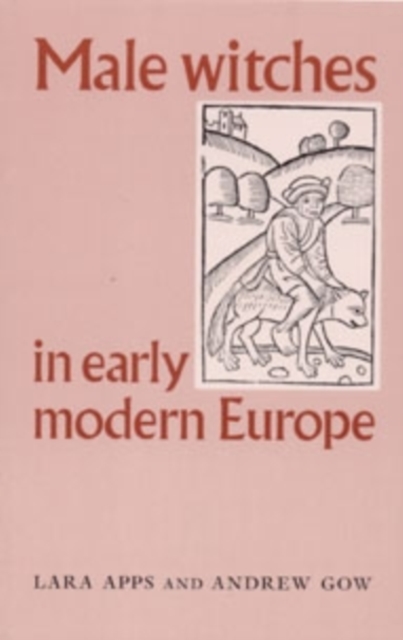
Male witches in early modern Europe
Gender at stake critiques historians' assumptions about witch-hunting as well as their explanations for this complex and perplexing phenomenon. The authors insist on the centrality of gender, tradition and ideas about witches in the construction of the witch as a dangerous figure. They challenge the marginalisation of male witches by feminist and other historians. The book shows that large numbers of men were accused of witchcraft in their own right, in some regions, more men were accused than women. The authors analyse ideas about witches and witch prosecution as gendered artefacts of patriarchal societies under which both women and men suffered. They challenge recent arguments and current orthodoxies by applying crucial insights from feminist scholarship on gender to a selection of statistical arguments, social-historical explanations, traditional feminist history and primary sources, including trial records and demonological literature. The authors assessment of current orthodoxies concerning the causes and origins of witch-hunting will be of particular interest to scholars and students in undergraduate and graduate courses in early modern history, religion, culture, gender studies and methodology.
eBook
Evil Comes to Salem
\"The Puritan belief in the devil and witchcraft spawned a massive effort to eradicated supposed evil influence, both in Europe and in America. Witch hunts had been perpetrated in Europe for hundreds of years before Salem, Massachusetts, had its caustic episode. Belief in the supernatural--both good and evil--was so strong, especially in Puritan New England, that things unexplained were explained as being either God's grace or the work of the devil, with no gray area.\" (Social Studies for Kids) Read more about the Salem Witch Trials.
Web Resource

Witchcraft narratives in Germany
Given the widespread belief in witchcraft and the existence of laws against such practices, why did witch-trials fail to gain momentum and escalate into 'witch-crazes' in certain parts of early modern Europe? This book answers this question by examining the rich legal records of the German city of Rothenburg ob der Tauber, a city which experienced a very restrained pattern of witch-trials and just one execution for witchcraft between 1561 and 1652. The author explores the factors that explain the absence of a 'witch-craze' in Rothenburg, placing particular emphasis on the interaction of elite and popular priorities in the pursuit (and non-pursuit) of alleged witches at law. By making the witchcraft narratives told by the peasants and townspeople of Rothenburg central to its analysis, the book also explores the social and psychological conflicts that lay behind the making of accusations and confessions of witchcraft. Furthermore, it challenges existing explanations for the gender-bias of witch-trials, and also offers insights into other areas of early modern life, such as experiences of and beliefs about communal conflict, magic, motherhood, childhood and illness. Written in a lively narrative style, this innovative study invites a wide readership to share in the compelling drama of early modern witch trials. It will be essential reading for researchers working in witchcraft studies, as well as those in the wider field of early modern European history.
eBook