
Catalogue Search | MBRL


Are you sure you want to remove the book from the shelf?

{{itemTitle}}
5,250
result(s) for
"wole"
Sort by:
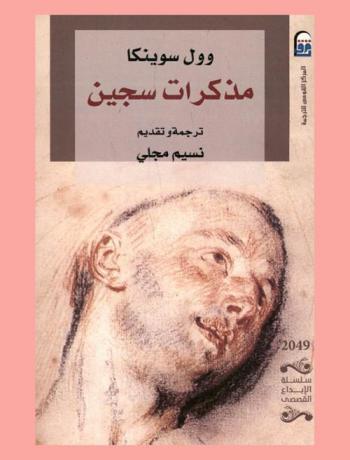
مذكرات سجين : (رواية)
لقد أخذ هذ الكتاب أشكالا كثيرة. منها مسألة ما الذى يجب أن يحتويه، وما الذى يجب تأجيله، وما الذى يجب أن نمحوه كليا، وكان هذا كله خاضعا لمشاكل الملاءمة ؛ لقدرة المؤلف المستمرة على التأثير فى الأحداث داخل بلده، وفى تحقيق التغييرات الثورية التي أصبح مكرسا لها أكثر من أي وقت مضى، كل ذلك أدى الى تغيير الفورما، والعنوان، بل فكرة هذا الكتاب اثنتى عشرة مرة على الأقل.
BOOK

Existential Dualism and Absurdity: Modernist Theatricality in Wole Soyinka’s Death and the King’s Horseman and Samuel Beckett’s Endgame
Wole Soyinka and Samuel Beckett apparently occupy distinct places in the literary space, in all ramifications. Specifically, while the former’s dramaturgy is definable within the context of the traditional convention of playwriting, otherwise known as well-made plays, the latter is inherently non-conformist in this regard. Hence, the effort in this paper was to locate a nexus in their writings, using two of their plays, Death and the King’s Horseman and Endgame, respectively. Theatre of the Absurd, as an offshoot of existentialism, provided the ground for the critical intersection of philosophical and ideological geometry of the two plays. The critical paradigm essentially relied on the interconnectivity of absurdist writings and existentialist thoughts, as the holistic context which fundamentally defines modernism, to assess what is conceived as modernist theatricality in the two plays. Building on the modernists’ interrogation of man’s existence and essence in the world in which existential meaning is presumably lost, the paper concluded that the two texts are largely intoned with modernist thoughts, regardless of their formal or structural distinction. It arrived at this by placing particular emphasis on the playwrights’ attempts, in these works, at demanding a more spontaneous response to the question of the essence of the individual and his/her place in the universe in which meaning in existence, in the modernist sense, is believed to have been lost.
Journal Article
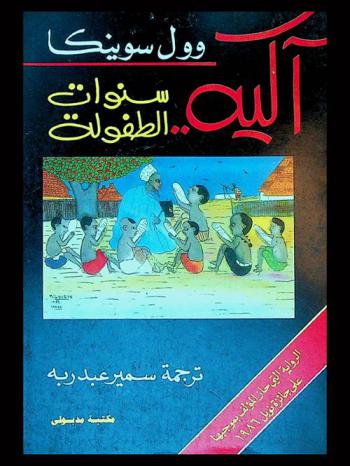
آكية سنوات الطفولة : سيرة ذاتية
في هذه الرواية الهامة والتى هي عبارة عن سيرة ذاتية مبهجة كتبها سوينكا بأسلوب أخاذ ورشيق وتحكي قصة طفولته وصباه قبل وأثناء الحرب العالمية الثانية في مدينة \"آكيه\" بغرب نيجيريا بحيث يصعب علي من كانوا في عمره أن يكبروا دون أن يتذكروا كل شيء أولئك الذين شاء لهم أن ينشأوا في تلك البيئة وذلك المكان متعدد الثقافات. يكتب المؤلف واضعا أفكاره بين ورق أعماله وأنت أيها القارئ يجب عليك أن تكتشف هذه الأفكار والتى في معظم أحوالها لا تخرج عن كونها فكرة إنسانية عامة، ويعتبر هذا شأن المبدعين الذين يتجاوزون بيئتهم وشخصيتهم إلى رؤية أبعد وإلى آفاق أكثر شمولا.
Book

Religious metaphors and the crisis of faith in Wole Soyinka’s poetry
Most commentaries on Wole Soyinka’s works across genres engage with his constant invocation of cultural tropes, most of which revolve around Ogun, his self-proclaimed muse. In this article, I highlight the centrality of religious myths and metaphors in a selection of Soyinka’s poems, namely, “Idanre” in Idanre and Other Poems (1967), Ogun Abibman (1976), “Joseph”, one of the “Four Archetypes” poems in A Shuttle in the Crypt (1972), “Mandela’s Earth” in Mandela’s Earth and Other Poems (1989), and selected poems under the sections “The Sign of the Zealot” and “Elegies” in Samarkand and Other Markets I Have Known (2002). While identifying the limitations of the poet’s Ogun trope, I dissect the centrality of faith issues in Soyinka’s poetry into two slants. The first, which is seen as encompassing his widely explored Ogun trope, is his use of religious metaphors to intervene on the dystopias in his postcolonial space. The second is his concern with the crisis of faith, a menace that has continued to threaten global peace. After drawing copious examples of religious tropes from Soyinka’s selected poems, I focus on the attention given by the poet to crisis in faith relationships. The copious examples of Soyinka’s use of religious metaphors lead to the conclusion, at the end of the paper, that access to Soyinka’s poetry is best achieved by paying attention to his religious metaphors. I also identify Soyinka’s antidote for the crisis of faith which lies in his prescription of tolerance and respect for humanist ideals.
Journal Article
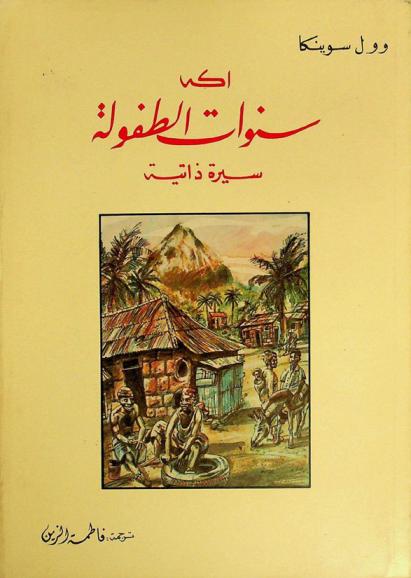
آكه سنوات الطفولة : سيرة ذاتية
هي عبارة عن سيرة ذاتية مبهجة كتبها سوينكا بأسلوب أخاذ ورشيق وتحكي قصة طفولته وصباه قبل وأثناء الحرب العالمية الثانية في مدينة \"آكه\" بغرب نيجيريا بحيث يصعب على من كانوا في عمره أن يكبروا دون أن يتذكروا كل شيء أولئك الذين شاء لهم أن ينشأوا في تلك البيئة وذلك المكان متعدد الثقافات. يكتب المؤلف واضعا أفكاره بين ورق أعماله وأنت أيها القارئ يجب عليك أن تكتشف هذه الأفكار والتى في معظم أحوالها لا تخرج عن كونها فكرة إنسانية عامة، ويعتبر هذا شأن المبدعين الذين يتجاوزون بيئتهم وشخصيتهم إلى رؤية أبعد وإلى آفاق أكثر شمولا.
BOOK

Leave the Dead Some Room to Dance: Postcolonial Founding and the Problem of Inheritance in Wole Soyinka’s A Dance of the Forests
In this essay, I examine Nigerian playwright Wole Soyinka’s A Dance of the Forests in order to think through political founding. Viewing founding from the postcolonial context, I explore how members of a political community negotiate among the multiple pasts that continue to affect them, and what kind of institutions and actors are best equipped to pursue this critical part of the founding project. Situating Soyinka’s account against competing narratives of the postcolonial condition, I demonstrate how he uses Yoruba philosophy and cosmology to reframe the challenges and potentials of founding, and I illustrate how political actors should respond to these by adopting the role of “citizen-artists” who can learn from past struggles and overcome their overwhelming legacies. Read as a dramatic intervention into Nigerian democratic politics and as a work of political theory, A Dance offers a lens through which to interrogate founding within and beyond the postcolony.
Journal Article


Wole Soyinka’s Christian Moment, 1958–1965
Wole Soyinka publicly broke from his parents’ faith in early adolescence, yet his anti-Christian stance was not fully realized until his early thirties. Thus, a rich religious dialogue animates the first eight years of his artistic career, 1958–1965. In works from these years (during which Nigeria gained its independence), Soyinka keenly observes and insightfully images Christianity yet holds it at a distance. Soyinka’s changing religious outlook is examined through three works from this period: Camwood on the Leaves, The Interpreters , and The Road . Actions suggesting that he was gradually letting go of his inherited Christian values are also explored.
Journal Article

Some Early Soyinka Letters
Among the papers of James Simmons held at the Rose Library of Emory University are nine letters he received from Wole Soyinka as well as one from Soyinka’s British partner, Barbara Dixon, both of whom had been his classmates at Leeds University in the mid-1950s. The letters cover Soyinka’s activities from July 29, 1958, a year after he had graduated from Leeds, until January 13, 1960, just after he returned to Nigeria. During this period Soyinka had worked as a broadcaster for the BBC, been a play reader for the Royal Court Theatre, and a teacher in London schools. He also travelled to Paris seeking employment as a singer. Much of this time he and Barbara were under financial pressure, and their relationship eventually broke up a year after their child had been born. These letters and others like them from later years in his life yield vital information for Soyinka’s future biographers.
Journal Article