
Catalogue Search | MBRL


Are you sure you want to remove the book from the shelf?

{{itemTitle}}
1,562,931
result(s) for
"womens"
Sort by:

Among Women across Worlds
In Among Women across Worlds, Suzy Kim explores the transnational connections between North Korean women and the global women's movement. Asian women, especially communists, are often depicted as victims of a patriarchal state. Kim challenges this view through extensive archival research, revealing that North Korean women asserted themselves from the late 1940s to 1975, before the Korean War began and up to the UN's International Women's Year. Kim centers on North Korea and the \"East\" to present a new genealogy of the global women's movement. Women of the Korean Democratic Women's Union (KDWU), part of the global left women's movement led by the Women's International Democratic Federation (WIDF), argued that family and domestic issues should be central to both national and international debates. They highlighted the connections between race, nationality, sex, and class in systems of exploitation. Their intersectional program proclaimed \"no peace without justice,\" \"the personal is the political,\" and \"women's rights are human rights,\" long before Western activists adopted these ideas. Among Women across Worlds uncovers movements and ideas foundational to today's era.
eBook

Me, not you
What violence can we do, in the name of fighting sexual violence? This book presents a critique of #MeToo and similar Anglo-American campaigns. These campaigns are dominated by self-described ‘nasty women’, who refuse to be silent and compliant and who name and shame perpetrators in the media. These women also tend to be privileged and white. The book argues that mainstream feminism filters righteous anger about gender inequality through race and class supremacy. This turns ‘me, too’ into ‘me, not you’: an exclusive focus on white women’s pain and protection, and a desire for power and control sated through criminal punishment or institutional discipline. Punitive systems tend to disproportionately target marginalised people, who become collateral damage of the white feminist ‘war machine’. It is also a short step from sacrificing marginalised people to seeing them as enemies, which happens in campaigns against the sex industry and transgender inclusion. In this reactionary feminism, ‘me, not you’ refers to hoarding resources, policing borders and shutting doors. The book concludes that to tackle these dynamics white feminists need to reach towards a more intersectional, connected and abolition-focused politics, taking their lead from feminists of colour and other marginalised people.
eBook
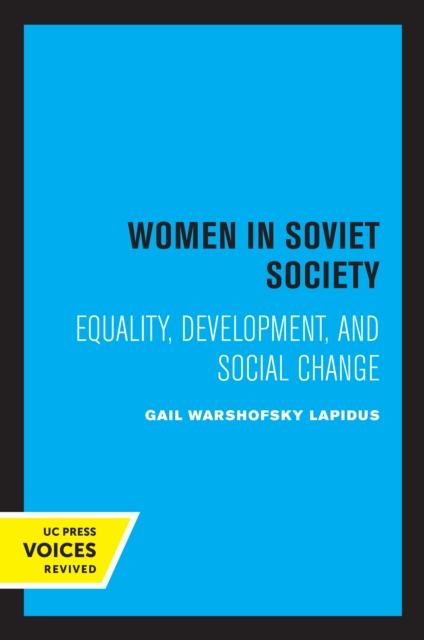
Women in Soviet Society
Women in Soviet Society: Equality, Development, and Social Change reframes one of the twentieth century's most sweeping social experiments: the promise--and limits--of Soviet sexual equality. Gail Warshofsky Lapidus moves beyond celebratory claims and simple indictments to offer a developmental account of how women's roles were mobilized to serve state-building, industrialization, and political consolidation. Anchored in Tocqueville's \"politics of equality\" and engaging Marxist, Leninist, and psychoanalytic debates, Lapidus tracks the tension between revolutionary ideals and institutional realities: the Zhenotdel's early activism; legal \"engineering\" around marriage, divorce, and abortion; the Stalinist synthesis that re-centered family authority while accelerating female labor-force participation; and postwar \"affirmative action, Soviet-style\" in protection laws, childcare, and education. The result is a nuanced portrait of gains and trade-offs--expanded access to schooling and work coupled with occupational segregation, wage penalties, and the enduring \"double burden\" created by underbuilt services and persistent domestic expectations. Structured with exceptional clarity, the book maps women's changing positions across economy, polity, and family, and then situates Soviet experience in comparative perspective. Chapters examine sectoral employment patterns, vertical stratification, and earnings; women's representation in Soviets, the Party, and the elite; demographic trends in marriage, divorce, fertility; and the policy reassessments that recast women alternately as productive and reproductive resources. Lapidus's core argument--that Leninist development instrumentalized equality while also enabling real social mobility--yields a balanced \"balance sheet\" of achievements and dilemmas. Drawing on law, policy, statistics, and contemporary debates,
she shows how modernization, ideological imperatives, and cultural continuities co-produced contradictory outcomes. For scholars of gender, Soviet studies, and comparative development, Women in Soviet Society offers a definitive, empirically grounded analysis that restores complexity to a case too often reduced to slogan or cautionary tale. This title is part of UC Press's Voices Revived program, which commemorates University of California Press's mission to seek out and cultivate the brightest minds and give them voice, reach, and impact. Drawing on a backlist dating to 1893, Voices Revived makes high-quality, peer-reviewed scholarship accessible once again using print-on-demand technology. This title was originally published in 1978. Many titles in the Voices Revived program are also newly available as ebooks, offered at a discounted price to support wider access to scholarly work.
eBook
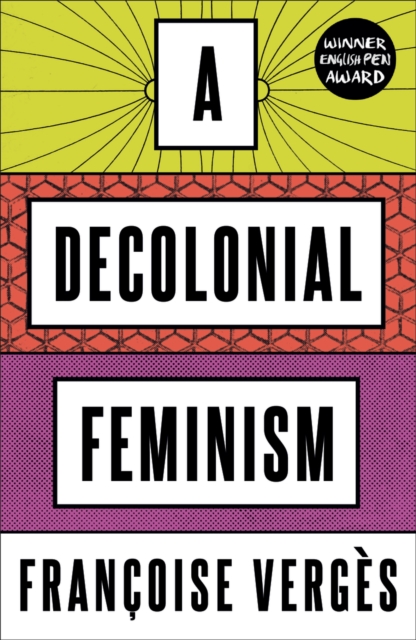
A Decolonial Feminism
***Winner of an English PEN Award 2021*** For too long feminism has been co-opted by the forces they seek to dismantle. In this powerful manifesto, Francoise Verges argues that feminists should no longer be accomplices of capitalism, racism, colonialism and imperialism: it is time to fight the system that created the boss, built the prisons and polices women’s bodies. A Decolonial Feminism grapples with the central issues in feminist debates today: from Eurocentrism and whiteness, to power, inclusion and exclusion. Delving into feminist and anti-racist histories, Verges also assesses contemporary activism, movements and struggles, including #MeToo and the Women's Strike. Centring anticolonialism and anti-racism within an intersectional Marxist feminism, the book puts forward an urgent demand to free ourselves from the capitalist, imperialist forces that oppress us.
eBook

Gender, State, and Medicine in Highland Ecuador
In 1921 Matilde Hidalgo became the first woman physician to graduate from the Universidad Central in Quito, Ecuador. Hidalgo was also the first woman to vote in a national election and the first to hold public office.Author Kim Clark relates the stories of Matilde Hidalgo and other women who successfully challenged newly instituted Ecuadorian state programs in the wake of the Liberal Revolution of 1895. New laws, while they did not specifically outline women's rights, left loopholes wherein women could contest entry into education systems and certain professions and vote in elections. As Clark demonstrates, many of those who seized these opportunities were unattached women who were socially and economically disenfranchised.Political and social changes during the liberal period drew new groups into the workforce. Women found novel opportunities to pursue professions where they did not compete directly with men. Training women for work meant expanding secular education systems and normal schools. Healthcare initiatives were also introduced that employed and targeted women to reduce infant mortality, eradicate venereal diseases, and regulate prostitution.Many of these state programs attempted to control women's behavior under the guise of morality and honor. Yet highland Ecuadorian women used them to better their lives and to gain professional training, health care, employment, and political rights. As they engaged state programs and used them for their own purposes, these women became modernizers and agents of change, winning freedoms for themselves and future generations.
eBook

Militarized Humanitarianism Meets Carceral Feminism: The Politics of Sex, Rights, and Freedom in Contemporary Antitrafficking Campaigns
Over the past decade, abolitionist feminist and evangelical Christian activists have directed increasing attention toward the “traffic in women” as a dangerous manifestation of global gender inequalities. Despite renowned disagreements around the politics of sex and gender, these groups have come together to advocate for harsher penalties against traffickers, prostitutes’ customers, and nations deemed to be taking insufficient steps to stem the flow of trafficked women. In this essay, I argue that what has served to unite this coalition of “strange bedfellows” is not simply an underlying commitment to conservative ideals of sexuality, as previous commentators have offered, but an equally significant commitment to carceral paradigms of justice and to militarized humanitarianism as the preeminent mode of engagement by the state. I draw upon my ongoing ethnographic research with feminist and evangelical antitrafficking movement leaders to argue that the alliance that has been so efficacious in framing contemporary antitrafficking politics is the product of two historically unique and intersecting trends: a rightward shift on the part of many mainstream feminists and other secular liberals away from a redistributive model of justice and toward a politics of incarceration, coincident with a leftward sweep on the part of many younger evangelicals toward a globally oriented social justice theology. In the final section of this essay, I consider the resilience of these trends given a newly installed and more progressive Obama administration, positing that they are likely to continue even as the terrain of militarized humanitarian action shifts in accordance with new sets of geopolitical interests.
Journal Article

Democratic Backsliding and the Instrumentalization of Women's Rights in Turkey
This article examines the instrumentalization of women's rights and the transformation of the gender rights regime in the context of democratic backsliding in Turkey. I show how the Islamically rooted Justice and Development Party governments and their allies used women's rights in constructing authoritarian rule and promoting a conservative gender agenda. The governing elites had different needs at different political stages and instrumentalized women's rights to meet those needs. First, they needed to legitimize their rule in a secular context, so they expanded liberal laws on women's rights. Second, in the process of backsliding, they sought to construct and legitimize their conservative ideology, so they reinterpreted existing laws to promote conservative goals. Finally, they wanted to mobilize conservative women in support of the newly authoritarian regime, so they built new institutions and marginalized existing women's NGOs. The article contributes to the literature on regime types and gender rights by shifting the focus from regime type to regime change.
Journal Article

Inflammation, Cholesterol, Lipoprotein(a), and 30-Year Cardiovascular Outcomes in Women
Measurement of low-density lipoprotein cholesterol, high-sensitivity C-reactive protein, and lipoprotein(a) predicted the 30-year cardiovascular disease risk among women enrolled in the Women’s Health Study.
Journal Article

Health care decision making autonomy of women from rural districts of Southern Ethiopia: a community based cross-sectional study
Millions of women have little health care decision making autonomy in many cultures and tribes. African women are often perceived to have little participation in health care decisions. However, little has been investigated to identify factors contributing to decision making autonomy. Hence, it is important to obtain information on the contributing factors of decision making autonomy and disparities across different socio-cultural contexts.
A cross-sectional study was conducted in Wolaita and Dawro zones, Southern Ethiopia from February to March 2015. A total of 967 women were selected through multistage sampling. A survey was administered face-to-face through an interview format. EpiData v1.4.4.0 and SPSS version 20 were used to enter and analyze data, respectively. Proportions and means were used to describe the study population. Variables with
-value <0.2 in bivariate analysis were selected for multivariable regression. Finally, variables with
-value <0.05 in multivariable logistic regressions were identified as independent predictors. Odds ratios along with confidence intervals were used to determine the presence of association.
It was determined that 58.4% of women have autonomy, while 40.9% of study participants' health care decisions were made by their husbands. The husband's education (adjusted odds ratio [AOR] =1.91 [1.10, 3.32]), wealth index (AOR =0.62 [0.42, 0.92]), age (AOR =2.42 [1.35, 4.32] and AOR =7 [3.45, 14.22]), family size (AOR =0.53 [0.33, 0.85] and AOR =0.42 [0.23, 0.75]), and occupation (AOR =1.66 [1.14, 2.41]), were predictors of health care decision making autonomy.
Even though every woman has the right to participate in her own health care decision making, more than two fifths of them have no role in making health care decisions about their own health. Husbands play a major role in making health care decisions about their wives. A comprehensive strategy needs to be implemented in order to empower women, as well as to challenge the traditional male dominance. Special attention has to be given to women living in rural areas in order to reduce their dependency through education and income generating activities.
Journal Article

FAMILY VIOLENCE AND FOOTBALL: THE EFFECT OF UNEXPECTED EMOTIONAL CUES ON VIOLENT BEHAVIOR
We study the link between family violence and the emotional cues associated with wins and losses by professional football teams. We hypothesize that the risk of violence is affected by the \"gain-loss\" utility of game outcomes around a rationally expected reference point. Our empirical analysis uses police reports of violent incidents on Sundays during the professional football season. Controlling for the pregame point spread and the size of the local viewing audience, we find that upset losses (defeats when the home team was predicted to win by four or more points) lead to a 10% increase in the rate of at-home violence by men against their wives and girlfriends. In contrast, losses when the game was expected to be close have small and insignificant effects. Upset wins (victories when the home team was predicted to lose) also have little impact on violence, consistent with asymmetry in the gain-loss utility function. The rise in violence after an upset loss is concentrated in a narrow time window near the end of the game and is larger for more important games. We find no evidence for reference point updating based on the halftime score.
Journal Article