Asset Details
Do you wish to reserve the book?

TRAC 2000

Hey, we have placed the reservation for you!
By the way, why not check out events that you can attend while you pick your title.

Oops! Something went wrong.
Looks like we were not able to place the reservation. Kindly try again later.
Are you sure you want to remove the book from the shelf?
TRAC 2000

Do you wish to request the book?
TRAC 2000
Please be aware that the book you have requested cannot be checked out. If you would like to checkout this book, you can reserve another copy

We have requested the book for you!
Your request is successful and it will be processed during the Library working hours. Please check the status of your request in My Requests.
Oops! Something went wrong.
Looks like we were not able to place your request. Kindly try again later.
eBook
TRAC 2000
2017
Overview
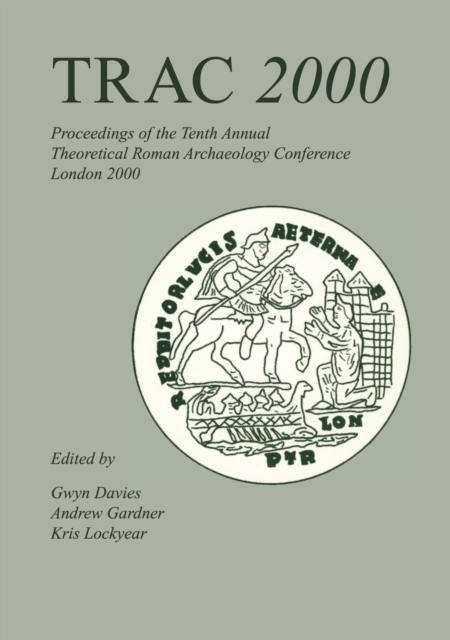
Thirteen papers on Roman archaeology from the 10th TRAC conference in London. The tenth Theoretical Roman Archaeology Conference was held in April 2000, at the Institute of Archaeology. As the confernce was diveded into five different sessions. In the opening session, Representing Romans the methodology of portraying the Romans to the wider world was expolored. Hunter and Clarke's paper outline the challenge of designing appropiate gallery displays for the new National Museum of Scotland whereas Grew, discusses the development of Roman London. Fincham's paper discusses the threat of overwheling military intervention by the imperial ower in colonial negotiations. Issues of ethnicity, gender, class and occupation within the later Roman army are addressed here. Green's paper presents an important discussion of hte nature of human/stag hybrids in iron Age and Gallo-Roman iconography and Hawkes presents an anlysis of differential foodways, preparing and serving meals encountered in Roman Britain. Carr considers the role of body decoration and grooming, arguing that individuals in different areas of south eastern Roman Britain made different cultureal choices to structure their ethnic identities. The final set of papers focused on Constructing Chrildhood in the Roman World reconsidering some long-standing truisms regarding the status and treatment of children in the Roman context. Pearce's examines Roman infant burial and what role religion plays in burial cerimony.