Asset Details
Do you wish to reserve the book?

Visions of the Future

Hey, we have placed the reservation for you!
By the way, why not check out events that you can attend while you pick your title.

Oops! Something went wrong.
Looks like we were not able to place the reservation. Kindly try again later.
Are you sure you want to remove the book from the shelf?
Visions of the Future

Do you wish to request the book?
Visions of the Future
Please be aware that the book you have requested cannot be checked out. If you would like to checkout this book, you can reserve another copy

We have requested the book for you!
Your request is successful and it will be processed during the Library working hours. Please check the status of your request in My Requests.
Oops! Something went wrong.
Looks like we were not able to place your request. Kindly try again later.
eBook
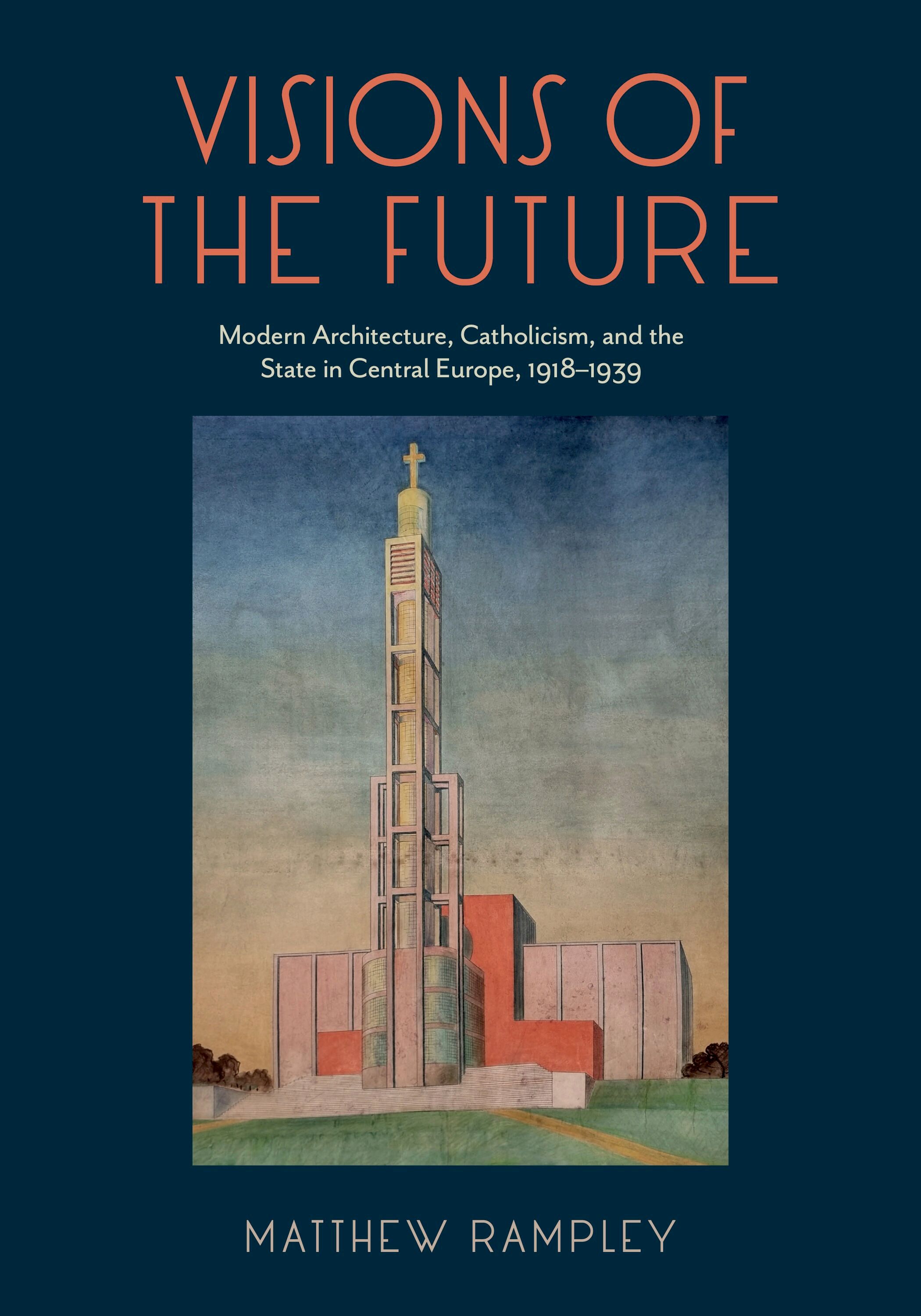
Visions of the Future
2025
Overview
Some of the most striking examples of modernist architecture are churches, yet they have seldom been subject to extended critical analysis. In this book, Matthew Rampley provides just such an analysis, focusing on the Catholic Church in interwar Austria, Czechoslovakia, and Hungary. A powerful institution in the Habsburg Empire, the Catholic Church continued to be a central social, political, and cultural agent after 1918, working in alliance with political parties and national governments to promote visions of a new national culture. As a result, church building took on an important ideological and political function. Rampley’s study is set against the backdrop of two interrelated issues: the role of architecture in the Catholic Church’s response to an increasingly secular modernity, and church architecture as part of the Church’s attempts to shape social and political life in the states that emerged after the collapse of Austria-Hungary. Rampley also examines the aesthetic, cultural, and political contexts that informed architectural projects, including the conflict between Catholicism and social democracy, the embrace of fascism, Catholic theories of technology, and discourses of regionalism and ruralism. In bringing to light an untold chapter in the history of modern architecture, this book also engages in methodological reflection on the implications of the study of modern church architecture for the historiography of modernism. This book will appeal to students and scholars of architectural history, religious and political history, and interwar Central European history.
Publisher
Penn State University Press,Pennsylvania State University Press
Subject
20th century, c 1900 to c 1999
/ Architecture and nationalism
/ Architecture: religious buildings
/ ART / History / Modern (late 19th Century to 1945)
/ Austria Czechoslovakia Hungary
/ building program, Catholic modernism
/ c 1500 onwards to present day
/ Catholic Church and the state
/ Catholic church buildings-Europe, Central-History-20th century
/ Catholic Church-Europe, Central-History-20th century
/ Church architecture-Europe, Central-History-20th century
/ Early 20th century c 1900 to c 1950
/ History
/ Modern movement (Architecture)-Europe, Central
/ The Arts
ISBN
0271100109, 9780271100104, 0271099399, 9780271099392