
Asset Details
Do you wish to reserve the book?

State-building in Kazakhstan

Hey, we have placed the reservation for you!
By the way, why not check out events that you can attend while you pick your title.

Oops! Something went wrong.
Looks like we were not able to place the reservation. Kindly try again later.
Are you sure you want to remove the book from the shelf?
State-building in Kazakhstan

Do you wish to request the book?
State-building in Kazakhstan
Please be aware that the book you have requested cannot be checked out. If you would like to checkout this book, you can reserve another copy

We have requested the book for you!
Your request is successful and it will be processed during the Library working hours. Please check the status of your request in My Requests.
Oops! Something went wrong.
Looks like we were not able to place your request. Kindly try again later.
eBook
State-building in Kazakhstan
2018
Overview
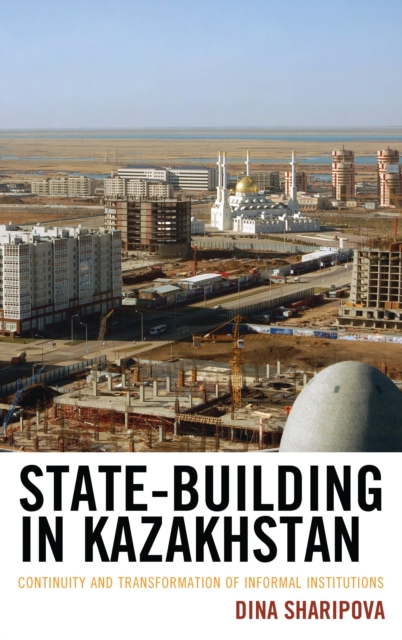
This book challenges the conventional wisdom that informal institutions—networks, clientelism, and connections—have to disappear in modern societies due to liberalization of the economy, rapid urbanization, and industrialization. The case of Kazakhstan shows that informal reciprocal institutions continue to play an important role in people’s everyday lives. Liberalization of the economy and state retrenchment from the social sphere decreased the provision of public goods and social support to the population in the post-independence period. Limited access to state benefits has, in turn, stimulated people’s engagement in informal reciprocal relations. The author investigates informal channels and mechanisms people use to gain access to quality public goods—education, housing, and healthcare. Comparing the Soviet and post-Soviet periods, the author shows that people are more likely to rely on family networks and clientelist relations rather than on help from the state to obtain scarce resources. The book provides an important contribution to the literature on informal institutions and explains the relationship between a formal welfare state and informal reciprocity.
Publisher
Lexington Books,Bloomsbury Publishing USA
Subject
ISBN
9781498540575, 1498540562, 9781498540568, 1498540570


