
Asset Details
Do you wish to reserve the book?

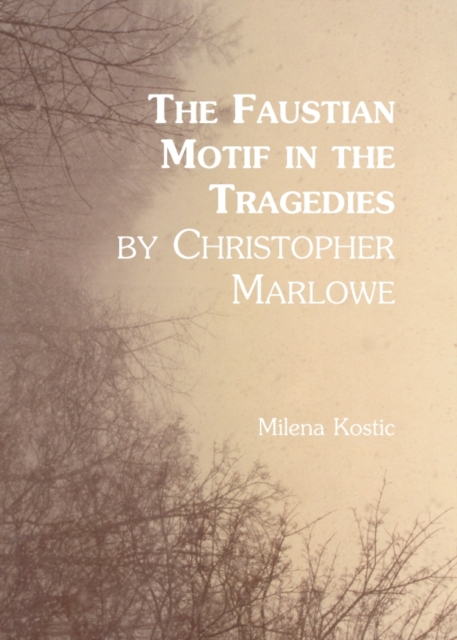
The Faustian Motif in the Tragedies by Christopher Marlowe

Hey, we have placed the reservation for you!
By the way, why not check out events that you can attend while you pick your title.

Oops! Something went wrong.
Looks like we were not able to place the reservation. Kindly try again later.
Are you sure you want to remove the book from the shelf?
The Faustian Motif in the Tragedies by Christopher Marlowe

Do you wish to request the book?
The Faustian Motif in the Tragedies by Christopher Marlowe
Please be aware that the book you have requested cannot be checked out. If you would like to checkout this book, you can reserve another copy

We have requested the book for you!
Your request is successful and it will be processed during the Library working hours. Please check the status of your request in My Requests.
Oops! Something went wrong.
Looks like we were not able to place your request. Kindly try again later.
eBook
The Faustian Motif in the Tragedies by Christopher Marlowe
2013,2014
Overview
The Faustian Motif in the Tragedies by Christopher Marlowe discusses the argument that the pact with demonic forces, and/or its consequences, is a motif explored not only in Doctor Faustus, but in Marlowe's other plays as well (Tamburlaine the Great, Dido, Queen of Carthage, The Jew of Malta). The book sets out to explore the way Marlowe explained this process, from play to play, in psychological and cultural terms, and to demonstrate its relevance for modern man and his culture.The text is divided into the Introduction and four main parts, each focusing on a particular aforementioned play by Marlowe. The book does not follow the actual chronological order in which these plays are supposed to have been written, not because it is uncertain, but for the obvious reason suggested by the nature of the theme: the text begins with Dr. Faustus because it is the only way to introduce and discuss the possible symbolic meanings of the act of selling one's soul to the Devil. It ends with The Jew of Malta because in the world of Marlowe's Malta - closest perhaps to our own in its mindless pursuit of profit - the major protagonists no longer have any soul to lose or to renounce.The method used in the book is wide-ranging and eclectic: besides relying on some permanently valid ideas of Humanist criticism, the book also offers insights into the views of the New Critics, particularly their requirement of the close reading of the literary works chosen for examination. Their approach is combined here with that of the New Historicists, who provided a corrective to the New Critic's formalism by insisting on the importance of taking into consideration the historical and cultural context the work belongs to.The book will appeal to both scholars and students interested in the field of the English Renaissance literature, and also to a wider reading audience keen on
observing, detecting and understanding the cultural processes equally relevant for the history of the English Renaissance period and present-day Western society.
Publisher
Cambridge Scholars Publishing
Subject
ISBN
9781443849500, 1443849502


