Asset Details
Do you wish to reserve the book?

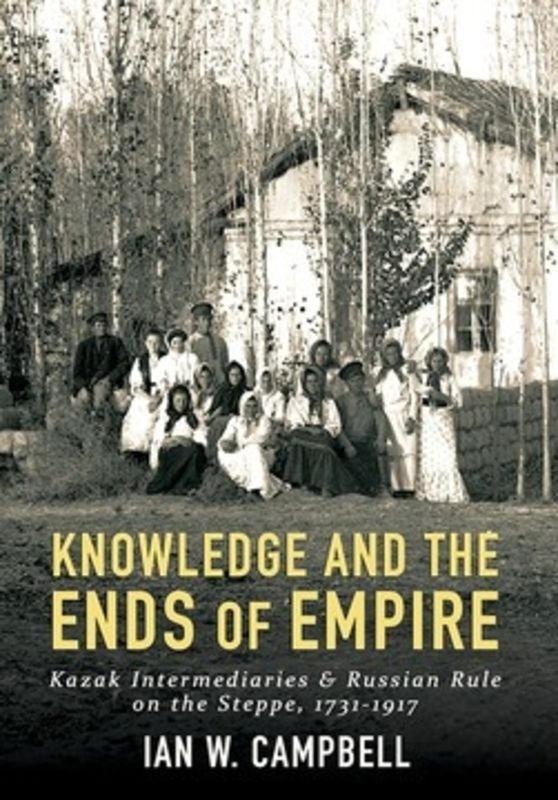
Knowledge and the Ends of Empire

Hey, we have placed the reservation for you!
By the way, why not check out events that you can attend while you pick your title.

Oops! Something went wrong.
Looks like we were not able to place the reservation. Kindly try again later.
Are you sure you want to remove the book from the shelf?
Knowledge and the Ends of Empire

Do you wish to request the book?
Knowledge and the Ends of Empire
Please be aware that the book you have requested cannot be checked out. If you would like to checkout this book, you can reserve another copy

We have requested the book for you!
Your request is successful and it will be processed during the Library working hours. Please check the status of your request in My Requests.
Oops! Something went wrong.
Looks like we were not able to place your request. Kindly try again later.
eBook
Knowledge and the Ends of Empire
2017
Overview
In Knowledge and the Ends of Empire, Ian W. Campbell investigates the connections between knowledge production and policy formation on the Kazak steppes of the Russian Empire. Hoping to better govern the region, tsarist officials were desperate to obtain reliable information about an unfamiliar environment and population. This thirst for knowledge created opportunities for Kazak intermediaries to represent themselves and their landscape to the tsarist state. Because tsarist officials were uncertain of what the steppe was, and disagreed on what could be made of it, Kazaks were able to be part of these debates, at times influencing the policies that were pursued.Drawing on archival materials from Russia and Kazakhstan and a wide range of nineteenth-century periodicals in Russian and Kazak, Campbell tells a story that highlights the contingencies of and opportunities for cooperation with imperial rule. Kazak intermediaries were at first able to put forward their own idiosyncratic views on whether the steppe was to be Muslim or secular, whether it should be a center of stock-raising or of agriculture, and the extent to which local institutions needed to give way to imperial institutions. It was when the tsarist state was most confident in its knowledge of the steppe that it committed its gravest errors by alienating Kazak intermediaries and placing unbearable stresses on pastoral nomads. From the 1890s on, when the dominant visions in St. Petersburg were of large-scale peasant colonization of the steppe and its transformation into a hearth of sedentary agriculture, the same local knowledge that Kazaks had used to negotiate tsarist rule was transformed into a language of resistance.
Publisher
Cornell University Press
Subject
ISBN
1501700790, 9781501700798, 1501707892, 9781501707896, 9781501707902, 1501707906