
Asset Details
Do you wish to reserve the book?

Dangerous trade

Hey, we have placed the reservation for you!
By the way, why not check out events that you can attend while you pick your title.

Oops! Something went wrong.
Looks like we were not able to place the reservation. Kindly try again later.
Are you sure you want to remove the book from the shelf?
Dangerous trade

Do you wish to request the book?
Dangerous trade
Please be aware that the book you have requested cannot be checked out. If you would like to checkout this book, you can reserve another copy

We have requested the book for you!
Your request is successful and it will be processed during the Library working hours. Please check the status of your request in My Requests.
Oops! Something went wrong.
Looks like we were not able to place your request. Kindly try again later.
eBook
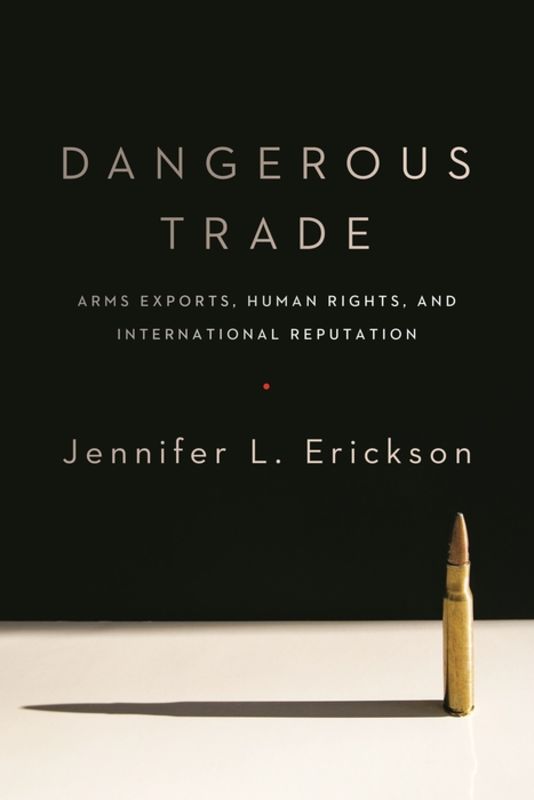
Dangerous trade
2015
Overview
In 2013, the United Nations approved the Arms Trade Treaty (ATT), which sets legally binding standards to regulate global arms exports. This groundbreaking treaty reflects a growing concern that small and major conventional arms play a significant role in perpetuating human rights violations, conflict, and societal instability worldwide. While many countries once staunchly opposed shared export controls and their perceived threat to political and economic autonomy, they are now beginning to embrace numerous agreements, such as the ATT and the EU Code of Conduct. Jennifer L. Erickson explores the reasons top arms-exporting democracies have put aside past sovereignty, security, and economic worries in favor of humanitarian arms transfer controls, and she follows the early effects of this about-face on export practice. She begins with a brief history of failed modern arms-export control initiatives and then tracks arms transfer trends over time. Pinpointing the normative shifts in the 1990s that put humanitarian arms control on the table, she reveals that these states committed to these policies out of concern for their international reputations. She also highlights how arms-trade scandals threaten domestic reputations and thus help improve compliance. Using statistical data and interviews conducted in France, Germany, Belgium, the United Kingdom, and the United States, Erickson challenges existing IR theories of state behavior, while providing insight into the role of reputation as a social mechanism and the importance of government transparency and accountability in generating compliance with new norms and rules.
Publisher
Columbia University Press
Subject
ISBN
9780231539036, 0231539037, 0231170963, 9780231170963


