Asset Details
Do you wish to reserve the book?

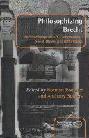
Brecht and Political Theatre

Hey, we have placed the reservation for you!
By the way, why not check out events that you can attend while you pick your title.

Oops! Something went wrong.
Looks like we were not able to place the reservation. Kindly try again later.
Are you sure you want to remove the book from the shelf?
Brecht and Political Theatre

Do you wish to request the book?
Brecht and Political Theatre
Please be aware that the book you have requested cannot be checked out. If you would like to checkout this book, you can reserve another copy

We have requested the book for you!
Your request is successful and it will be processed during the Library working hours. Please check the status of your request in My Requests.
Oops! Something went wrong.
Looks like we were not able to place your request. Kindly try again later.

eBook
Brecht and Political Theatre
2006
Overview
This production history of The Mother provides substantial new insights into Bertolt Brecht’s theatre and drama, his impact on political theatre, and the relationship between text, performance, and politico-cultural context. As the only play which Brecht staged in the Weimar Republic, during his exile, and in the GDR, The Mother offers a unique opportunity to compare his theatrical practice in contrasting settings and at different points in his career. Through detailed analysis of original archival evidence, Bradley shows how Brecht became far more sensitive to his spectators’ political views and cultural expectations, even making major tactical concessions in his 1951 production at the Berliner Ensemble. These compromises indicate that his ‘mature’ staging should not be regarded as definitive, for it was tailored to a unique and delicate situation. The Mother has appealed strongly to politically committed theatre practitioners both in and beyond Germany. By exploiting the text’s generic hybridity and the interplay between Brecht’s ‘epic’ and ‘dramatic’ elements, directors have interpreted it in radically different ways. So although Brecht’s 1951 production stagnated into an affirmative GDR heritage piece, post-Brechtian directors have used The Mother to promote their own political and theatrical concerns, from anti-authoritarian theatre to reflections on the legacies of state Socialism. Their ideological and theatrical subversion have helped Brecht’s text to outlive the political system that it came to uphold.
Publisher
Clarendon Press,Oxford University Press,Oxford University Press, Incorporated
Subject
/ Brecht, Bertolt, 1898-1956 -- Dramatic production
/ Brecht, Bertolt, 1898-1956 -- Stage history
/ Brecht, Bertolt, 1898-1956. Mutter
/ Literary Studies (20th Century onwards)
/ Literary studies: from c 1900
/ Literatures of Germanic languages
/ Mutter
/ Political plays, German -- History and criticism
/ Theater
ISBN
0191536776, 9780191536779, 0199286582, 9780199286584