
Asset Details
Do you wish to reserve the book?

The loss of sadness : how psychiatry transformed normal sorrow into depressive disorder

Hey, we have placed the reservation for you!
By the way, why not check out events that you can attend while you pick your title.

Oops! Something went wrong.
Looks like we were not able to place the reservation. Kindly try again later.
Are you sure you want to remove the book from the shelf?
The loss of sadness : how psychiatry transformed normal sorrow into depressive disorder

Do you wish to request the book?
The loss of sadness : how psychiatry transformed normal sorrow into depressive disorder
Please be aware that the book you have requested cannot be checked out. If you would like to checkout this book, you can reserve another copy

We have requested the book for you!
Your request is successful and it will be processed during the Library working hours. Please check the status of your request in My Requests.
Oops! Something went wrong.
Looks like we were not able to place your request. Kindly try again later.
eBook
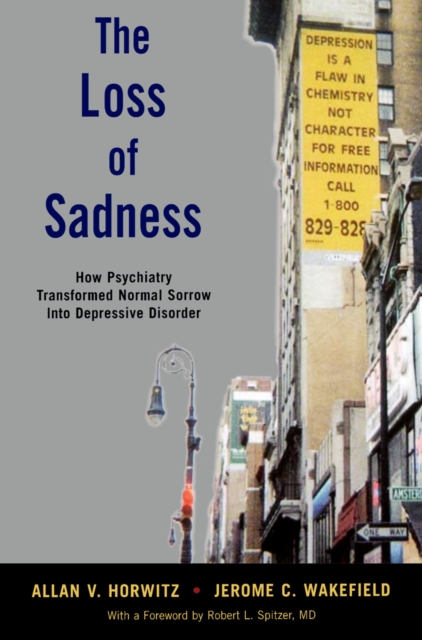
The loss of sadness : how psychiatry transformed normal sorrow into depressive disorder
2007
Overview
The Loss of Sadness argues that the increased prevalence of major depressive disorder is due not to a genuine rise in mental disease, but to the way that normal human sadness has been 'pathologised' since 1980. That year saw the publication of the landmark third edition of The Diagnostic and Statistical Manual of Mental Disorders (DSM-III), which has since become a dominant force behind our current understanding of mental illness overall. As concerns at least major depression, the authors argue that the DSM's definition of the condition is too broad and that as a result virtually all research and clinical approaches to the condition have been based on a flawed understanding about it. The social, political, and scientific implications of this are far-reaching - from the overselling of antidepressants to treat ordinary sadness, as Big Pharma exploits the DSM for its own purposes; to intrusive and expensive depression screening programs at all levels of society, as well-meaning but misguided initiatives translate the DSM into simple terms to catch any whiff of depressive pathology in our midst; and funded research into the 'epidemic' of depression, which advances the field very litttle and the public even less. Ultimately, the definition of depression that is in operation today has formed the basis for an entire system of social control (e.g. community-wide screening initiatives, intrusive public health policy) that benefits psychiatry, primary care providers, and the pharmaceutical and insurance industries by turning everyone else into a potential consumer of services, needed or not. The authors do recognise that depression is a devastating illness that affects some people. Their chief concern is with the use of this diagnosis as a catch-all for anyone who has experienced sadness for more than a few weeks at a time. The result is a pointed yet nuanced critique of modern psychiatry that will stir controversy of the sort that will reacquaint us with sadness as a primary human emotion and that could productively influence the way that depression the actual illness is characterised in the future.
Publisher
Oxford University Press,Oxford University Press, Incorporated
Subject
ISBN
9780195313048, 0195313046


