Asset Details
Do you wish to reserve the book?

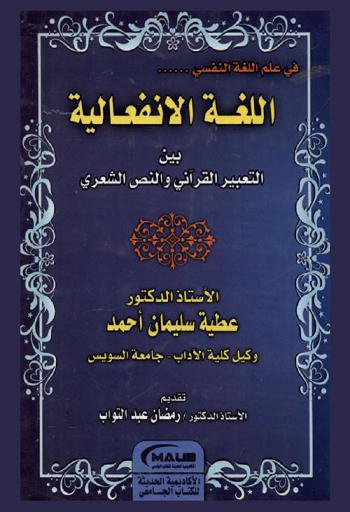
The Conceptualization of the Evil-Commanding Self in the Quran within the Frame of the Conceptual Metaphor Theory

Hey, we have placed the reservation for you!
By the way, why not check out events that you can attend while you pick your title.

Oops! Something went wrong.
Looks like we were not able to place the reservation. Kindly try again later.
Are you sure you want to remove the book from the shelf?
The Conceptualization of the Evil-Commanding Self in the Quran within the Frame of the Conceptual Metaphor Theory

Do you wish to request the book?
The Conceptualization of the Evil-Commanding Self in the Quran within the Frame of the Conceptual Metaphor Theory
Please be aware that the book you have requested cannot be checked out. If you would like to checkout this book, you can reserve another copy

We have requested the book for you!
Your request is successful and it will be processed during the Library working hours. Please check the status of your request in My Requests.
Oops! Something went wrong.
Looks like we were not able to place your request. Kindly try again later.

Journal Article
The Conceptualization of the Evil-Commanding Self in the Quran within the Frame of the Conceptual Metaphor Theory
2025
Overview
The study aims to investigate how the concept self (i.e nfis) is metaphorically conceptualized in the Quran within the framework of the Conceptual Metaphor Theory (CMT). The research limits itself to the concept of the Evil-Commanding Self (al-nafis al-'ammārah bil-soū) in Chapter Two (Surah Al- Bagarah) as a sample. The researcher applies a descriptive and an analytical method using data from Quranic verses where the term self is used. The data is analyzed basically to cognize how the term self relates to the construction within which it is positioned in particular, and the structure of the verse in general. The researcher found thirteen verses where self is described as commanding evil. The verses were grouped under nine general concepts (i.e. betrayal, deceiving, contradictory, neglectful, hypocritical, unjust, envy, cheaply sold self, etc.). It is found that caring for and talking about human self in the Quranic text is not arbitrary, but it has always been cognized as a power that resides inside people as a source of their actions and movements. Furthermore, it is also found that the way the term self is perceived reflects basic and universal human experiences as well as cognitive capacities. In doing so, the study contributes to a deeper comprehension of the human psyche and its significance in religious and ethical contexts.
Publisher
جامعة عين شمس - كلية الآداب
Subject