Asset Details
Do you wish to reserve the book?

Art and Intimacy

Hey, we have placed the reservation for you!
By the way, why not check out events that you can attend while you pick your title.

Oops! Something went wrong.
Looks like we were not able to place the reservation. Kindly try again later.
Are you sure you want to remove the book from the shelf?
Art and Intimacy

Do you wish to request the book?
Art and Intimacy
Please be aware that the book you have requested cannot be checked out. If you would like to checkout this book, you can reserve another copy

We have requested the book for you!
Your request is successful and it will be processed during the Library working hours. Please check the status of your request in My Requests.
Oops! Something went wrong.
Looks like we were not able to place your request. Kindly try again later.
eBook
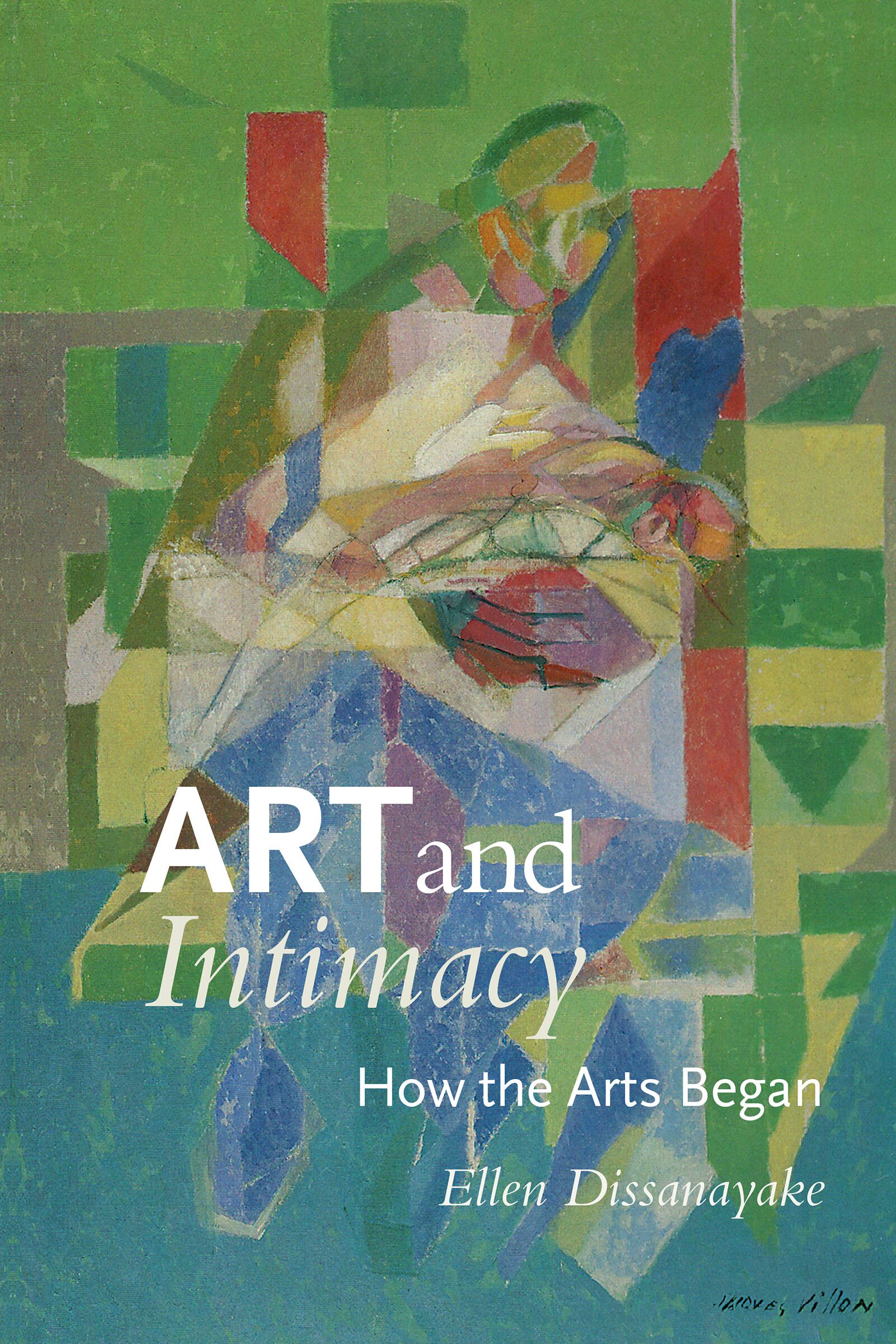
Art and Intimacy
2024
Overview
To Ellen Dissanayake, the arts are biologically evolved propensities of human nature: their fundamental features helped early humans adapt to their environment and reproduce themselves successfully over generations. In Art and Intimacy she argues for the joint evolutionary origin of art and intimacy, what we commonly call love.It all begins with the human trait of birthing immature and helpless infants. To ensure that mothers find their demanding babies worth caring for, humans evolved to be lovable and to attune themselves to others from the moment of birth. The ways in which mother and infant respond to each other are rhythmically patterned vocalizations and exaggerated face and body movements that Dissanayake calls rhythms and sensory modes.Rhythms and modes also give rise to the arts. Because humans are born predisposed to respond to and use rhythmic-modal signals, societies everywhere have elaborated them further as music, mime, dance, and display, in rituals which instill and reinforce valued cultural beliefs. Just as rhythms and modes coordinate and unify the mother-infant pair, in ceremonies they coordinate and unify members of a group.Today we humans live in environments very different from those of our ancestors. They used ceremonies (the arts) to address matters of serious concern, such as health, prosperity, and fecundity, that affected their survival. Now we tend to dismiss the arts, to see them as superfluous, only for an elite. But if we are biologically predisposed to participate in artlike behavior, then we actually need the arts. Even -- or perhaps especially -- in our fast-paced, sophisticated modern lives, the arts encourage us to show that we care about important things.
Publisher
University of Washington Press
Subject