
Asset Details
Do you wish to reserve the book?

Democracy Burning?

Hey, we have placed the reservation for you!
By the way, why not check out events that you can attend while you pick your title.

Oops! Something went wrong.
Looks like we were not able to place the reservation. Kindly try again later.
Are you sure you want to remove the book from the shelf?
Democracy Burning?

Do you wish to request the book?
Democracy Burning?
Please be aware that the book you have requested cannot be checked out. If you would like to checkout this book, you can reserve another copy

We have requested the book for you!
Your request is successful and it will be processed during the Library working hours. Please check the status of your request in My Requests.
Oops! Something went wrong.
Looks like we were not able to place your request. Kindly try again later.
eBook
Democracy Burning?
2023
Overview
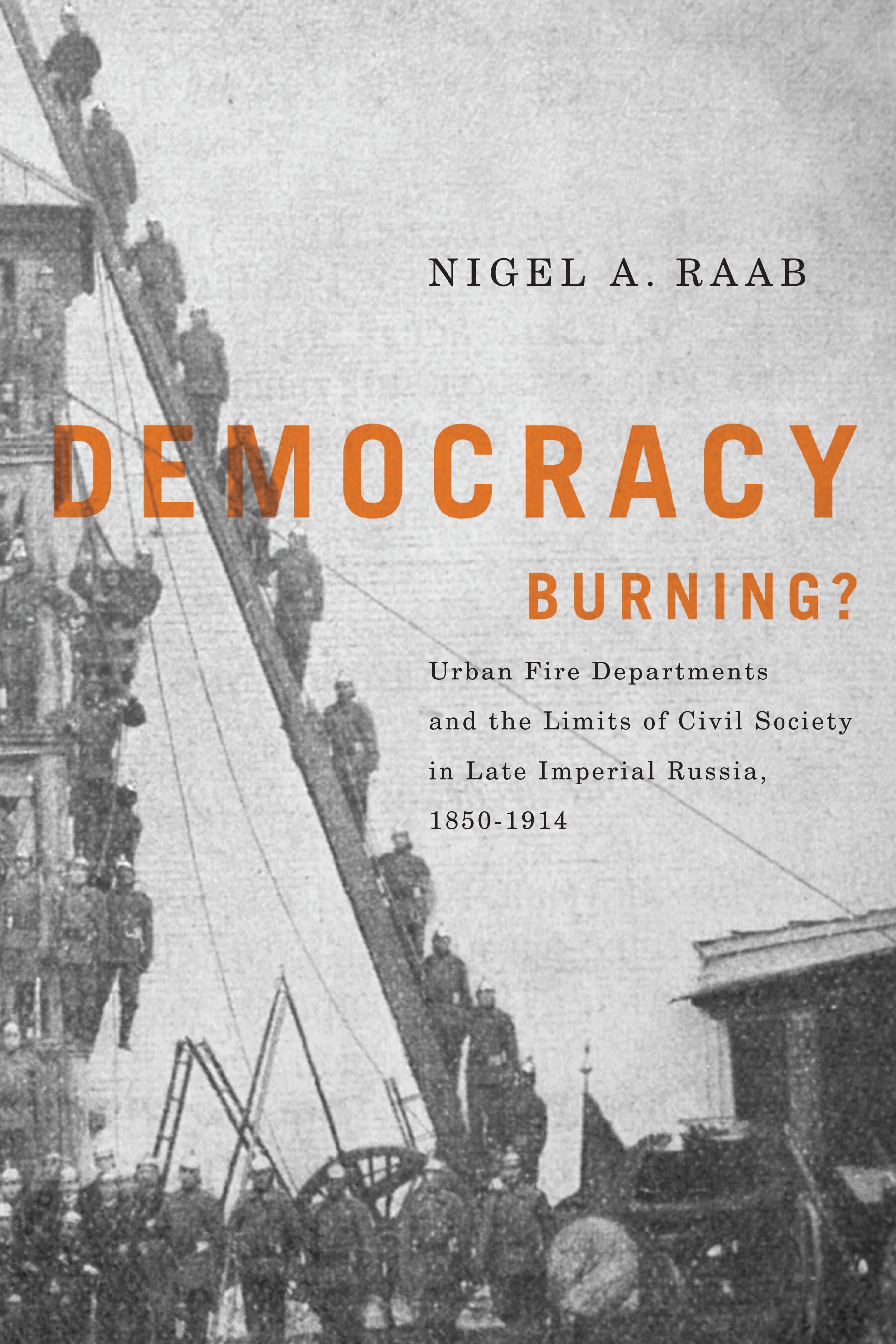
Nineteenth-century commentators often claimed that Russia burned to the ground every thirty years. In an empire whose cities were built of wood, firefighters had a visible presence throughout Russia's urban centres and became politically active across the country. Democracy Burning? studies the political, cultural, and social values of volunteer firefighters and reveals the ways in which their public organizations cooperated with the authoritarian state. Nigel Raab considers the important roles that nationalism, regionalism, militarism, photography, and civil society played in fire departments and challenges prevailing notions that volunteer organizations opposed the state. His analysis not only provides insights into questions about a nascent civic consciousness in the years leading to revolution but also reveals new and important information about other aspects of urban life. A skilled work of history and urban studies, Democracy Burning? forces us to rethink the way we consider large public organizations and their relation to authoritarian governments.
Publisher
McGill-Queen's University Press
Subject


