
Catalogue Search | MBRL


Are you sure you want to remove the book from the shelf?

{{itemTitle}}
12
result(s) for
"Allison Cavanagh"
Sort by:
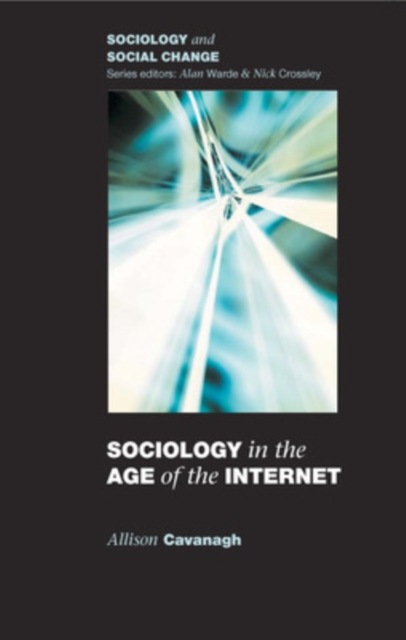
Sociology in the age of the Internet
This book provides a key to understanding the changes identified through an evaluation of the utility of new social theory by investigating the novelty of the Internet and setting the Internet in the context of communication histories.
eBook

Framing the riots
An analysis of commentary on the UK’s August 2011 riots reveals shifts in the way the media and politicians now construe concepts of youth, race, criminality and deprivation. By comparing the response to these events with that which followed the riots of 1981, these changes can be clarified and illuminated. This analysis reveals that discussions of ‘social problems’ exploited by ‘infiltrators’ (1981) have been replaced by notions of ‘pure criminality’ and ‘mob rule’. The implications of these changes for contemporary protest, and some ways in which the riots and other forms of protest can be related, are drawn out.
Journal Article
On the reception of Foucault
Much of the energy devoted to ‘resolving’ the structure–agency ‘dispute’ derives from particular readings of sociology’s founding fathers: Durkheim, Marx and Weber. The contemporary dominance of theorists such as Bourdieu, Giddens and Habermas, however, did not emerge seamlessly. There was no smooth transition in Anglophone sociology between the ‘structuralist’ Marxism of the early 1970s – as filtered through Antonio Gramsci (by the Birmingham Centre for Contemporary Cultural Studies) and Louis Althusser (in the sociology of education and ‘welfare’) – and today’s theoretical doldrums. Many sociologists used Michel Foucault’s ideas to supplement, and then replace, the left-structuralist consensus of the 1970s and
Book Chapter

eTrust: Forming Relationships in the Online World
Cavanagh reviews eTrust: Forming Relationships in the Online World edited by Karen S. Cook, Chris Snijders, Vincent Buskens, and Coye Cheshire.
Book Review

Epidemiology and characteristics of childhood glaucoma: results from the Dallas Glaucoma Registry
Few studies have provided epidemiological characteristics of childhood glaucoma in a large, multiethnic population. This information is important if we are to better screen for and characterize this specific type of glaucoma. In this study, we evaluate the characteristics of patients with childhood glaucoma, including glaucoma suspects, as identified through the Dallas Glaucoma Registry (DGR).
The DGR catalogs the characteristics of glaucoma patients seen at University of Texas Southwestern Medical Center, an academic tertiary referral center for a large, multiethnic, urban population in the United States. We analyzed these patients with respect to race, medical and surgical treatment, cup-to-disc ratio, intraocular pressure, and visual outcomes.
The study comprised 376 eyes of 239 childhood glaucoma patients, of whom 19% had primary congenital glaucoma, 4% had primary juvenile glaucoma, 45% had secondary glaucoma, and 31% were glaucoma suspects. Trauma and postsurgical aphakia were the most common causes for secondary glaucoma. Thirty-eight percent of patients were Hispanic, 30% were Caucasian, 21% were African American, 3% were Asian, and 9% were unknown or unreported. Male sex was more common at 56%. Of all eyes with glaucoma, 65% received surgical intervention while 70% required at least one medication for intraocular pressure control. Trabeculotomy and tube-shunt surgery were the most common surgeries performed. Of patients who could have Snellen visual acuity measured, glaucoma suspect eyes had the largest proportion of eyes (96%) with good visual acuity (better than 20/40) while primary congenital glaucoma eyes had the smallest proportion (41%) with good visual acuity. Secondary glaucoma eyes had the largest proportion of eyes (30%) with poor visual acuity (worse than count fingers).
The most common etiologies of childhood glaucoma were primary congenital glaucoma and secondary causes including trauma and postsurgical aphakia. A high proportion of glaucoma patients were of Hispanic background, reflecting the patient population studied. Trabeculotomy and tube-shunt surgery were the most common surgical interventions performed.
Journal Article
