
Catalogue Search | MBRL


Are you sure you want to remove the book from the shelf?

{{itemTitle}}
1,245
result(s) for
"Austin, Brian"
Sort by:

Paris Climate Agreement : beacon of hope
This book is open access under a CC BY 4.0 license. This volume presents an Empirical Model of Global Climate developed by the authors and uses that model to show that global warming will likely remain below 2, relative to preindustrial, throughout this century provided: a) both the unconditional and conditional Paris INDC commitments are followed; b) the emission reductions needed to achieve the Paris INDCs are carried forward to 2060 and beyond. The first section of the book provides a short overview of Earth's climate system, describing and contrasting climatic changes throughout the planet's history and anthropogenic changes post-Industrial Revolution. The second section describes the climate model developed by the authors (Canty et al., Atmospheric Chemistry and Physics, 2013) and contrasts the model with climate models used in the Intergovernmental Panel on Climate Change (IPCC) 2013 Report. Chapter 3 examines both the unconditional (i.e., firm commitments) and conditional Paris INDCs (commitments contingent on financial flow and/or technology transfer) through the lens of their climate model and concludes that if all of the Paris INDCs are followed, then they are indeed a beacon of hope for Earth's climate. The fourth part of the book offers a perspective of energy needs and subsequent emissions reductions required to meet the Paris temperature goals, illuminating challenges faced both in the developing world and the developed world. Throughout the book, easy-to-understand charts and graphics illustrate concepts. The scientific basis of Chapters 2 and 3 was first presented in a keynote session of the 96th Annual Meeting of the American Meteorological Society in January, 2016.
Book

The value of cultures to modern microbiology
Since the late nineteenth century, pure cultures have been regarded as the cornerstone of bacteriology. However, not all bacteria will multiply sufficiently to produce visible colonies on solid media; some cells will produce micro-colonies that are invisible to the naked eye. Moreover, the proportion of culturable cells that produce visible growth will vary according to the species and the state of the cells—are they actively growing or comparatively inactive? The latter have a poorer rate of recovery in terms of cultivability. It is unclear whether or not an individual colony is always derived from a single cell; it is possible that organisms in close proximity to each other may multiply and come together to produce single colonies. Then, the resultant growth will most certainly be derived from more than one initial cell. Although it is generally assumed that streaking and re-streaking on fresh media will purify any culture, there is evidence for microbial consortia interacting to form what appear to be single pure cultures. As so-called pure cultures underpin traditional microbiology, it is relevant to understand that the culture does not necessarily contain clones of identical bacteria, but that there may be variation in the genetic potential of the component cells, i.e. the cells are not homogeneous. Certainly, many bacteria change rapidly upon culturing, with some becoming bigger and less active. It is difficult to be sure if these changes reflect a loss or change of DNA or whether standard culturing methods select faster growing cells that are effectively not representative of the environment from which they were derived. These concepts are reviewed with an emphasis on bacterial fish pathogens.
Journal Article

Superman by Mark Millar
\"The Justice League of America and the military declare war on Superman! Starring Batman, Wonder Woman, Flash (Wally West), Green Lantern (Kyle Rayner), Martian Manhunter and more classic DC characters. Will Superman be able to end the war? Then, a genius weapons designer comes to the aid of Boss Moxie, creating an unbelievable menace in the form of a 50-foot robot lobster for the Man of Steel! Who saves Superman? In stories that predate his work on such hits as Kick-Ass, Wanted, The Authority and The Ultimates, now legendary scribe Mark Millar takes on the Man of Steel in this anthology collection of tales.)\"-- Provided by publisher.
Book

Vibrio harveyi: a serious pathogen of fish and invertebrates in mariculture
Vibrio harveyi
, which belongs to family
Vibrionaceae
of class
Gammaproteobacteria
, includes the species
V. carchariae
and
V. trachuri
as its junior synonyms. The organism is a well-recognized and serious bacterial pathogen of marine fish and invertebrates, including penaeid shrimp, in aquaculture. Diseased fish may exhibit a range of lesions, including eye lesions/blindness, gastro-enteritis, muscle necrosis, skin ulcers, and tail rot disease. In shrimp,
V. harveyi
is regarded as the etiological agent of luminous vibriosis in which affected animals glow in the dark. There is a second condition of shrimp known as
Bolitas negricans
where the digestive tract is filled with spheres of sloughed-off tissue. It is recognized that the pathogenicity mechanisms of
V. harveyi
may be different in fish and penaeid shrimp. In shrimp, the pathogenicity mechanisms involved the endotoxin lipopolysaccharide, and extracellular proteases, and interaction with bacteriophages. In fish, the pathogenicity mechanisms involved extracellular hemolysin (encoded by duplicate hemolysin genes), which was identified as a phospholipase B and could inactivate fish cells by apoptosis, via the caspase activation pathway.
V. harveyi
may enter the so-called viable but nonculturable (VBNC) state, and resuscitation of the VBNC cells may be an important reason for vibriosis outbreaks in aquaculture. Disease control measures center on dietary supplements (including probiotics), nonspecific immunostimulants, and vaccines and to a lesser extent antibiotics and other antimicrobial compounds.
Journal Article

Evidence On The Chronic Care Model In The New Millennium
Developed more than a decade ago, the Chronic Care Model (CCM) is a widely adopted approach to improving ambulatory care that has guided clinical quality initiatives in the United States and around the world. We examine the evidence of the CCM's effectiveness by reviewing articles published since 2000 that used one of five key CCM papers as a reference. Accumulated evidence appears to support the CCM as an integrated framework to guide practice redesign. Although work remains to be done in areas such as cost-effectiveness, these studies suggest that redesigning care using the CCM leads to improved patient care and better health outcomes.
Journal Article

Radio communications through rock strata – South African mining experience over 50 years
The pioneering work done in South Africa in developing radio communications technology for use underground in mines is summarised. Propagation took place, in the main, directly through the rock strata with incidental coupling into power cables, pipes, rails and other conductors. The research established the optimum frequencies for communications as well as the most appropriate antennas. Specialised radio equipment was developed for this task as constrained by the technology of the time. Size and weight were major constraints; ultimately, handheld equipment, using single-sideband modulation, was produced that functioned exceptionally well in numerous situations underground.
Journal Article

Selective Pressure of Antibiotic Pollution on Bacteria of Importance to Public Health
Background: Many bacteria of clinical importance survive and may grow in different environments. Antibiotic pollution may exert on them a selective pressure leading to an increase in the prevalence of resistance. Objectives: In this study we sought to determine whether environmental concentrations of antibiotics and concentrations representing action limits used in environmental risk assessment may exert a selective pressure on clinically relevant bacteria in the environment. Methods: We used bacterial inhibition as an assessment end point to link antibiotic selective pressures to the prevalence of resistance in bacterial populations. Species sensitivity distributions were derived for three antibiotics by fitting log-logistic models to end points calculated from minimum inhibitory concentration (MIC) distributions based on worldwide data collated by the European Committee on Antimicrobial Susceptibility Testing (EUCAST). To place bacteria represented in these distributions in a broader context, we performed a brief phylogenetic analysis. The potentially affected fraction of bacterial genera at measured environmental concentrations of antibiotics and environmental risk assessment action limits was used as a proxy for antibiotic selective pressure. Measured environmental concentrations and environmental risk assessment action limits were also directly compared to wild-type cut-off values. Results: The potentially affected fraction of bacterial genera estimated based on antibiotic concentrations measured in water environments is < 7%. We estimated that measured environmental concentrations in river sediments, swine feces lagoons, liquid manure, and farmed soil inhibit wildtype populations in up to 60%, 92%, 100%, and 30% of bacterial genera, respectively. At concentrations used as action limits in environmental risk assessment, erythromycin and ciprofloxacin were estimated to inhibit wild-type populations in up to 25% and 76% of bacterial genera. Conclusions: Measured environmental concentrations of antibiotics, as well as concentrations representing environmental risk assessment action limits, are high enough to exert a selective pressure on clinically relevant bacteria that may lead to an increase in the prevalence of resistance.
Journal Article
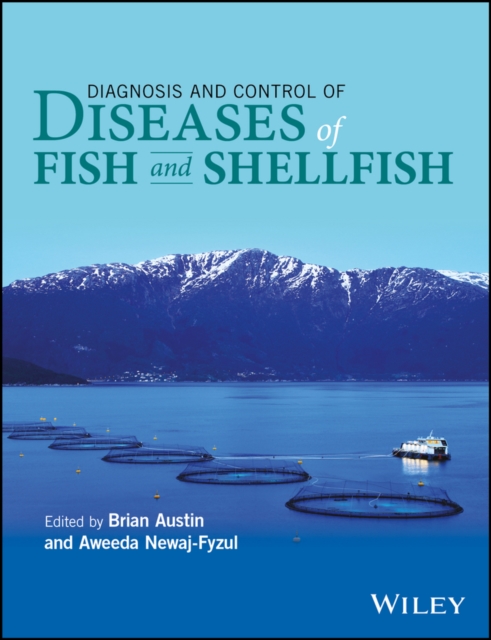
Diagnosis and Control of Diseases of Fish and Shellfish
There has been a continual expansion in aquaculture, such that total production is fast approaching that of wild-caught fisheries. Yet the expansion is marred by continued problems of disease. New pathogens emerge, and others become associated with new conditions. Some of these pathogens become well established, and develop into major killers of aquatic species. Diagnosis and Control of Diseases of Fish and Shellfish focuses on the diagnosis and control of diseases of fish and shellfish, notably those affecting aquaculture. Divided into 12 chapters, the book discusses the range of bacterial, viral and parasitic pathogens, their trends, emerging problems, and the relative significance to aquaculture. Developments in diagnostics and disease management, including the widespread use of serological and molecular methods, are presented. Application/dose and mode of action of prebiotics, probiotics and medicinal plant products used to control disease are examined, as well as the management and hygiene precautions that can be taken to prevent/control the spread of disease. This book will be a valuable resource for researchers, students, diagnosticians, veterinarians, fish pathologists and microbiologists concerned with the management of diseases of fish and shellfish.
eBook

Fermented medicinal herbs improve hematological and physiological profile of Striped catfish (Pangasi anodon hypophthalmus) version 3; peer review: 1 approved, 2 approved with reservations
This study sought to determine the effect of fermented medicinal herbs (FMH),
i.e. cutchery (
Kaempferia galanga), turmeric (
Curcuma longa) and curcuma (
Curcuma xanthorrhiza) in combination with molasses and probiotic drink (Yakult), administered orally on the hematological and physiological profile
of striped catfish (
Pangasi
a
nodon hypophthalmus). A complete randomized design (CRD) experiment was used with four levels of treatments, namely P0 (control), P1 (FMH 100 mL/kg), P2 (FMH 200 mL/kg) and P3 (FMH 300 mL/kg) of feed. The fish were kept in a farm in cages at 75 fish/m
3 and fed with the experimental diets for 60 days. The results revealed that FMH (P2) dietary administration improved hematological and physiological profile of catfish, i.e total erythrocytes of 2.81 x 10
6 cells/mm
3, hematocrit values of 39.00%, hemoglobin levels of 10.73 g/dL, total leukocytes of 11.41 x 10
4 cells/mm
3, blood glucose 97.33 mg/dL, and total serum protein 4.10 mg/dL compared to controls with 1.89 x 10
6 cells/mm
3, 32.33 %, g/dL, 9.67 x 10
4 cells/mm
3, 67.33 mg/dL, and total serum protein of 3.10 mg/dL, respectively. Moreover, the diet improved special growth rate, feed conversion ratio, feed efficiency and the survival rate of catfish. The hematological and physiological profile of catfish improvement are considered to be due to the content of secondary metabolites of FMH, namely curcuminoids, vitamin C, essential oils, tannins, and flavonoids, which trigger immunostimulation. The presence of curcuminoids provide an antioxidant effect on cell membranes reducing erythrocyte cell membrane damage due to oxidation. Similarly, flavonoids are natural antioxidants, which are credited with the ability of reducing free radicals and anti-free radicals.
Journal Article
Radio communications through rock strata - South African mining experience over 50 years
The pioneering work done in South Africa in developing radio communications technology for use underground in mines is summarised. Propagation took place, in the main, directly through the rock strata with incidental coupling into power cables, pipes, rails and other conductors. The research established the optimum frequencies for communications as well as the most appropriate antennas. Specialised radio equipment was developed for this task as constrained by the technology of the time. Size and weight were major constraints; ultimately, handheld equipment, using single-sideband modulation, was produced that functioned exceptionally well in numerous situations underground.
Journal Article