
Catalogue Search | MBRL


Are you sure you want to remove the book from the shelf?

{{itemTitle}}
2,420
result(s) for
"Bauer, Thomas"
Sort by:


Lobar or Sublobar Resection for Peripheral Stage IA Non–Small-Cell Lung Cancer
The increased detection of small-sized peripheral non-small-cell lung cancer (NSCLC) has renewed interest in sublobar resection in lieu of lobectomy.
We conducted a multicenter, noninferiority, phase 3 trial in which patients with NSCLC clinically staged as T1aN0 (tumor size, ≤2 cm) were randomly assigned to undergo sublobar resection or lobar resection after intraoperative confirmation of node-negative disease. The primary end point was disease-free survival, defined as the time between randomization and disease recurrence or death from any cause. Secondary end points were overall survival, locoregional and systemic recurrence, and pulmonary functions.
From June 2007 through March 2017, a total of 697 patients were assigned to undergo sublobar resection (340 patients) or lobar resection (357 patients). After a median follow-up of 7 years, sublobar resection was noninferior to lobar resection for disease-free survival (hazard ratio for disease recurrence or death, 1.01; 90% confidence interval [CI], 0.83 to 1.24). In addition, overall survival after sublobar resection was similar to that after lobar resection (hazard ratio for death, 0.95; 95% CI, 0.72 to 1.26). The 5-year disease-free survival was 63.6% (95% CI, 57.9 to 68.8) after sublobar resection and 64.1% (95% CI, 58.5 to 69.0) after lobar resection. The 5-year overall survival was 80.3% (95% CI, 75.5 to 84.3) after sublobar resection and 78.9% (95% CI, 74.1 to 82.9) after lobar resection. No substantial difference was seen between the two groups in the incidence of locoregional or distant recurrence. At 6 months postoperatively, a between-group difference of 2 percentage points was measured in the median percentage of predicted forced expiratory volume in 1 second, favoring the sublobar-resection group.
In patients with peripheral NSCLC with a tumor size of 2 cm or less and pathologically confirmed node-negative disease in the hilar and mediastinal lymph nodes, sublobar resection was not inferior to lobectomy with respect to disease-free survival. Overall survival was similar with the two procedures. (Funded by the National Cancer Institute and others; CALGB 140503 ClinicalTrials.gov number, NCT00499330.).
Journal Article

Nanointerferometric amplitude and phase reconstruction of tightly focused vector beams
Highly confined vectorial electromagnetic field distributions are an excellent tool for detailed studies in nano-optics, such as nonlinear microscopy
1
, advanced fluorescence imaging
2
,
3
or nanoplasmonics
4
,
5
. Such field distributions can be generated, for instance, by tight focusing of polarized light beams
6
,
7
,
8
,
9
. To guarantee high resolution in the investigation of objects with subwavelength dimensions, precise knowledge of the spatial distribution of the exciting vectorial field is of utmost importance. The full-field reconstruction methods presented to date involve, for example, complex near-field techniques
10
,
11
,
12
,
13
. Here, we demonstrate a simple and straightforward-to-implement measurement scheme and reconstruction algorithm based on the scattering signal of a single spherical nanoparticle as a field probe. We are able to reconstruct the amplitudes and relative phases of the individual focal field components with subwavelength resolution from a single scan measurement without the need for polarization analysis of the scattered light. This scheme has the potential to improve microscopy and nanoscopy techniques.
An easily implementable reconstruction scheme is demonstrated for determining the full vectorial amplitude and relative phase distributions of highly confined electromagnetic fields with subwavelength resolution from a single-scan measurement. This scheme will help improve microscopy and nanoscopy techniques.
Journal Article
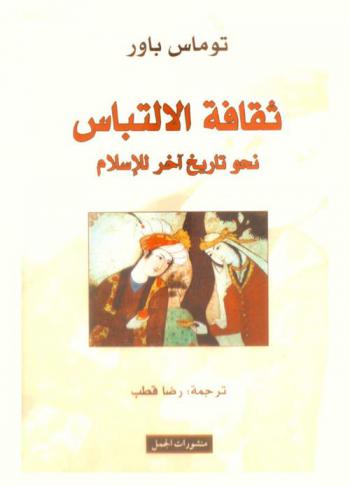
ثقافة الالتباس : نحو تاريخ آخر للإسلام
يتناول الكتاب بصفة خاصة تاريخا لقطوف من حضارة الإسلام، ويهتم من ناحية بالعالم الإسلامي الكلاسيكي المكتوب بالعربية من مصر حتى إيران في الفترة الممتدة من 900 م تقريبا حتى 1500 م، ومن ناحية أخرى بالحداثة في كلا القرنين الأخيرين، في هذا الإطار يوضح الكتاب كيف أن مجالات الحق والدين، واللغة والأدب، والتصورات حول السياسة والجنس، والسلوكيات تجاه الغرباء في العصر الكلاسيكي، كان يسودها القبول الرصين للتنوع وتعدد المعنى، ناهيك عن السعادة الغامرة بها، هذا التسامح الكبير مع التعدد تلاشى مرة أخرى تاركا الساحة لعدم تسامح مع التعدد الذي أصبح في يومنا هذا هائلا.
BOOK

Observation of optical polarization Möbius strips
Möbius strips are three-dimensional geometrical structures, fascinating for their peculiar property of being surfaces with only one \"side\"—or, more technically, being \"nonorientable\" surfaces. Despite being easily realized artificially, the spontaneous emergence of these structures in nature is exceedingly rare. Here, we generate Möbius strips of optical polarization by tightly focusing the light beam emerging from a q-plate, a liquid crystal device that modifies the polarization of light in a space-variant manner. Using a recently developed method for the three-dimensional nanotomography of optical vector fields, we fully reconstruct the light polarization structure in the focal region, confirming the appearance of Möbius polarization structures. The preparation of such structured light modes may be important for complex light beam engineering and optical micro- and nanofabrication.
Journal Article
Impact of Elevated Wall Temperatures on Nitrate Salt Stability in Thermal Energy Storage
Energy storage is vital for on-demand electricity generation from renewable sources like wind and solar. Besides employing batteries, retrofitting conventional fossil-fired power plants with thermal energy storage might present a highly cost-effective solution. State-of-the-art molten salt storage systems currently operate at a maximum temperature of 565 °C. At a higher permanent temperature, nitrate salts start to decompose. The actual wall temperatures of power components for heating, such as solar receivers and electrical heaters, may exceed temperature limits. To date, there is no clear threshold identified up to which heating surfaces in contact with nitrate salt can be operated without leading to the degradation of the salt, which is inevitably followed by increased corrosivity. In this study, possible mechanisms affecting the maximum permissible wall temperature of heating surfaces are identified. The local production of oxygen and nitrite at hot surfaces and its accumulation in the entire system is looked at in an experiment with 9.3 kg of nitrate salt. The effect of high wall temperatures on the evolution of oxygen and nitrite content over time is monitored and analyzed. Parametric studies with an experimentally validated physical model focusing on the nitrate/nitrite equilibrium reveal major influencing factors, with wall temperatures significantly exceeding current design limits. These findings potentially allow for more compact and cost-effective heating components. This work supports the advancement of high-temperature thermal energy storage systems essential for the scalability and economic competitiveness of renewable energy infrastructure.
Journal Article

A culture of ambiguity : an alternative history of Islam
\"Islamic cultures seem to be ideal examples of cultures dominated entirely by religious norms. But in this sense the modern understanding of Islam differs markedly from that of the classical period (i.e., the premodern until well into the nineteenth century). Whereas modern fundamentalist movements aim at the greatest possible legitimization of religious norms throughout the entire society and see this as being the most Islamic structure (and are confirmed in this view by the western public opinion of Islam), a glimpse at premodern Islamic cultural forms offer a much more complex picture. Already the extraction of norms from the authoritative texts reveals itself to be an exacting process of disambiguation that included several subjective processes and rational procedures. The fact that these procedures led to a juxtaposition of competing norms was widely accepted--see the much quoted prophet's hadith \"Difference of opinion is a mercy for my community.\" This kind of tolerance of ambiguity manifests itself not only in Islamic law but also in many other spheres of Islamic scholarship (for example, in Qur'an exegesis and in linguistics), in several literary genres, and also in the mentality of social conditions and of the people themselves, which included tolerance of religious minorities, sympathetic attitudes towards foreigners, and high social mobility). Symptomatic is also the considerably conflict-free coexistence of religious and secular discourses in classical Islamic culture, which stands in striking contrast to the inseparability of Islam and the worldly sphere postulated today. Under these specific conditions Islam was spared many of the crises of the Occident, but herein also lies an important cause of the current conflicts between Islam and the modern West. The collision of Islam with a culture that hardly knew such a tolerance of ambiguity and tended to reject it had to lead to a reformulation of the fundamentals of Islam in the form of ideologies that were more in conformance with modernity, which, in both their pro-western liberal form as well as in their Islamicist variation, are equally characterized by the rejection of their own cultural traditions. Beyond the investigation of cultural ambiguity in Islamic history, this interdisciplinary project tests out to what degree the investigation of the (in)tolerance of ambiguity allows relevant cultural-historical approaches to be established\"-- Provided by publisher.
Book
