
Catalogue Search | MBRL


Are you sure you want to remove the book from the shelf?

{{itemTitle}}
175
result(s) for
"Ben Wisner"
Sort by:
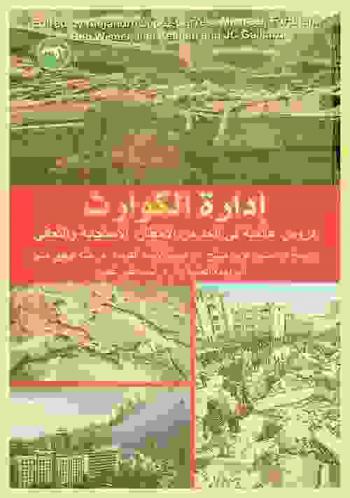

Five Years Beyond Sendai—Can We Get Beyond Frameworks?
The Sendai Framework for Disaster Risk Reduction 2015–2030 (SFDRR) and its implementation is evaluated after its first five years. A dozen questions that the author and a colleague used in their evaluation of the Hyogo Framework for Action 2005–2015 (HFA) are repeated. Improvements are noted in relation to possible coherence and alignment with other components of the Post-2015 Agenda, especially as regards climate change and urban disasters as well as the higher visibility of civil society and women, and also regarding the specificity of targets and monitoring of governments’ successes. Nevertheless, the overall conclusion is that both the HFA and the SFDRR fail to deal with root causes of disaster. A new, radically proactive leadership role is suggested for the United Nations Office for Disaster Risk Reduction in partnership with civil society in identifying and warning all engaged in Post-2015 Agenda activities of possible creation of new risk by agenda implementation activities, especially for the poor and already-marginalized.
Journal Article

Handbook of Hazards and Disaster Risk Reduction
The Handbook provides a comprehensive statement and reference point for hazard and disaster research, policy making, and practice in an international and multi-disciplinary context. It offers critical reviews and appraisals of current state of the art and future development of conceptual, theoretical and practical approaches as well as empirical knowledge and available tools.
Organized into five inter-related sections, this Handbook contains sixty-five contributions from leading scholars. Section one situates hazards and disasters in their broad political, cultural, economic, and environmental context. Section two contains treatments of potentially damaging natural events/phenomena organized by major earth system. Section three critically reviews progress in responding to disasters including warning, relief and recovery. Section four addresses mitigation of potential loss and prevention of disasters under two sub-headings: governance, advocacy and self-help, and communication and participation. Section five ends with a concluding chapter by the editors.
The engaging international contributions reflect upon the politics and policy of how we think about and practice applied hazard research and disaster risk reduction. This Handbook provides a wealth of interdisciplinary information and will appeal to students and practitioners interested in Geography, Environment Studies and Development Studies.
Ben Wisner is a retired Professor who has worked on the interface between disaster risk reduction and sustainable human development since 1966. He currently conducts research and advises institutions such as the Global Network of Civil Society for Disaster Reduction.
JC Gaillard is Senior Lecturer at the School of Environment of The University of Auckland, New Zealand.
Ilan Kelman is a Senior Research Fellow at the Center for International Climate and Environmental Research–Oslo (CICERO).
\"The take-home message is that to fully understand the implications of the worlds of hazards and disaster risk, people must better understand vulnerabilities and how they create the wicked problems of communities. Undoubtedly the most comprehensive book on these topics to date. Summing Up: Essential\" - CHOICE, August 2012
Foreword Salvano Briceño 1. Challenging Risk: We Offer the Reader a Left Foot Book The Editors Section I: Big Picture Views – Hazards, Vulnerabilities and Capacities 2. Introduction to Section I: Big Picture Views – Hazards, Vulnerabilities and Capacities The Editors 3. Framing Disaster: Theories and Stories Seeking to Understand Hazards, Vulnerability and Risk Ben Wisner, JC Gaillard and Ilan Kelman 4. Historical Concepts of Disasters and Risk Greg Bankoff 5. Politics of Disaster Risk Adolfo Mascarenhas and Ben Wisner 6. Human Rights, Disasters and State Obligations Claudine Haenni Dale and Jean Connolly Carmalt 7. Violent Conflict, Natural Hazards and Disaster Ben Wisner 8. Culture, Hazard and Disaster Kenneth Hewitt 9. Knowledge and Disaster Risk Reduction Jessica Mercer 10. Religious Interpretations of Disaster David Chester, Angus Duncan and Heather Sangster 11. Hazards and Disasters Represented in Film Greg Berger and Ben Wisner 12. Hazards and Disasters Represented in Music Bob Alexander 13. Hazard, Risk and Urbanisation Mark Pelling 14. Disaster Risk and Sustainable Development Chris Bacon Section II: Fine-Grained Views – Hazards, Vulnerabilities and Capacities 15. Introduction to Section II: Fine-Grained Views – Hazards, Vulnerabilities and Capacities The Editors 16. Data Sources on Hazards Julio Serje 17. Tools for Identifying Hazards Keiko Saito, Jane Strachan, Timothy Fewtrell, Nick Rosser, Susanna Jenkins, Aidan Slingsby and Katharine Haynes 18. Hazard, Risk and Climate Change David Simon 19. Coastal Storm Bas Jonkman, Herman Gerritsen and Marcel Marchand 20. Thunderstorm and Tornado David Etkin, Kaz Higuchi and George Platsis 21. Flood Hanna Schmuck 22. Drought Tom Smucker 23. Extreme Heat and Cold Sabrina McCormick 24. Wildfire Alexander Held 25. Landslide and other Mass Movements Danang Sri Hadmoko and Salvatore Engels-DiMauro 26. Earthquake Cinna Lomnitz and Ben Wisner 27. Tsunami Brian McAdoo 28. Volcanic Eruption Susanna Jenkins and Katharine Haynes 29. Soil Erosion and Contamination Salvatore Engels-DiMauro 30. Human Epidemic Chris Dibben 31. Livestock Epidemic Delia Grace and John McDermott 32. Plant Disease, Pests and Erosion of Biodiversity Pascal Girot 33. Hazards From Space Bill McGuire 34. Disability and Disaster David Alexander 35. Gender, Sexuality and Disaster Maureen Fordham 36. Children, Youth and Disaster Agnes Babugura 37. Elderly People and Disaster Ehren Ngo 38. Caste, Ethnicity, Religious Affiliation and Disaster JC Gaillard Section III: Preparedness and Response 39. Introduction to Section III: Preparedness and Response The Editors 40. Early Warning Principles and Systems Juan Carlos Villagran 41. Preparedness, Warning and Evacuation Philip Buckle 42. Emergency Management Principles Alejandro López-Carresi 43. From Damage and Needs Assessments to Relief Claude de Ville de Goyet 44. Health Care and Disaster Mark Keim and Jonathan Abrahams 45. Food Security and Disaster Ian Christoplos 46. Settlement and Shelter Reconstruction Manu Gupta 47. Psycho-Social Recovery Tamman Aloudat and Lene Christensen 48. Socio-Economic Recovery Rohit Jigyasu Section IV: Planning, Prevention and Mitigation 49. Introduction to Section IV: Planning, Prevention and Mitigation The Editors 50. International Planning Systems for Disaster Margaret Arnold 51. National Planning and Disaster Allan Lavell, JC Gaillard, Ben Wisner, Wendy Saunders and Dewald van Niekerk 52. Local Government and Disaster Geoff O’Brien, Mihir Bhatt, Wendy Saunders, JC Gaillard and Ben Wisner 53. Urban and Regional Planning and Disaster Cassidy Johnson 54. Financial Mechanisms for Disaster Risk Joanne Linnerooth-Bayer 55. Economic Development Policy and Disaster Risk Charlotte Benson 56. Protection of Infrastructure Ana Maria Cruz 57. Social Protection and Disaster Walt Peacock and Carla Prater 58. Livelihood Protection and Support and Disaster David Sanderson 59. Community Action and Disaster Zenaida Delica Willison and JC Gaillard 60. Civil Society and Disaster Martha Thompson 61. University Research’s Role in Reducing Disaster Risk Thea Hilhorst and Annelies Heijmans 62. Education and Disaster Emmanuel Luna 63. Media, Communication and Disaster Tim Radford and Ben Wisner 64. Participatory Action Research and Disaster Risk Mike McCall and Graciela Peters-Guari Section V: Conclusion 65. Challenging Risk: Has the Left Foot Stepped Forward? The Editors
eBook

Rethinking the interplay between affluence and vulnerability to aid climate change adaptive capacity
Affluence and vulnerability are often seen as opposite sides of a coin—with affluence generally understood as reducing forms of vulnerability through increased resilience and adaptive capacity. However, in the context of climate change and an increase in associated hazards and disasters, we suggest the need to re-examine this dynamic relationship—a complex association we define here as the Affluence–Vulnerability Interface (AVI). We review research in different national contexts to show how a more nuanced understanding of the AVI can (a) problematize the notion that increasing material affluence necessarily has a mitigating influence on social vulnerability, (b) extend our analysis of social vulnerability beyond low-income regions to include affluent contexts and (c) improve our understanding of how psychosocial characteristics influence people’s vulnerability. Finally, we briefly outline three methodological approaches that we believe will assist future engagement with the AVI.
Journal Article

Revisiting frameworks: Have they helped us reduce disaster risk?
Owing to the increasing impact of disasters worldwide, there is a recognised need for putting theory into relevant and effective practice in disaster risk reduction (DRR). Substantial research has been oriented on reducing loss of life, injury, livelihoods and infrastructure disruption. In this paper, we gathered the main insights derived from the reflections of the earlier work of authors or co-authors of frameworks for understanding disaster risk.
The findings add to our understanding of how bridging the gap between science and policymaking to manage disaster risk is shaped. This review showed evidence that disaster risk research and interaction among relevant DRR stakeholders have evolved. The degree of decisions, resource allocations and actions of state and non-state actors are influenced by applying such frameworks. However, limitations on resources in the policy-making spheres may require prioritisation but also new challenges in terms of responsibility, accountability and effective disaster risk governance.
Journal Article

DRR pioneers: interview with Ben Wisner
PurposeThe transcript provides an overview of the development of the field and changing paradigms in this regard.Design/methodology/approachThe transcript was developed in the context of a United Nations Office for Disaster Risk Reduction (UNDRR) project on the history of disaster risk reduction (DRR).FindingsThe transcript traces the initial discussions of how the At Risk book was conceived and presents new dimensions and challenges within the field.Originality/valueThe interview highlights the importance of the need to document the transitions, developments and paradigm changes in the field over time.
Journal Article

The Routledge Handbook of Hazards and Disaster Risk Reduction
The Handbook provides a comprehensive statement and reference point for hazard and disaster research, policy making, and practice in an international and multi-disciplinary context. It offers critical reviews and appraisals of current state of the art and future development of conceptual, theoretical and practical approaches as well as empirical knowledge and available tools.
Organized into five inter-related sections, this Handbook contains sixty-five contributions from leading scholars. Section one situates hazards and disasters in their broad political, cultural, economic, and environmental context. Section two contains treatments of potentially damaging natural events/phenomena organized by major earth system. Section three critically reviews progress in responding to disasters including warning, relief and recovery. Section four addresses mitigation of potential loss and prevention of disasters under two sub-headings: governance, advocacy and self-help, and communication and participation. Section five ends with a concluding chapter by the editors.
The engaging international contributions reflect upon the politics and policy of how we think about and practice applied hazard research and disaster risk reduction. This Handbook provides a wealth of interdisciplinary information and will appeal to students and practitioners interested in Geography, Environment Studies and Development Studies.
eBook

Quelques grammes d’histoire pour des tonnes de riz : produire plus suffira-t-il à éradiquer la faim dans le monde ?
Cet article interroge les conclusions de la récente conférence de Rome sur la sécurité alimentaire mondiale tenue en juin 2008. Il remet en cause les stratégies qui visent à accroître les investissements dans le domaine de l'agriculture pour faire face à la faim dans le monde. La discussion s'appuie sur des exemples africains et asiatiques. This article questions the conclusions of the recent world food security conference held in Rome in June 2008. It challenges the strategy which aims at increasing investments in the agricultural sector as a response to widespread hunger. The discussion relies on examples from Africa and Asia.
Journal Article
Lets talk about you
Purpose
The purpose of this paper is to report on the creation of innovative methods for engaging in conversations about everyday risk.
Design/methodology/approach
A range of methods from conventional survey research to open-ended, semi-structured conversations and focus groups were used in the series of studies that serve as the subject of this meta-study. The meta-study uses participant observation, key informant interviews and project reports to narrate and evaluate the evolution of Frontline as an action planning, monitoring, advocacy and research tool.
Findings
The Views from the Frontline (VFL) methods began as the bottom-up mirror of a top-down monitoring approach used by the United Nations (Hyogo Framework for Action Monitor). Limitations of such bottom up monitoring led to creation of guidelines for formalising local knowledge resulting from actions – Action at the Frontline (AFL) and, later, Frontline, a flexible tool for eliciting experiences of everyday risk. The earlier VFL monitoring approach had shared outsiders’ assumptions about the nature of the “problem” and limited the degree to which local residents could express their own experiences and priorities.
Originality/value
Extensive use of this suite of methods has shown that civil society organisations are fully capable of conducting credible research when properly supported and motivated. Use of these methods has so far provided strong support for policy advocacy at the global scale, has had moderate success in liaison with national policy makers and slow but promising results as a learning/action tool at the local scale. Frontline has as yet untapped potential as a resource for academic research.
Journal Article