
Catalogue Search | MBRL


Are you sure you want to remove the book from the shelf?

{{itemTitle}}
10
result(s) for
"Bruce, Emily author"
Sort by:
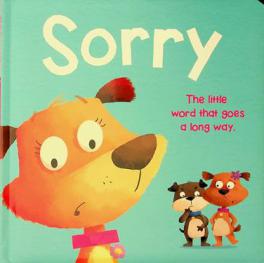
Sorry : the little word that goes a long way
The animals in this story are learning that everyone needs to say \"sorry\" sometimes. Luckily, they all have wise friends to show them how.
Book

Experimental design
Gives a complete presentation of the design and analysis of experiments in approximately one half the space of competing books. With only the modest prerequisite of a basic (noncalculus) statistics course, this text is appropriate for the widest possible audience.
eBook

Star bound : a beginner's guide to the American space program, from Goddard's rockets to Goldilocks planets and everything in between
\"Star Bound is a book for anyone who wants to learn about the American space program but isn't sure where to start. First and foremost, it's a history-short, sweet, and straightforward. From rocketry pioneer Robert Goddard's primitive flight tests in 1926 through the creation of NASA, from our first steps on the moon to construction of the International Space Station and planning a trip to Mars, readers will meet the people and projects that have put the United States at the forefront of space exploration. Along the way, they'll learn: How the United States beat the Soviets to the moon Why astronauts float in space (Hint: It's not for lack of gravity!) How fast rockets have to go to stay in orbit around Earth How we can \"look back in time\" through a space telescope With technology evolving and humanity's understanding of the universe expanding, we are entering an exciting period of space exploration. Authored by two veteran space writers with unique insights into the topic, Star Bound offers up the story of Americans in space with a focus on the cultural and societal contexts of the country's most important missions rather than engineering and technical minutiae. Vibrant, positive, and humorous, Star Bound is packed with facts and stories for novice space fans. And sprinkled in with the history are lists of the greatest space songs, books, movies, and more-all designed to make space exploration accessible to even the casual reader\"-- Provided by publisher.
BOOK

Strong States, Weak Schools: The Benefits and Dilemmas of Centralized Accountability
Why are governments pushing to centrally regulate teaching and learning at this historical moment? Do these accountability mechanisms succeed in boosting student achievement? How are teachers responding to top-down rules, incentives, and the recasting of what knowledge counts inside school? This book answers these questions.
eBook

Regression analysis
Concise and innovative book that gives a complete presentation of applied regression analysis in approximately one-half the space of competing books. With only the modest prerequisite of a basic (non-calculus) statistics course, this text is appropriate for the widest possible audience.
eBook
The facial nerve
A contemporary text on facial nerve diseases \"
The Facial Nerve is a concise yet comprehensive guide to the pathology, diagnosis, and treatment of facial nerve disorders. Addressing important facial nerve problems such as congenital disorders and Bell's palsy, this text provides physicians with the most up-to-date medical and surgical treatment recommendations.
Key Features:
* Pairs clinical practice guidelines with relevant research on the chapter topic
* Includes a discussion of rehabilitation for patients with permanent facial paralysis
* Contains full-color, high-quality illustrations and photographs throughout
* Written by premier authorities on the management of facial nerve diseases
This book succinctly covers the essential aspects of facial nerve management and is a must-have reference for otolaryngologists, neurosurgeons, neurologists, facial plastic surgeons, ophthalmologists, and physical therapists caring for patients with facial nerve disorders.
eBook

The Risk Pivot
The last decade has seen a revolution in global energy. First, we saw explosive growth in demand from Asia's rising powers, which fueled fears about scarcity and conflict. But we've also seen an American revolution in technology and markets, resulting in a dramatic increase in sup-ply. This is strengthening America's hand in the world-but it's not without complications. There are major security consequences of these shifts. Among the most consequential are China and India, Asia's emerging giants, which are increasingly exposed to political risks associated with energy risks, as well as the energy flows, pivoting to Asia. Meanwhile the great powers struggle to balance their need for fossil fuels with a mounting effort to tackle climate change. The top powers, and the United States above all, face a stra-tegic choice: whether to use energy as a weapon of geopolitics, or as a tool of a stable order.
CONTENTS
Introduction
1. The President and the King-Key Messages of the Book
2. The Energy Revolutions-A Primer
Geopolitics in Flux-The Players
3. Choices-Scenarios, and the Choice the Powers Confront
4. Rough Seas Ahead-The Great Powers' Search for Energy Security
Globalization and Complexity-The Problems
5. Transition in the Gulf
6. The Turbulent Middle
7. Fragile States
8. The Russian Problem
9. Connections-from Pipelines to Politics
Governance-The Partners
10. An Emerging System of Global Energy Governance
11. Leadership Choices
eBook

American Statesmanship
This book, much needed in our public discourse, examines
some of the most significant political leaders in American
history.
With an eye on the elusive qualities of political greatness,
this anthology considers the principles and practices of diverse
political leaders who influenced the founding and development of
the American experiment in self-government. Providing both breadth
and depth, this work is a virtual \"who's who\" from the founding to
modern times. From George Washington to Frederick Douglass and
Elizabeth Cady Stanton to FDR and Ronald Reagan, the book's
twenty-six chapters are thematically organized to include a brief
biography of each subject, his or her historical context, and the
core principles and policies that led to political success or
failure. A final chapter considers the rhetorical legacy of Bill
Clinton, George W. Bush, Barack Obama, and Donald Trump. Nearly all
readers agree that statesmanship makes a crucial difference in the
life of a nation and its example is sorely needed in America today.
These concise portraits will appeal to experts as well as history
buffs. The volume is ideal for leadership and political science
classroom use in conjunction with primary sources.
Contributors: Kenneth L. Deutsch, Gary L. Gregg II, David
Tucker, Sean D. Sutton, Bruce P. Frohnen, Stephanie P. Newbold,
Phillip G. Henderson, Michael P. Federici, Troy L. Kickler,
Johnathan O'Neill, H. Lee Cheek, Jr., Carey Roberts, Hans
Schmeisser, Joseph R. Fornieri, Peter C. Myers, Emily Krichbaum,
Natalie Taylor, Jean M. Yarbrough, Christopher Burkett, Will
Morrisey, Elizabeth Edwards Spalding, Patrick J. Garrity, Giorgi
Areshidze, William J. Atto, David B. Frisk, Mark Blitz, Jeffrey
Crouch, and Mark J. Rozell.
eBook

Realizing the promise of 21st-century education
Keys to building a new generation of courses and schoolsWhile many futurists tout the value of teaching students 21st-century skills, bridging the concept with the practice is best accomplished by professional educators. Authors Bruce Joyce and Emily Calhoun know how to actualize the critical reforms that enable schools to prepare students for today's workforce. They outline a clear vision for advancing school reform that emphasizes infusing technology across the curriculum. Specific steps include: Providing technology access to all students to promote equity and engagement; Developing hybrid courses that prepare students to meet 21st-century needs; Designing professional development that connects technology to teaching; Improving literacy instruction; Changing the high school paradigm; Involving teachers, parents, and community members in school leadershipWe have a tremendous opportunity to bridge education with the information and communications technology revolution. Joyce and Calhoun show how to deliver on the promise of a 21st-century education by teaching students the skills they need to achieve in their careers and in life.
eBook

Strategic supervision : a brief guide for managing social service organizations
Offering social service agency leaders the necessary skills for day-to-day supervision practiceThis guide presents readers with a practical overview to the most important aspects of supervisory leadership and personnel management within the social work environment. Strategic Supervision serves as a primer for new or soon-to-be supervisors on the types of knowledge, skills and abilities necessary for effective supervisory practice. It also offers more seasoned practitioners a concise compendium of checklists and tools that can be utilized selectively.Key Features
eBook