
Catalogue Search | MBRL


Are you sure you want to remove the book from the shelf?

{{itemTitle}}
89
result(s) for
"Bundy, Donald A. P."
Sort by:


The role of water, sanitation and hygiene interventions in reducing soil-transmitted helminths: interpreting the evidence and identifying next steps
The transmission soil transmitted helminths (STH) occurs
via
ingestion of or contact with infective stages present in soil contaminated with human faeces. It follows therefore that efforts to reduce faecal contamination of the environment should help to reduce risk of parasite exposure and improvements in water, sanitation and hygiene (WASH) are seen as essential for the long-term, sustainable control of STH. However, the link between WASH and STH is not always supported by the available evidence from randomised controlled trials, which report mixed effects of WASH intervention on infection risk. This review critically summarises the available trial evidence and offers an interpretation of the observed heterogeneity in findings. The review also discusses the implications of findings for control programmes and highlights three main issues which merit further consideration: intervention design, exposure assessment, and intervention fidelity assessment.
Journal Article


Hookworm-Related Anaemia among Pregnant Women: A Systematic Review
Hookworm infection is among the major causes of anaemia in poor communities, but its importance in causing maternal anaemia is poorly understood, and this has hampered effective lobbying for the inclusion of anthelmintic treatment in maternal health packages. We sought to review existing evidence on the role of hookworm as a risk factor for anaemia among pregnant women. We also estimate the number of hookworm infections in pregnant women in sub-Saharan Africa (SSA).
Structured searches using MEDLINE and EMBASE as well as manual searches of reference lists were conducted, and unpublished data were obtained by contacting authors. Papers were independently reviewed by two authors, and relevant data were extracted. We compared haemoglobin concentration (Hb) according to intensity of hookworm infection and calculated standardised mean differences and 95% confidence intervals. To estimate the number of pregnant women, we used population surfaces and a spatial model of hookworm prevalence.
One hundred and five reports were screened and 19 were eligible for inclusion: 13 cross-sectional studies, 2 randomised controlled trials, 2 non-randomised treatment trials and 2 observational studies. Comparing uninfected women and women lightly (1-1,999 eggs/gram [epg]) infected with hookworm, the standardised mean difference (SMD) was -0.24 (95% CI: -0.36 to -0.13). The SMD between women heavily (4000+ epg) infected and those lightly infected was -0.57 (95% CI: -0.87 to -0.26). All identified intervention studies showed a benefit of deworming for maternal or child health, but since a variety of outcomes measures were employed, quantitative evaluation was not possible. We estimate that 37.7 million women of reproductive age in SSA are infected with hookworm in 2005 and that approximately 6.9 million pregnant women are infected.
Evidence indicates that increasing hookworm infection intensity is associated with lower haemoglobin levels in pregnant women in poor countries. There are insufficient data to quantify the benefits of deworming, and further studies are warranted. Given that between a quarter and a third of pregnant women in SSA are infected with hookworm and at risk of preventable hookworm-related anaemia, efforts should be made to increase the coverage of anthelmintic treatment among pregnant women.
Journal Article
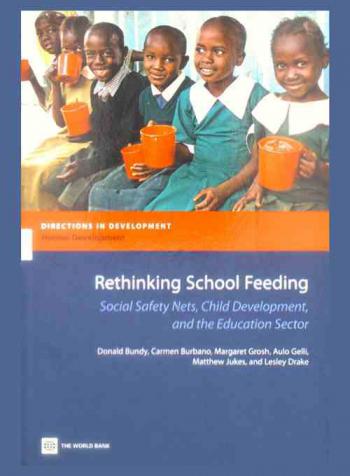

Effectiveness and cost-effectiveness of school meals programmes on education, health and nutrition, social protection and agriculture in low-income and middle-income countries: a systematic review protocol
IntroductionGlobally, school meals programmes (SMPs), otherwise referred to as school feeding programmes, are widely implemented with the aim of improving multisectoral outcomes, including education, health and nutrition, social protection and agriculture, among other cross-cutting impact areas. Despite their widespread adoption and the broad recognition of their potential benefits, evidence on their actual impact across these diverse outcomes remains limited, fragmented and often inconclusive. This lack of consolidated and robust evidence has prompted growing interest from development and humanitarian agencies, practitioners and policymakers in generating high-quality data to inform the design, implementation and scaling of these interventions. Therefore, to address this gap, we plan to conduct a systematic review aimed at assessing the effectiveness and cost-effectiveness of SMPs on outcomes related to education, health and nutrition, social protection and agriculture in low-income and middle-income countries.Methods and analysisA comprehensive literature search will be conducted on relevant studies published between 2007 and 2025. The study will focus on four primary outcomes, which will include education, health and nutrition, social protection and agriculture. This systematic review will align with the Preferred Reporting Items for Systematic Reviews and Meta-Analyses guidelines. We will search seven databases: MEDLINE (via Ovid), Scopus, Web of Science, CINAHL, Embase (via Ovid), PubMed and Global Health (via Ovid) using predefined keywords. The risk of bias of randomised and non-randomised studies will be assessed using the Cochrane Risk of Bias tool and the Risk of Bias In Non-randomised Studies - of Interventions tool, respectively. Two reviewers will independently select studies, extract data and assess risk of bias. All included studies will be summarised and meta-analyses will be conducted when appropriate. Heterogeneity will be assessed using the I² statistic, subgroup analyses and meta-regression.Ethical considerations and disseminationThis study will not involve the collection of primary data and will thus not require any ethical approval. The dissemination of the outcome of the study will be through global conferences, policy briefs and scientific journals.PROSPERO registration numberCRD42024628180.
Journal Article
Programmatic implications of the TUMIKIA trial on community-wide treatment for soil-transmitted helminths: further health economic analyses needed before a change in policy
School-based deworming programmes are currently the main approach used to control the soil-transmitted helminths (STHs). A key unanswered policy question is whether mass drug administration (MDA) should be targeted to the whole community instead, and several trials in this area have been conducted or are currently on-going. A recent well-conducted trial demonstrated that successful community-wide treatment is a feasible strategy for STH control and can be more effective than school-based treatment in reducing prevalence and intensity of hookworm infection. However, we would argue that it is vital that these findings are not taken out of context or over generalised, as the additional health benefits gained from switching to community-wide treatment will vary depending on the STH species and baseline endemicity. Moreover, community-wide treatment will typically be more expensive than school-based treatment. The epidemiological evidence for an additional benefit from a switch to community-wide treatment has yet to be proven to represent “good value for money” across different settings. Further work is needed before changes in policy are made regarding the use of community-wide treatment for STH control, including comprehensive assessments of its additional public health benefits and costs across a range of scenarios, accounting for the presence of alternative treatment delivery platforms.
Journal Article
African Programme for Onchocerciasis Control 1995–2015: Model-Estimated Health Impact and Cost
Onchocerciasis causes a considerable disease burden in Africa, mainly through skin and eye disease. Since 1995, the African Programme for Onchocerciasis Control (APOC) has coordinated annual mass treatment with ivermectin in 16 countries. In this study, we estimate the health impact of APOC and the associated costs from a program perspective up to 2010 and provide expected trends up to 2015.
With data on pre-control prevalence of infection and population coverage of mass treatment, we simulated trends in infection, blindness, visual impairment, and severe itch using the micro-simulation model ONCHOSIM, and estimated disability-adjusted life years (DALYs) lost due to onchocerciasis. We assessed financial costs for APOC, beneficiary governments, and non-governmental development organizations, excluding cost of donated drugs. We estimated that between 1995 and 2010, mass treatment with ivermectin averted 8.2 million DALYs due to onchocerciasis in APOC areas, at a nominal cost of about US$257 million. We expect that APOC will avert another 9.2 million DALYs between 2011 and 2015, at a nominal cost of US$221 million.
Our simulations suggest that APOC has had a remarkable impact on population health in Africa between 1995 and 2010. This health impact is predicted to double during the subsequent five years of the program, through to 2015. APOC is a highly cost-effective public health program. Given the anticipated elimination of onchocerciasis from some APOC areas, we expect even more health gains and a more favorable cost-effectiveness of mass treatment with ivermectin in the near future.
Journal Article
The Global Atlas of Helminth Infection: Mapping the Way Forward in Neglected Tropical Disease Control
[...]mass drug administration (MDA) should be optimally targeted to communities with the highest prevalence of infection and presumed greatest morbidity [3], [4]. [...]they can provide an important planning tool for national control programmes.
Journal Article