
Catalogue Search | MBRL


Are you sure you want to remove the book from the shelf?

{{itemTitle}}
12
result(s) for
"Cranfield, Jonathan"
Sort by:

Sherlock Holmes
From the stories of Sir Arthur Conan Doyle to the recent BBC series that has made a heartthrob out of Benedict Cumberbatch, Sherlock Holmes has been much a part of the British and global cultural legacy from the moment of his first appearance in 1887. The essays in this volume explore the numerous adaptations, rewritings, rip-offs, role-playing, wiki and crowdsourced texts, virtual realities, and faux scholarship Sherlock Holmes has inspired.
Book
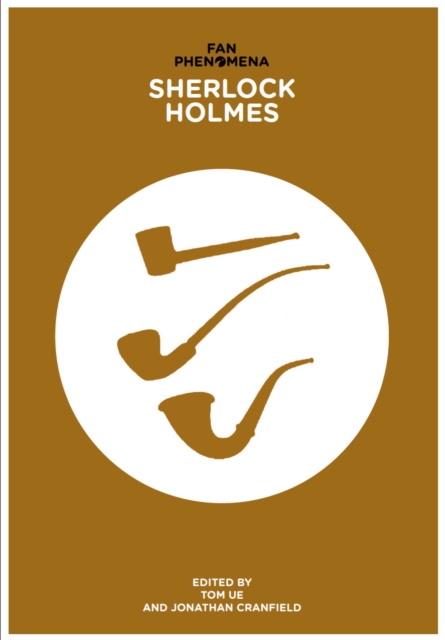
Sherlock Holmes
Few could have predicted the enduring fascination with the legendary detective Sherlock Holmes. From the stories of Sir Arthur Conan Doyle to the recent BBC series that has made a heartthrob out of Benedict Cumberbatch, the sleuth has been much a part of the British and global cultural legacy from the moment of his first appearance in 1887. The contributors to this book discuss the ways in which various fan cultures have sprung up around the stories and how they have proved to be a strong cultural paradigm for the ways in which phenomena functions in the twentieth and twenty-first centuries. Essays explore the numerous adaptations, rewritings, rip-offs, role-playing, wiki and crowdsourced texts, virtual realities, and faux scholarship Sherlock Holmes has inspired. Though fervid fan behavior is often mischaracterized as a modern phenomenon, the historical roots of fan manifestations that have been largely forgotten are revived in this thrilling book. Complete with interviews with writers who have famously brought the character of Holmes back to life, the collection benefits from the vast knowledge of its contributors, including academics who teach in the field, archivists, and a number of writers who have been involved in the enactment of Holmes stories on stage, screen, and radio. The release of Fan Phenomena: Sherlock Holmes coincides with Holmes's 160th birthday, so it is no mystery that it will make a welcome addition to the burgeoning scholarship on this timeless detective.
eBook

The Submarine in British Periodicals and Fiction, 1901–1914: Death From Below
Holland had honed his submarine building skills in the 1870s and 1880s exclusively for Fenian paramilitary use2 and had been partly inspired by American experiments with submarine warfare during the Revolutionary War and by the Confederate forces during the American Civil War.3 In each case, submarines had been imagined as \"equalizers,\" levelling the playing field between paramilitary organisations and nation states. Robertson quoted the presumed view of the admiralty that \"to design and work a submarine boat was so remote an accomplishment that there was no reasonable probability of being able to create it.\" [...]it would be the weapon \"of an inferior power. The new surge of funds, however, was worryingly aimed towards pleasing the \"man in street\" with grand displays of shipbuilding rather than on personnel and training.29 The insinuation here was that the spread of literacy and voting rights had made the government squeamish over the views of the ordinary citizens and prone to counter-productive populism. [...]submarines became gaudy baubles with which to entertain the public rather than serious weapons of war. A (just about) victorious war had damaged the British reputation; the ensuing \"peace\" was marked by onerous taxation and military expansion; diplomacy soothed international tensions just as it irritated others; the navy was a hidebound, unaccountable institution that was yet somehow prey to the plebiscite whims of the people; it lagged behind in matters of technology but also wasted vast amounts of money on new projects like submarines; the power of the Westminster parties was broken yet the State was assuming a vice- like grip over taxation and spending to the extent that the Westminster Review could even proclaim the onset of \"Practical Socialism\" in February 1905 thanks to state involvement in industry and the growth of municipal services.31 Into this context came the dramatic conclusion of the Russo-Japanese War.
Journal Article

“The Kinematograph View of Life”: Cinema, Fiction & Periodicals in Britain, 1910–20
This article examines the depiction of cinemas and film culture in mainstream literary periodicals between 1910 and 1920. It focuses on the role played by illustrated magazines (Quiver, the Pall Mall Magazine and the Strand) in legitimizing film as an art form and countering accusations of immorality from anti-cinema activists. It also looks at the role played by early cinema fiction within this discourse. The final section explores the changes to authorship wrought by the globalization of cinema and the periodical press during and immediately after the First World War.
Journal Article
Fan phenomena
Few could have predicted the enduring fascination with the legendary detective Sherlock Holmes. From the stories of Sir Arthur Conan Doyle to the recent BBC series that has made a heart-throb out of Benedict Cumberbatch, the sleuth has been much a part of the British and global cultural legacy from the moment of his first appearance in 1887.
The contributors to this book discuss the ways in which various fan cultures have sprung up around the stories and how they have proved to be a strong cultural paradigm for the ways in which these phenomena function in the twentieth and twenty-first centuries. Essays explore the numerous adaptations, rewritings, rip-offs, role-playing, wiki and crowd sourced texts, virtual realities and faux scholarship Sherlock Holmes has inspired. Though fervid fan behaviour is often mis-characterized as a modern phenomenon, the historical roots of fan manifestation that have been largely forgotten are revived in this thrilling book.
Complete with interviews with writers who have famously brought the character of Holmes back to life, the collection benefits from the vast knowledge of its contributors, including academics who teach in the field, archivists and a number of writers who have been involved in the enactment of Holmes stories on stage, screen and radio. The release of Fan Phenomena: Sherlock Holmes coincides with Holmes's 160th birthday, so it is no mystery that it will make a welcome addition to the burgeoning scholarship on this timeless detective.
eBook

The Voice of Science: Ideology, Sherlock Holmes, and the Strand Magazine
This thesis uses The Strand Magazine and Arthur Conan Doyle's Sherlock Holmes stories to examine the different ways in which science and ideology interacted in popular culture between 1891 and 1930. It is interested in the relationship between high and low cultures and the different experiences of the fin-de-siecle and modernity that they betray. It attempts to reconstruct an epistemology of scientific knowledge from 'the artefacts of low culture' and challenges prevailing critical attitudes in periodical criticism and Holmesian criticism. The methodology is derived from a mixture of Marxist literary criticism, ideology theory and the history of science in the belief that attitudes from all three critical traditions are necessary to properly unpack the culturally-embedded nature of periodicals. It plots the relationship between scientific and popular discourses and examines the different ways in which fiction was able to ideologically commodify scientific knowledge and incorporate it into everyday representations of the real world.The thesis is split into four main sections that analyse, respectively, class relations in the 1890s, scientific articles after the turn of the century, depictions of the male body in the aftermath of the Second Boer War and the effect of the onset of a knowledge economy of traditional genre fiction between 1913 and 1930.
Dissertation

How Sherlock Pulled the Trick: Spiritualism and the Pseudoscientific Method
[...]you can find a Holmes quote to support any imaginable proposition whether profound, trivial, or unhinged. Other chapters examine the genesis and epistemic structure of Conan Doyle's spiritualist beliefs, his career as a proselytizer and public debater, the growth of Sherlock Holmes fandom, the constructivist theory wars of the 1980s, and the character's role in online conspiracy theories pertaining to 9/11 and post-Trump American politics. How could the same character's words be used in self-justification by 9/11 truthers and newspaper factcheckers, QAnon devotees and august professors, evolutionary biologists and the Intelligent Design movement?
Book Review