
Catalogue Search | MBRL


Are you sure you want to remove the book from the shelf?

{{itemTitle}}
136
result(s) for
"Crow, Tracy"
Sort by:


On Point
Personal writing can be risky for anyone, but for military veterans, especially those suffering from post-traumatic stress, sharing stories can trigger painful and disturbing flashbacks. Writing is also risky for the ego. It is one thing to write a military story, especially one based on authentic experiences; it is quite another to muster the courage to share that story with others for critique and feedback.
Award-winning journalist and author Tracy Crow presents a roadmap for writing an authentic, persuasive military story. Drawing from her personal experiences and those of other veteran writers, and from the insights of noteworthy writing and teaching professionals,On Pointis the guide Crow wishes she'd had when she first began writing about her military experience. No previous writing guide specifically addresses the unique challenges and rewards facing soldiers who want to craft their military story with courage and candor.
eBook


New Look, New Standards: As the Learning Landscape Shifts, So Do We
Learning Forward's Standards for Professional Learning define and describe professional learning that leads to improved educator practices, leadership, and student outcomes. Standards draw on the latest evidence and research about what works in professional learning to help educators implement every phase of the professional learning process. They help stakeholders design, lead, facilitate, support, and evaluate professional learning to advance school and system priorities so that all students learn at high levels. The latest iteration of Standards for Professional Learning includes 11 standards within a framework of three categories: (1) Rigorous Content for Each Learner; (2) Transformational Processes; and (3) Conditions for Success. This article describes each of the three framework categories and illustrates how they can look in practice, drawing on the example of a fictional school district.
Journal Article
COACHING IS EMBEDDED IN STANDARDS FOR PROFESSIONAL LEARNING
Professional learning results in equitable and excellent outcomes for all students when educators understand and apply research on change management, engage in feedback processes, and implement and sustain professional learning. Coaches are often a school or system's chief implementation leaders for professional learning, with the collaboration of principals and central office leaders. Professional learning results in equitable and excellent outcomes for all students when educators set relevant and contextualized learning goals, ground their work in research and theories about learning, and implement evidence-based learning designs.
Journal Article
LEADERS PLAY KEY ROLES IN IMPLEMENTING STANDARDS
At all levels - in schools, districts, states, provinces, and charter management organizations - leaders who embrace high-quality professional learning enable teachers and students to fully experience its benefits. Leaders prioritize, enable, support, model, and uphold expectations for high-quality professional learning. [...]while both current and revised Standards for Professional Learning include a dedicated leadership standard, multiple standards are inclusive of and directly relevant to leaders. Engage as learners Leaders apply the Standards for Professional Learning for themselves as learners as well as for other educators they serve to build the knowledge, skills, and practices that are responsive to their contexts. At all levels - in schools, districts, states, provinces, and charter management organizations - leaders who embrace high-quality professional learning enable teachers and students to fully experience its benefits.
Journal Article

Eyes Right
Just out of high school in 1977, her personal life already a mess, Tracy Crow thought the Marines might straighten her out. And sure enough, in the Corps she became a respected public affairs officer and military journalistone day covering tank maneuvers or beach assaults, the next interviewing the secretary of the navy. But success didnt come without a price. When Crow pledged herself to God, Corps, and Country, women Marines were still a rarity, and gender inequality and harassment were rampant. Determined to prove she belonged, Crow always put her career firsteven when, after two miscarriages and a stillborn child, her marriage to another Marine officer began to deteriorate. And when her affair with a prominent general was exposedand both were threatened with court-martialCrow was forced to re-evaluate her loyalty to the Marines, her career, and her family. Eyes Right is Crows story. A clear-eyed self-portrait of a troubled teen bootstrapping her way out of a world of alcoholism and domestic violence, it is also a rare inside look at the Marines from a womans perspective. Her memoir, which includes two Pushcart Prizenominated essays, evokes the challenges of being a woman and a Marine with immediacy and clarity, and in the process reveals how much Crows generation did for todays military women, and at what cost.
eBook
LET'S PUT AN END TO WASTED PROFESSIONAL LEARNING DAYS
While his colleagues who teach core subjects like math and reading spent the day in contentoriented team learning, every \"leftover\" teacher from grades K-12 - music, physical education, health, business, and others - focused on nachos. Increase awareness about how to best use professional learning time. Because Learning Forward has been working on this challenge for decades, we know that often a limited number of educators in a system have the authority or resources to drive the design of professional learning. School and district leaders who prioritize adult learning create cultures where teachers and other educators are safe to speak up for their needs and where even students, as we discuss throughout this issue of The Learning Professional, have a say in the support their teachers need.
Journal Article
ARE PERSONALIZATION AND HIGH-QUALITY MATERIALS MUTUALLY EXCLUSIVE?
[...]teams examined the five-stage learning team model described in Becoming a Learning Team (Hirsh & Crow, 2018) to consider how to support teachers as they implement instructional materials with students. HELP EACH STUDENT THRIVE The professional learning that teachers engage in, ideally in teams, prepares them to do this challenging but important work by offering time for intensive study of content, support from knowledgeable peers and coaches, and discussions about which concepts may present challenges to a particular student and how to address them. Here are key takeaways from the paper: * Teacher effectiveness increases through professional learning cycles focused on student content and instructional materials. * Implementing high-quality instructional materials is complex and requires intensive support for educators. * Alignment of an instructional vision throughout a system is bolstered through collaboration with an external assistance provider. * Elements for successful implementation include a plan for intentional scaling and intentional development of leaders throughout a system. * Educators who implemented LEAP with high fidelity saw marked improvements in student results.
Journal Article
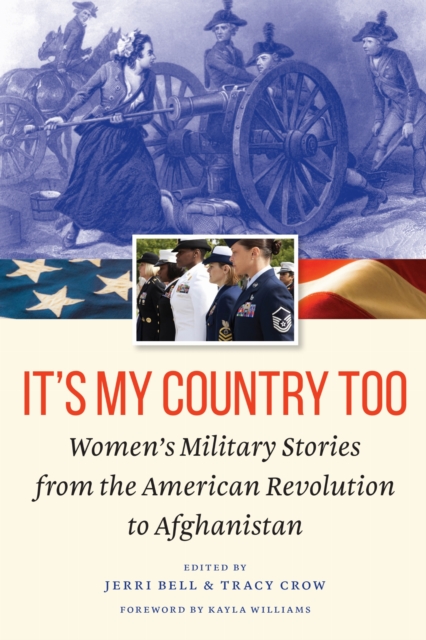
It's My Country Too
pThis inspiring anthology is the first to convey the rich experiences and contributions of women in the American military in their own words-from the Revolutionary War to the present wars in the Middle East. Serving with the Union Army during the Civil War as a nurse, scout, spy, and soldier, Harriet Tubman tells what it was like to be the first American woman to lead a raid against an enemy, freeing some 750 slaves. Busting gender stereotypes, Josette Dermody Wingo enlisted as a gunner's mate in the navy in World War II to teach sailors to fire Oerlikon anti-aircraft guns. Marine Barbara Dulinsky recalls serving under fire in Saigon during the Tet Offensive of 1968, and Brooke King describes the aftermath of her experiences outside the wire with the army in Operation Iraqi Freedom. In excerpts from their diaries, letters, oral histories, and pension depositions-as well as from published and unpublished memoirs-generations of women reveal why and how they chose to serve their country, often breaking with social norms, even at great personal peril. /p
eBook