
Catalogue Search | MBRL


Are you sure you want to remove the book from the shelf?

{{itemTitle}}
21
result(s) for
"Dawson, Marcelle"
Sort by:


The Contested Terrain of Sport and Well-Being: Health and Wellness or Wellbeing Washing?
Wellbeing has firmly established itself within contemporary practice, politics and policy. Indeed, the cultural, commercial, and terrestrial landscape of the concept is staggering and manifests within popular discourse and across global organisations and institutions, national governments, workplaces, and consumer lifestyle products and services. Notably, the field of sport, exercise, and physical activity has been identified by the World Health Organisation (WHO), the United Nations, and the OECD as a key sector with the potential to contribute to people’s wellbeing. This should not be surprising given that there is a large body of literature espousing the benefits of regular physical activity (in myriad forms) as part of a healthy lifestyle. However, there are increasing concerns that wellbeing’s global ubiquity may be leading to a range of unintended consequences and/or unscrupulous practices within both international organisations and nation-states. This largely conceptual essay focuses on the concept and process of wellbeing washing by (1) tracing the historical roots and evolution of wellbeing; (2) exploring its reconceptualization within the framework of neoliberalism; (3) offering a preliminary outline of the concept of wellbeing washing; and (4) briefly describing how wellbeing washing is manifesting within the context of sport in Aotearoa/New Zealand. Overall, this analysis explores wellbeing as a contested terrain of interests marked by a range of complexities and contradictions.
Journal Article
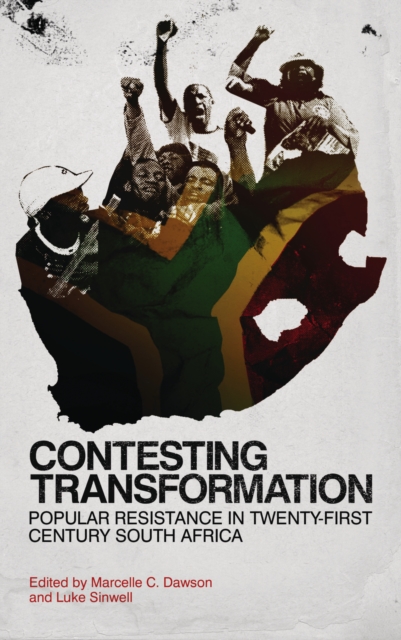
Contesting Transformation
Contesting Transformation is a sober and critical reflection of the wave of social movement struggles which have taken place in post-Apartheid South Africa. Much of the writing on these movements was produced when they were at their peak, whereas this collection takes stock of the subsequent period of contradiction and complexity. The contributors consider how these different movements conceive of transformation and assess the extent to which these understandings challenge the narrative of the ruling African National Congress (ANC). From township revolts to labour struggles, Contesting Transformation is the definitive critical survey of the state of popular struggle in South Africa today.
eBook
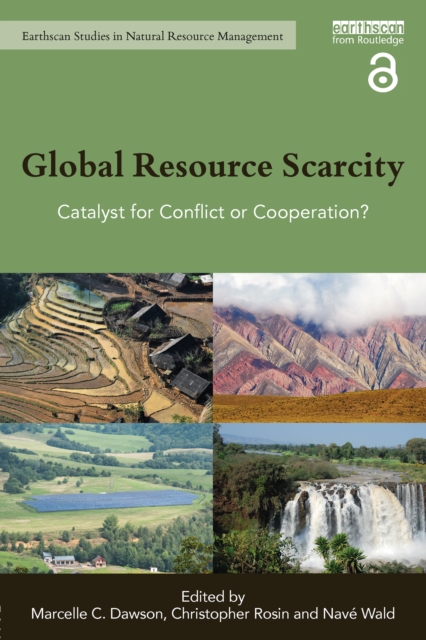
Global Resource Scarcity
A common perception of global resource scarcity holds that it is inevitably a catalyst for conflict among nations; yet, paradoxically, incidents of such scarcity underlie some of the most important examples of international cooperation. This volume examines the wider potential for the experience of scarcity to promote cooperation in international relations and diplomacy beyond the traditional bounds of the interests of competitive nation states. The interdisciplinary background of the book’s contributors shifts the focus of the analysis beyond narrow theoretical treatments of international relations and resource diplomacy to broader examinations of the practicalities of cooperation in the context of competition and scarcity. Combining the insights of a range of social scientists with those of experts in the natural and bio-sciences—many of whom work as ‘resource practitioners’ outside the context of universities—the book works through the tensions between ‘thinking/theory’ and ‘doing/practice’, which so often plague the process of social change. These encounters with scarcity draw attention away from the myopic focus on market forces and allocation, and encourage us to recognise more fully the social nature of the tensions and opportunities that are associated with our shared dependence on resources that are not readily accessible to all. The book brings together experts on theorising scarcity and those on the scarcity of specific resources. It begins with a theoretical reframing of both the contested concept of scarcity and the underlying dynamics of resource diplomacy. The authors then outline the current tensions around resource scarcity or degradation and examine existing progress towards cooperative international management of resources. These include food and water scarcity, mineral exploration and exploitation of the oceans. Overall, the contributors propose a more hopeful and positive engagement among the world’s nations as they pursue the economic and social benefits derived from natural resources, while maintaining the ecological processes on which they depend.
eBook

Introduction: Resource scarcity between conflict and cooperation
This introduction presents an overview of the key concepts discussed in the subsequent chapters of this book. The book talks about the relationship between what are perceived to be scarce natural resources and the tendency for access to them to lead to international conflict or cooperation. The diversity of forms and levels of engagement with resource scarcity and its implications for international relations poses particular problems when one attempts to provide a summary, but insightful, overview to those with more general interests in scarcity or politics. The scarcity of resources and the likelihood of such scarcity leading to international conflict is a common feature of public discourse and speculation. The potential for scarcity to initiate forms of international collaboration or cooperation is a much less common element of how we understand the world. In a global context framed by increasing attention to environmental issues and concerns readily appreciated international implications.
Book Chapter

A world without scarcity?
What should be very apparent at this point is that the availability—or perhaps more accurately the accessibility—of resources is a topic that attracts the attention of a wide range of professionals, scholars and activists. In the resulting discourse, global resource scarcity is often regarded as a catalyst for conflict; yet, paradoxically, such scarcity also underlies some of the most important international collaborations. While some natural resources are irrefutably essential for life and human survival, others are more important for livelihoods and economic prosperity. Some resources derive their significance and value from how difficult they are to ‘capture’ and control, while ‘market forces’ determine the worth of others. The fact that natural resources underlie existing conceptions of economic security and achievement makes the capacity to control their access and exploitation highly desirable.
Book Chapter

Student activism, structural adjustment and the democratic transition in sub-Saharan Africa,1 - Introduction: Student Activism, Structural Adjustment and the Democratic Transition in Africa
University students in the period following independence were a transitory social group, who held well-founded expectations of rewarding and high-status employ- ment after graduation. In the 1970s many of these assurances began to erode as countries that had attempted to implement state-led development faced interna- tional recession and internal corruption and decay. State funding of higher educa- tion by the late 1970s was being targeted for restructuring by the World Bank and the International Monetary Fund (IMF). Student activism was affected: while stu- dents clung onto a self-conscious elitism, the reality of student poverty and the financial crises of African universities transformed their activism. As well as see- ing their status as a privileged group collapse, there was an unprecedented ‘con- vergence of forces’ between students and the popular classes. This introduction surveys the role of students, the nature of their protest and their relationship with civil society in the processes that brought about a wave of multi-party elections and democratic struggles in Africa. The article critically intervenes in some of the most important debates on the role of student activism on the continent and intro- duces the contributions in this special issue devoted to student activism.
Journal Article
Student activism, structural adjustment and the democratic transition in Africa
ABSTRACT IN ENGLISH: University students in the period following independence were a transitory social group, who held well-founded expectations of rewarding and high-status employment after graduation. In the 1970s many of these assurances began to erode as countries that had attempted to implement state-led development faced international recession and internal corruption and decay. State funding of higher education by the late 1970s was being targeted for restructuring by the World Bank and the International Monetary Fund (IMF). Student activism was affected: while students clung onto a self-conscious elitism, the reality of student poverty and the financial crises of African universities transformed their activism. As well as seeing their status as a privileged group collapse, there was an unprecedented 'convergence of forces' between students and the popular classes. This introduction surveys the role of students, the nature of their protest and their relationship with civil society in the processes that brought about a wave of multi-party elections and democratic struggles in Africa. The article critically intervenes in some of the most important debates on the role of student activism on the continent and introduces the contributions in this special issue devoted to student acitivism. // ABSTRACT IN FRENCH: Les étudiants formaient, dans la période qui a suivi l'indépendance, un groupe social transitoire porteur d'attentes tout à fait fondées de rétribution et de statut social élevé après l'obtention du diplôme. Les années 1970 ont commencé à réduire nombre de ces assurances, alors que les pays qui avaient tenté de mettre en place un développement dirigé par l'Etat se trouvaient confrontés à la récession internationale, à la corruption intérieure et à la décomposition. Le financement par l'Etat de l'enseignement supérieur était, dès la fin des années 1970, la cible des restructurations imposées par la Banque mondiale et le Fond monétaire internationale (FMI). L'activisme étudiant devait en subir les effets : en même temps que les étudiants se raccrochaient à un élitisme auto-satisfait, la réalité de la pauvreté étudiante et les crises financières des universités africaines transformèrent leur activisme. En plus de l'effondrement de leur statut de groupe privilégié, il y avait une 'convergence de forces' sans précédent entre les étudiants et les classes populaires. Cette introduction examine le rôle des étudiants, la nature de leur protestation et leur relation avec la société civile dans le processus qui amena une vague d'élections multipartismes et de luttes pour la démocratie en Afrique. L'article intervient de façon critique dans certains des débats les plus importants sur le rôle de l'activisme étudiant sur le continent et introduit les contributions à cette édition spéciale consacrée à l'activisme étudiant. Reprinted by permission of the Council for the Development of Social Science Research in Afica. All rights reserved.
Journal Article