
Catalogue Search | MBRL


Are you sure you want to remove the book from the shelf?

{{itemTitle}}
14
result(s) for
"Evers-Vermeul, Jacqueline"
Sort by:
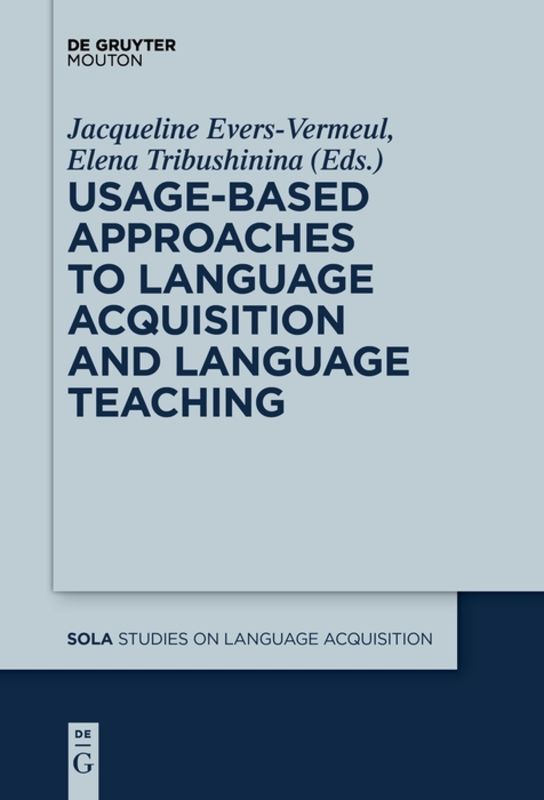
Usage-based approaches to language acquisition and language teaching
Language acquisition is a human endeavor par excellence. As children, all human beings learn to understand and speak at least one language: their mother tongue. It is a process that seems to take place without any obvious effort. Second language learning, particularly among adults, causes more difficulty. The purpose of this series is to compile a collection of high-quality monographs on language acquisition. The series serves the needs of everyone who wants to know more about the problem of language acquisition in general and/or about language acquisition in specific contexts.
eBook

A Meta-Analysis on the Effects of Text Structure Instruction on Reading Comprehension in the Upper Elementary Grades
In this meta-analysis, the authors synthesize results from 44 (quasi-) experimental studies on informational and narrative text structure interventions involving students in grades 4–6 in regular school settings. Findings show that text structure instruction had positive immediate effects on students’ reading comprehension but that effect sizes varied largely across outcome measures: questions (Hedges’ g = 0.25), summarization (g = 0.57), recall (g = 0.37), and knowledge about text structure (g = 0.38). However, students who received text structure instruction no longer outperformed control groups at delayed posttests. Content-related features, such as a focus on paragraph-level structure, active construction of graphic organizers, and teaching rule-based summarization techniques, moderated the effectiveness of text structure instruction, but these effects also varied across outcome measures. Instructional features moderated delayed effects: Interventions with opportunities for individual student practice resulted in higher delayed effects for comprehension questions. The authors argue that text structure instruction deserves a place in the primary school curriculum so the positive effects on reading will be maintained.
Journal Article

The emergence of Dutch connectives; how cumulative cognitive complexity explains the order of acquisition
Before they are three years old, most children have started to build coherent discourse. This article focuses on one important linguistic device children have to learn: connectives. The main questions are: Do connectives emerge in a fixed order? And if so, how can this order be explained? In line with Bloom et al. (1980) we propose to explain similarities in the development in terms of cumulative cognitive complexity: complex relations are acquired later than simple ones. Following a cognitive approach to coherence relations, we expect positive relations to be acquired before negatives and additives before temporals and causals. We develop a multidimensional approach to the acquisition process in order to account for the variation among children. Hypotheses were tested by analyzing data from children aged 1 ; 5–5 ; 6 on the emergence of Dutch connectives. The multidimensional approach of cognitive complexity describes both the uniformity and the diversity in the developmental sequences of Dutch-speaking and English-speaking children.
Journal Article

What textbooks offer and what teachers teach: an analysis of the Dutch reading comprehension curriculum
In the Netherlands, the quality of the reading curriculum is currently under debate because of disappointing results on national and international assessments of students’ reading skills and motivation. In a mixed-method study, we analyzed the content of Dutch textbooks for reading comprehension instruction (i.e., the implemented curriculum) and teachers’ evaluation and use of these books (i.e., the enacted curriculum). A materials analysis of reading comprehension lessons (N = 80) in eight textbooks for grades 4 and 5 was complemented with semi-structured teacher interviews (N = 29) and lesson observations (N = 11), with a focus on the quality of reading strategy and text structure instruction in the curriculum. Main findings are (1) a lack of alignment between lesson goals, theory, and assignments, (2) a strong focus on practicing strategies, (3) limited declarative knowledge about strategies and text structure, (4) little opportunities for self-regulated strategy application. The teachers that were interviewed mention similar problems, but still hardly deviate from the textbook’s content and pedagogical guidelines. We make recommendations to improve the quality of the curriculum.
Journal Article

Causal connectives as indicators of source information: Evidence from the visual world paradigm
Causal relations can be presented as subjective, involving someone's reasoning, or objective, depicting a real-world cause-consequence relation. Subjective relations require longer processing times than objective relations. We hypothesize that the extra time is due to the involvement of a Subject of Consciousness (SoC) in the mental representation of subjective information. To test this hypothesis, we conducted a Visual World Paradigm eye-tracking experiment on Dutch and Chinese connectives that differ in the degree of subjectivity they encode. In both languages, subjective connectives triggered an immediate increased attention to the SoC, compared to objective connectives. Only when the subjectivity information was not expressed by the connective, modal verbs presented later in the sentence induced an increase in looks at the SoC. This focus on the SoC due to the linguistic cues can be explained as the tracking of the information source in the situation models, which continues throughout the sentence.
Journal Article

Applying Collocation Analysis to Chinese Discourse: A Case Study of Causal Connectives
Collocation analysis can be used to extract meaningful linguistic information from large-scale corpus data. This paper reviews the methodological issues one may encounter when performing collocation analysis for discourse studies on Chinese. We propose four crucial aspects to consider in such analyses: (i) the definition of collocates according to various parameters; (ii) the choice of analysis and association measures; (iii) the definition of the search span; and (iv) the selection of corpora for analysis. To illustrate how these aspects can be addressed when applying a Chinese collocation analysis, we conducted a case study of two Chinese causal connectives:
‘that is why’ and
‘as a result’. The distinctive collocation analysis shows how these two connectives differ in volitionality, an important dimension of discourse relations. The study also demonstrates that collocation analysis, as an explorative approach based on large-scale data, can provide valuable converging evidence for corpus-based studies that have been conducted with laborious manual analysis on limited datasets.
Journal Article

oaLezen en schrijven in Natuur- en Techniekonderwijs
Reading and writing within Science education: Text structure as a bridge between content knowledge and text comprehensionScience education provides a functional context for reading and writing activities. Previous interventions on language-and-science integrated approaches have generated positive effects on language skills as well as on science knowledge. While such interventions often focused on the role of vocabulary, we targeted text structure instruction for reading and writing within Science, as knowledge about common expository text structures (sequence, comparison, cause-effect and problem-solution) can be related to essential conceptual relations within Science. We examined the effects of the FLINT intervention (4 reading lessons, 3 writing lessons and 2 hands-on lessons) on text comprehension, summarization skills, writing skills and subject knowledge of Dutch fourth graders. Teachers and students were enthusiastic about the lesson series, but compared to another language-and-science integrated approach (without text structure elements) we did not find additional effects of text structure instruction on any of the outcome measures. Given that several meta-analyses did establish the benefits of text structure instruction, we provide alternative explanations for these findings as well as suggestions for future research.
Journal Article
The influence of input on connective acquisition: a growth curve analysis of English because and German weil
The current study used growth curve analysis to study the role of input during the acquisition of the English causal connective because and its German counterpart weil. The corpora of five German and five English children and their adult caretakers (age range 0;10–4;3) were analyzed for the amount as well as for the type of connective use – imitated, elicited, and independent. The growth curves showed that children's elicited use developed faster than their independent use; imitations were rare. Adult connective input was not found to function as a scaffold of children's connective use. Rather, the adult why/warum-questions played an important role in the acquisition of because and weil. In turn, children also used why/warum-questions to elicit causal responses from their caretakers, which shows that children were responsible for a great part of their own input.
Journal Article
Effecten van narrativiteit in educatieve teksten
This study aims to gain more insight into narrativity in the educational domain. Based on earlier research, we define three prototypical narrative elements (i.e., the presence of particularized events, an experiencing character, and a landscape of consciousness), and present an analytic model that illustrates how varying combinations of these elements occur in Dutch educational materials for Social Studies and Science. Using this model, we then analyze experimental texts from previous studies on the effects of narrativity on text comprehension and recall. We demonstrate that experimental narrative texts nearly always exhibit all prototypical narrative elements, while their expository counterparts also contain some narrative elements and thus are not purely expository. In addition, we show that no consistent patterns can be found in the results of the selected experimental studies, and that the data at hand therefore do not allow for strong conclusions about the effects of narrativity in educational texts. Finally, we discuss the limitations of previous as well as the present research and the implications for future research.
Journal Article