
Catalogue Search | MBRL


Are you sure you want to remove the book from the shelf?

{{itemTitle}}
8
result(s) for
"Fine, Gary Alan, author"
Sort by:


Tiny Publics
If all politics is local, then so is almost everything else, argues sociologist Gary Alan Fine. We organize our lives by relying on those closest to us—family members, friends, work colleagues, team mates, and other intimates—to create meaning and order. In this thoughtful and wide-ranging new book, Fine argues that the basic building blocks of society itself are forged within the boundaries of such small groups, the “tiny publics” necessary for a robust, functioning social order at all levels. Action, meaning, authority, inequality, organization, and institutions all have their roots in small groups. Yet for the past twenty-five years social scientists have tended to ignore the power of groups in favor of an emphasis on organizations, societies, or individuals. Based on over thirty-five years of Fine’s own ethnographic research across an array of small groups, Tiny Publics presents a compelling new theory of the pivotal role of small groups in organizing social life. No social system can thrive without flourishing small groups. They provide havens in an impersonal world, where faceless organizations become humanized. Taking examples from such diverse worlds as Little League baseball teams, restaurant workers, high school debate teams, weather forecasters, and political volunteers, Fine demonstrates how each group has its own unique culture, or idioculture—the system of knowledge, beliefs, behavior, and customs that define and hold a group together. With their dense network of relationships, groups serve as important sources of social and cultural capital for their members. The apparently innocuous jokes, rituals, and nicknames prevalent within Little League baseball teams help establish how teams function internally and how they compete with other teams. Small groups also provide a platform for their members to engage in broader social discourse and a supportive environment to begin effecting change in larger institutions. In his studies of mushroom collectors and high school debate teams, Fine demonstrates the importance of stories that group members tell each other about their successes and frustrations in fostering a strong sense of social cohesion. And Fine shows how the personal commitment political volunteers bring to their efforts is reinforced by the close-knit nature of their work, which in turn has the power to change larger groups and institutions. In this way, the actions and debates begun in small groups can eventually radiate outward to affect every level of society. Fine convincingly demonstrates how small groups provide fertile ground for the seeds of civic engagement. Outcomes often attributed to large-scale social forces originate within such small-scale domains. Employing rich insights from both sociology and social psychology, as well as vivid examples from a revealing array of real-world groups, Tiny Publics provides a compelling examination of the importance of small groups and of the rich vitality they bring to social life.
eBook
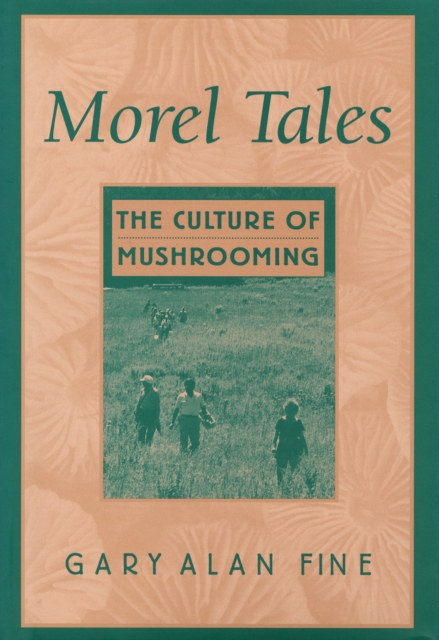
Morel tales
In this thoughtful book, Gary Fine explores how Americans attempt
to give meaning to the natural world that surrounds them. Although
\"nature\" has often been treated as an unproblematic reality, Fine
suggests that the meanings we assign to the natural environment are
culturally grounded. In other words, there is no nature separate
from culture. He calls this process of cultural construction and
interpretation, \"naturework.\" Of course, there is no denying the
biological reality of trees, mountains, earthquakes, and
hurricanes, but, he argues, they must be interpreted to be made
meaningful. Fine supports this claim by examining the fascinating
world of mushrooming. Based on three years of field research with
mushroomers at local and national forays, Morel Tales
highlights the extensive range of meanings that mushrooms have for
mushroomers. Fine details how mushroomers talk about their
finds--turning their experiences into \"fish stories\" (the one that
got away), war stories, and treasure tales; how mushroomers
routinely joke about dying from or killing others with
misidentified mushrooms, and how this dark humor contributes to the
sense of community among collectors. He also describes the
sometimes friendly, sometimes tense relations between amateur
mushroom collectors and professional mycologists. Fine extends his
argument to show that the elaboration of cultural meanings found
among mushroom collectors is equally applicable to birders,
butterfly collectors, rock hounds, and other naturalists.
eBook
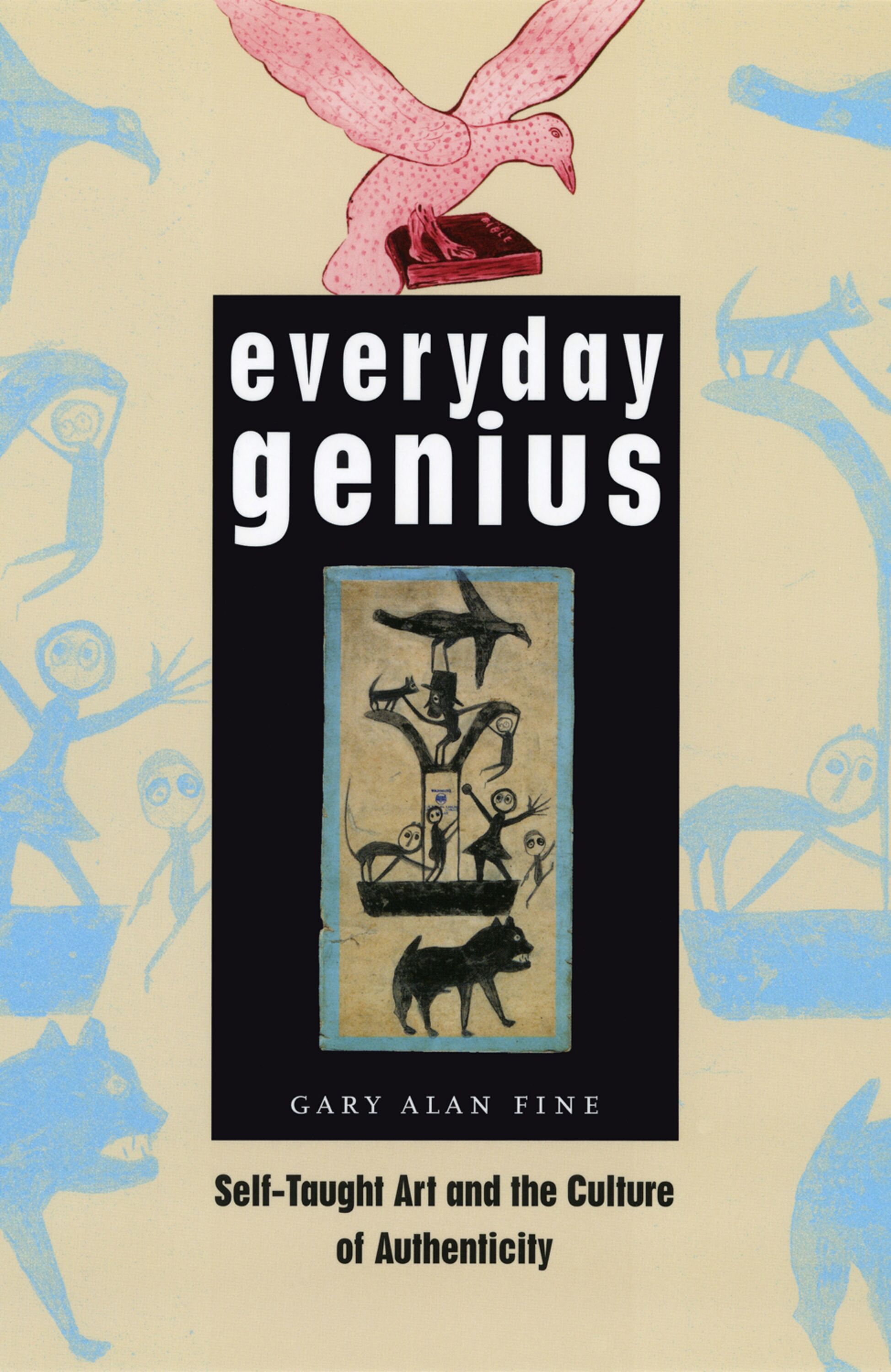
Everyday genius
From Henry Darger's elaborate paintings of young girls caught in a vicious war to the sacred art of the Reverend Howard Finster, the work of outsider artists has achieved unique status in the art world. Celebrated for their lack of traditional training and their position on the fringes of society, outsider artists nonetheless participate in a traditional network of value, status, and money. After spending years immersed in the world of self-taught artists, Gary Alan Fine presents Everyday Genius, one of the most insightful and comprehensive examinations of this network and how it confers artistic value. Fine considers the differences among folk art, outsider art, and self-taught art, explaining the economics of this distinctive art market and exploring the dimensions of its artistic production and distribution. Interviewing dealers, collectors, curators, and critics and venturing into the backwoods and inner-city homes of numerous self-taught artists, Fine describes how authenticity is central to the system in which artists—often poor, elderly, members of a minority group, or mentally ill—are seen as having an unfettered form of expression highly valued in the art world. Respected dealers, he shows, have a hand in burnishing biographies of the artists, and both dealers and collectors trade in identities as much as objects. Revealing the inner workings of an elaborate and prestigious world in which money, personalities, and values affect one another, Fine speaks eloquently to both experts and general readers, and provides rare access to a world of creative invention-both by self-taught artists and by those who profit from their work.
eBook

Gifted tongues
Learning to argue and persuade in a highly competitive environment is only one aspect of life on a high-school debate team. Teenage debaters also participate in a distinct cultural world--complete with its own jargon and status system--in which they must negotiate complicated relationships with teammates, competitors, coaches, and parents as well as classmates outside the debating circuit. In Gifted Tongues, Gary Alan Fine offers a rich description of this world as a testing ground for both intellectual and emotional development, while seeking to understand adolescents as social actors. Considering the benefits and drawbacks of the debating experience, he also recommends ways of reshaping programs so that more high schools can use them to boost academic performance and foster specific skills in citizenship.
eBook
In Chaotic Times, Rumors Soothe, Frighten and Divide
Scholars of rumor note that at times of mass confusion, rumors emerge as people have an overpowering desire to know what is happening. They are a form of improvised news. To understand the meaning of events, although incorrectly, seems more comforting than the dread of uncertainty. Indeed, this explains why, immediately after the bombing of the Murrah Federal Building in Oklahoma City, it was quickly - and falsely - rumored that Arab terrorists were involved. The story made sense to much of the American public. One finds similar rumors in times of racial tension: In the aftermath of the acquittal of the police officers accused of beating Rodney King, excessive and wrong claims about riots in wealthy white areas and military intervention in impoverished black communities made sense, even if they were not justified by the events. Rumor follows prejudice and stereotypes. Rumors in times of stress fall into three categories: wish- fulfillment, bogie and wedge-driving rumors. The first reveals what we most wish were true. Have you heard that Osama bin Laden is dying of liver cancer, and thus the recent attacks were the last gasp of a frightened and impotent man? Probably incorrect but, perhaps, comforting. Bogie rumors reflect our dark fears. We hear that smallpox or anthrax is being stockpiled to be spread at sporting events. We lack secure evidence for these fears, but they make sense to a frightened public that believes terrorists have endless power.
Newspaper Article

3 books that seek to offer hope and help in dealing with life's problems
To capture how teenagers break down and how they are fixed, [David L. Marcus] follows a group of troubled students at an elite, therapeutic boarding school, the Academy at Swift River in the bucolic hills of western Massachusetts. Students go to Swift River for 14 months, commencing with a wilderness experience and concluding with a five- week service-learning project in rural Costa Rica. The cost: a tidy 5,000 per month. Although Marcus does not fully underline the irony, Swift River and its corporate parent, the Aspen Education Group, reflect the same franchised, status-oriented culture that he deplores. This is, as he notes, form of parenting-by-proxy, outsourcing child-rearing to specialists. Marcus does not reject the need for such therapeutic schools, but these institutions do remind us of the failures of poorly prepared parents.
Newspaper Article

Erving Goffman
Few sociologists have commanded a larger readership than Erving Goffman. From his first book, The Presentation of Self In Everyday Life (1956), to his last, Forms of Talk (1981), his publications were eagerly awaited and his ideas widely discussed. In 1982 when he died at the age of 60, the response was that a figure of outstanding importance had left the stage of modern sociology. In this powerful study, Tom Burns provides a meticulous and incomparable examination of Erving Goffman's work. Burn's arranges Goffman's writings into a series of themes such as 'Social Order', 'Acting Out', normalisation', 'abnormalisation', 'grading and discrimination' and 'realms of being'. This is a useful device because it brings out the richness and diversity of Goffman's preoccupations. This richness and diversity is often lost in secondary accounts which insist on labelling Goffman as a 'micro-sociologist' or 'symbolic interactionist'. In a painstaking and accurate discussion Burns shows the meaning and application of Goffman's key concepts. He also guides the reader in the direct influences upon Goffman's thought. He shows more clearly than anyone else how Goffman was influenced by Durkheim, Simmel, the Chicago School, animal ethology and linguistic philosophy. The book ends with a crisp and incisive critical assessment of Goffman's sociology.
eBook