
Catalogue Search | MBRL


Are you sure you want to remove the book from the shelf?

{{itemTitle}}
16,198
result(s) for
"Fu, Yan"
Sort by:


Realizing efficient blue and deep-blue delayed fluorescence materials with record-beating electroluminescence efficiencies of 43.4
As promising luminescent materials for organic light-emitting diodes (OLEDs), thermally activated delayed fluorescence materials are booming vigorously in recent years, but robust blue ones still remain challenging. Herein, we report three highly efficient blue and deep-blue delayed fluorescence materials comprised of a weak electron acceptor chromeno[3,2-c]carbazol-8(5H)-one with a rigid polycyclic structure and a weak electron donor spiro[acridine-9,9’-xanthene]. They hold distinguished merits of excellent photoluminescence quantum yields (99%), ultrahigh horizontal transition dipole ratios (93.6%), and fast radiative transition and reverse intersystem crossing, which furnish superb blue and deep-blue electroluminescence with Commission Internationale de I’Eclairage coordinates (CIE
x,y
) of (0.14, 0.18) and (0.14, 0.15) and record-beating external quantum efficiencies (
η
ext
s) of 43.4% and 41.3%, respectively. Their efficiency roll-offs are successfully reduced by suppressing triplet-triplet and singlet-singlet annihilations. Moreover, high-performance deep-blue and green hyperfluorescence OLEDs are achieved by utilizing these materials as sensitizers for multi-resonance delayed fluorescence dopants, providing state-of-the-art
η
ext
s of 32.5% (CIE
x,y
= 0.14, 0.10) and 37.6% (CIE
x,y
= 0.32, 0.64), respectively, as well as greatly advanced operational lifetimes. These splendid results can surely inspire the development of blue and deep-blue luminescent materials and devices.
Thermally activated delayed fluorescence materials are important for the development of OLED materials but the development of robust blue emitting materials remains challenging. Here, the authors report three highly efficient blue and deepblue delayed fluorescence materials demonstrating excellent electroluminescence performance.
Journal Article
Microplastic diversity increases the abundance of antibiotic resistance genes in soil
The impact of microplastics on antibiotic resistance has attracted widespread attention. However, previous studies primarily focused on the effects of individual microplastics. In reality, diverse microplastic types accumulate in soil, and it remains less well studied whether microplastic diversity (i.e., variations in color, shape or polymer type) can be an important driver of increased antibiotic resistance gene (ARG) abundance. Here, we employed microcosm studies to investigate the effects of microplastic diversity on soil ARG dynamics through metagenomic analysis. Additionally, we evaluated the associated potential health risks by profiling virulence factor genes (VFGs) and mobile genetic elements (MGEs). Our findings reveal that as microplastic diversity increases, there is a corresponding rise in the abundance of soil ARGs, VFGs and MGEs. We further identified microbial adaptive strategies involving genes (changed genetic diversity), community (increased specific microbes), and functions (enriched metabolic pathways) that correlate with increased ARG abundance and may thus contribute to ARG dissemination. Additional global change factors, including fungicide application and plant diversity reduction, also contributed to elevated ARG abundance. Our findings suggest that, in addition to considering contamination levels, it is crucial to monitor microplastic diversity in ecosystems due to their potential role in driving the dissemination of antibiotic resistance through multiple pathways.
The effects of microplastics (MPs) on soil microbial communities and antimicrobial resistance genes are not well understood. Here, the authors used microcosm studies to show that MP diversity, and partially fungicide treatment and reduced plant diversity, correlate with higher levels of ARG and related genetic factors.
Journal Article
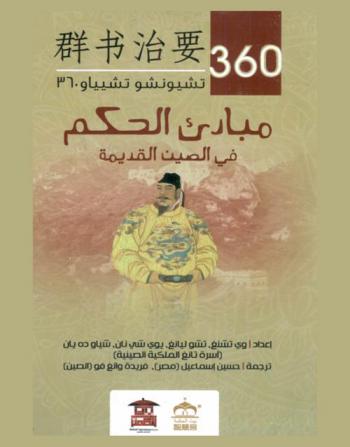
مبادئ الحكم في الصين القديمة
يتناول كتاب (مبادئ الحكم في الصين القديمة) والذي قامه بتأليفه (وي تشينغ) في حوالي (211) صفحة من القطع المتوسط موضوع (تاريخ الصين قديم) مستعرضا المحتويات التالية : قبل أكثر من ألف وربعمائة عام، أصدر الإمبراطور تاي تسونغ إمبراطور أسرة تانغ الملكية (618-907) مرسوما بأن يجمع أربعة من أشهر علماء الصين وسياسييها وأمهرهم وقتها المعارف التاريخية حول مبادئ الحكم الإمبراطوري من الكتب الكلاسيكية القديمة الستة، والمجموعات التاريخية الأربع، والمئات من مؤلفات المدارس الفكرية الصينية، وأن يرتبوها ويستخرجوا منها الدروس الاكثر اهمية حول تهذيب النفس وإصلاحها، وإدارة العائلة، والحكم الجيد للبلاد، وسبل جلب السلام للعالم. وكانت النتيجة مجموعة عنوانها \"تشيونشو تشيياو\" التي أقتبست بعناية من أربعة عشر ألف كتاب، وتسع وثمانين ألف مخطوطة من الكتابات القديمة، بإجمالي خمسمائة ألف فقرة مكتوبة، تغطي خمسة وشتين صنفا من الكتب. وقد ساعد هذا الكتاب الإمبراطور تاي سونغ والكثير من الأباطرة من بعده في أمور الحكم، ويعود الفضل في تحقيق الرخاء والسلام في المراحل اللاحقة بالصين القديمة بنسبة كبيرة إلى هذا الكتاب.
BOOK

Gastrodin ameliorates the lipopolysaccharide-induced neuroinflammation in mice by downregulating miR-107-3p
Background: Neuroinflammation plays a pivotal role in the pathogenesis of Central Nervous System (CNS) diseases. The phenolic glucoside gastrodin (GAS), has been known to treat CNS disorders by exerting anti-inflammatory activities. Our aim was to investigate the potential neuroprotective mechanisms of GAS on lipopolysaccharide (LPS)-induced mice. Methods: Male C57BL/6J mice were treated by LPS, before which GAS was adminisrated. The behavior tests such as forced swim test, tail suspension test, and elevated plus maze were performed to evaluate depressive-anxiety-like behaviors. A high-throughput sequencing (HTS) analysis was performed to screen out distinctive miRNAs which were validated using quantitative real-time PCR. Then, miRNA agomir or NC was injected stereotaxically into hippocampus of mice to explore the role of miRNA on GAS in response to LPS. Furthermore, Immunofluorescence and the hematoxylin and eosin (H&E) staining were employed to observe the cellular morphology. The protein levels of pro-inflammatory factors were evaluated by western blot. Finally, the target mRNA of miRNA was predicted using bioinformatics analysis. GO and KEGG enrichment analyses were conducted to clarify the potential function of target protein, which were visualized by bubble charts. Results: The behavioral data showed that mice in the LPS group had obvious depressive-anxiety-like behaviors, and 100 mg/kg GAS could improve these behavioral changes and alleviate the levels of pro-inflammatory cytokines in the hippocampus when mice were exposed to LPS for 6 h. Meanwhile, LPS-induced microglia and astrocyte activation in the CA1, CA2, CA3, and DG regions of the hippocampus were also reversed by GAS. Furthermore, miR-107-3p were screened out and verified for GAS in response to LPS. Importantly, miR-107-3p overexpression negatively abrogated the neuroprotective effects of GAS. Moreover, KPNA1 might be the target molecular of miR-107-3p. KPNA1 might regulate 12 neuroinflammation-related genes, which were mainly involved in cytokine−mediated signaling pathway. Conclusion: These results suggested that GAS might alleviate the LPS-induced neuroinflammation and depressive-anxiety-like behaviors in mice by downregulating miR-107-3p and upregulating the downstream target KPNA1. The indicates miR-107-3p may provide a new strategy for the treatment of CNS diseases.
Journal Article

A defensin-like protein drives cadmium efflux and allocation in rice
Pollution by heavy metals limits the area of land available for cultivation of food crops. A potential solution to this problem might lie in the molecular breeding of food crops for phytoremediation that accumulate toxic metals in straw while producing safe and nutritious grains. Here, we identify a rice quantitative trait locus we name cadmium (Cd) accumulation in leaf 1 (
CAL1
), which encodes a defensin-like protein. CAL1 is expressed preferentially in root exodermis and xylem parenchyma cells. We provide evidence that CAL1 acts by chelating Cd in the cytosol and facilitating Cd secretion to extracellular spaces, hence lowering cytosolic Cd concentration while driving long-distance Cd transport via xylem vessels. CAL1 does not appear to affect Cd accumulation in rice grains or the accumulation of other essential metals, thus providing an efficient molecular tool to breed dual-function rice varieties that produce safe grains while remediating paddy soils.
Crops that allocate heavy metals to leaves rather than grains could allow phytoremediation of polluted soil while producing food that is safe to eat. Here, the authors show that a defensin-like protein promotes cadmium secretion from rice cells and allocation to leaves without causing accumulation in grain.
Journal Article
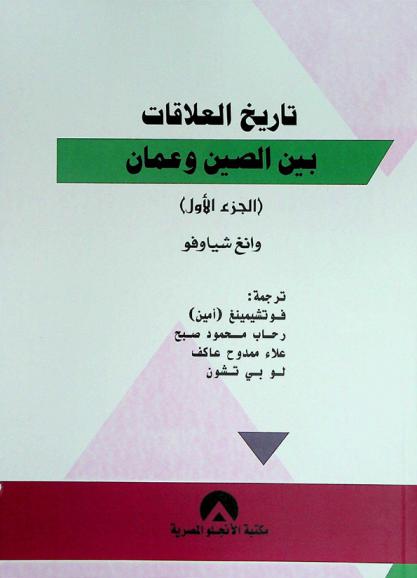
تاريخ العلاقات بين الصين وعمان
يستعرض هذا الكتاب الجوانب التاريخية والسياسية والثقافية للعلاقات بين الصين وسلطنة عمان، منذ العصور القديمة وحتى العصر الحديث، مع تركيز خاص على التبادل التجاري والبحري الذي ازدهر بين الجانبين عبر طريق الحرير البحري. يبرز الكتاب كيف شكل التواصل الحضاري بين الصين وعمان أحد أقدم النماذج للعلاقات السلمية في التاريخ، حيث ساهم البحارة العمانيون في نقل السلع والثقافات بين الشرق الأقصى والجزيرة العربية. كما يتناول العلاقات الدبلوماسية الحديثة بين البلدين، وتطورها في إطار الشراكات الاقتصادية ومبادرة الحزام والطريق، مؤكدا على الاحترام المتبادل والتعاون المتوازن بين البلدين عبر القرون.
BOOK

Correction: The effect of tennis on male bone mineral density: A meta-analysis
[This corrects the article DOI: 10.1371/journal.pone.0328636.].
Journal Article