
Catalogue Search | MBRL


Are you sure you want to remove the book from the shelf?

{{itemTitle}}
29
result(s) for
"Hamdi, Tahrir"
Sort by:
IMAGINING PALESTINE
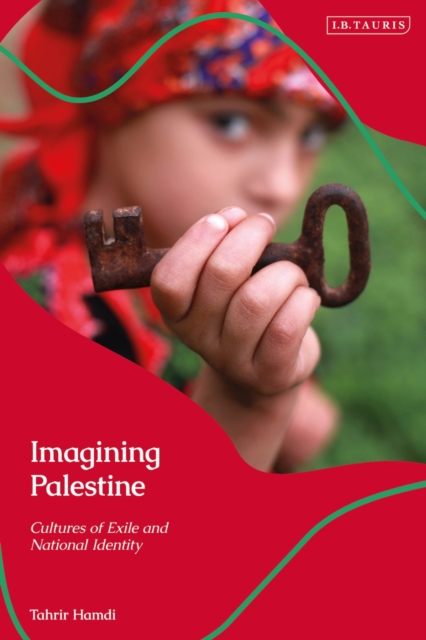
All national identities are somewhat fluid, held together by collective beliefs and practices as much as official territory and borders. In the context of the Palestinians, whose national status in so many instances remains unresolved, the articulation and ‘imagination’ of national identity is particularly urgent. This book explores the ways that Palestinian intellectuals, artists, activists and ordinary citizens ‘imagine’ their homeland, examining the works of key Palestinian thinkers and writers such as Edward Said, Mahmoud Darwish, Mourid Barghouti, Ghassan Kanafani and Naji Al Ali. Deploying Benedict Anderson’s notion of ‘Imagined Communities’ and Edward Soja’s theory of ‘Third Space’, Tahrir Hamdi argues that the imaginative construction of Palestine is a key element in the Palestinians’ ongoing struggle. An interdisciplinary work drawing upon critical theory, postcolonial studies and literary analysis, this book will be of interest to students and scholars of Palestine and Middle East studies and Arabic literature
eBook

DECOLONIZING ENGLISH LITERATURE DEPARTMENTS AT ARAB UNIVERSITIES
Education in the Arab world is in need of a revolution, and this revolutionary transformation is inevitably and intricately linked to the production, ordering, and dissemination of revolutionary, anti-colonial knowledge. This article emphasizes the urgency for decolonizing education, specifically English literature departments at Arab universities. Many thinkers have documented the connection between literature, culture, and imperialism on the one hand (Gauri Viswanathan’s Masks of Conquest, 1989 and Edward Said’s Culture and Imperialism, 1993) and literature, culture, and resistance on the other hand (Fanon, Kanafani, Cabral, Said, and others who wrote about zero point epistemology). While there have been some decolonization efforts in different parts of the world, even at Ivy League institutions (Cornell University, for example), Arab universities ironically maintain a very rigid, government accredited English and American literary curriculum with no attempt or intention at decolonizing these colonial era curricula. This article interrogates the aims behind maintaining a purely English (and American) literary curricula, especially as the Arab region continues to undergo the most violent and aggressive forms of Western intervention, which has led to massive destruction of Arab state infrastructures, the loss of Palestine in 1948, the dissolution of the social fabric of Arab societies and thousands of deaths in the past two decades. Against this destructive Western agenda, a constructive, awareness raising impulse embedded in a literature/culture of resistance is in order. It is high time that Arab universities decolonize their English literature departments, a necessary transformation that entails, to quote the title of an essay by Walter D. Mignolo, “Epistemic Disobedience, Independent Thought and Decolonial Freedom” (2009).
Journal Article
The Arab Intellectual and the Present Moment
The Iraqi poet Saadi Youssef urgently asks, “Why are the poets silent?/Where have they gone?” These questions underscore the compelling need for the guiding voices of Arab intellectuals at this deeply divided present moment in the Arab world that has effectively seen the destruction of seemingly stable nations and identities. It is important to understand why and how easily “things fell apart” for Arab nations and peoples under the destructive influence and direct intervention of imperialist and Zionist agendas and forces. What does it mean to speak truth to power in the current Arab and global context where the destruction of Arab nations, such as Iraq, Syria, Libya, and Yemen has become the all too familiar, convenient, and accepted status quo, which is marked by destructive and exclusionary discourses? It has become incumbent upon the Arab intellectual/writer/poet to lead the self-examination process in order to provide an understanding of the current Arab situation within its greater global context and construct a revolutionary and insurrectionary oppositional discourse that would expose and dismantle the current defeatist and divisionary discourses. Antonio Gramsci's concepts of hegemony and consent, Louis Althusser's ideological state apparatuses, and Edward Said's important ideas on the intellectual's critical consciousness, secular criticism, and beginnings are the theoretical lenses used to help decipher the catastrophic happenings in the Arab world. This study also examines excerpts of literary works by important Arab poets/intellectuals, such as Mahmoud Darwish, Mourid Barghouti, Bader Shaker Al-Sayyab, Saadi Youssef, and Yusuf Al-Ani.
Journal Article
The Power of Poetry to Travel: An Interview with Mourid Barghouti
A car pulls up and the driver comes out, revealing the tall, graceful figure of one of Palestine's most important and well-known poets, Mourid Barghouti, the author of twelve books of poetry and two excellent memoirs, I Saw Ramallah (2003) and the sequel I Was Born There, I Was Born Here (2011). Poetry works slowly, on the front of the beautiful, the right, the imagination, and it works like a slow-release medicine that you take for your body; poetry works like a slow-release medicine for the mind and the soul of the receiver. Because if you are happy with the dictator or with the regime or with the setting-they have ministries, armies, radios, TV stations to praise them.
Journal Article
Yeats's Ireland, Darwish's Palestine: The National in the Personal, Mystical, and Mythological
William Butler Yeats's and Mahmoud Darwish's poetic oeuvres can safely be said to have contributed significantly to building distinct national consciousnesses for their respective nations of Ireland and Palestine. These poets have equipped themselves with unique repertoires, which include the personal, the mystical, and the mythological, not to escape into a more ideal or abstract world, but to create anew their homelands, which have been placed under political, social, cultural, and in Darwish's case, geographical erasure by oppressive imperialist/Zionist invaders and occupiers. Both poets take on their roles as politician/artist/magician seriously by using hypnotic and other magical techniques in order to focus their people's psyches on the idea of cultural and national liberation. The poetry of both Yeats and Darwish shows poignantly how a poet can embody the nation and how poetry can indeed make something happen.
Journal Article
DECOLONIZING ENGLISH LITERATURE DEPARTMENTS AT ARAB UNIVERSITIES
Education in the Arab world is in need of a revolution, and this revolutionary transformation is inevitably and intricately linked to the production, ordering, and dissemination of revolutionary, anti-colonial knowledge. This article emphasizes the urgency for decolonizing education, specifically English literature departments at Arab universities. Many thinkers have documented the connection between literature, culture, and imperialism on the one hand (Gauri Viswanathan's Masks of Conquest, 1989 and Edward Said's Culture and Imperialism, 1993) and literature, culture, and resistance on the other hand (Fanon, Kanafani, Cabral, Said, and others who wrote about zero point epistemology). While there have been some decolonization efforts in different parts of the world, even at Ivy League institutions (Cornell University, for example), Arab universities ironically maintain a very rigid, government accredited English and American literary curriculum with no attempt or intention at decolonizing these colonial era curricula. This article interrogates the aims behind maintaining a purely English (and American) literary curricula, especially as the Arab region continues to undergo the most violent and aggressive forms of Western intervention, which has led to massive destruction of Arab state infrastructures, the loss of Palestine in 1948, the dissolution of the social fabric of Arab societies and thousands of deaths in the past two decades. Against this destructive Western agenda, a constructive, awareness raising impulse embedded in a literature/culture of resistance is in order. It is high time that Arab universities decolonize their English literature departments, a necessary transformation that entails, to quote the title of an essay by Walter D. Mignolo, \"Epistemic Disobedience, Independent Thought and Decolonial Freedom\" (2009).
Journal Article

The World Bids Farewell to the Poet and the Professor, Two Cultural Combatants of Palestine
Barghoutis life was punctuated by his many exiles, and like his people, the Palestinians, he went from one exile to the next-from his home village of Deir Ghassana, near Ramallah where he was born in 1944 to Cairo to study English literature at Cairo University in 1963; after graduating in 1967, the Naksa had already happened and Barghoutis world was turned upside down, and he could never return to his Ramallah, which was now under Israeli occupation. [...]it is restored, you are not normal. Qasem then joined An-Najah National University in Nablus in 1980 where he stayed until his retirement in 2013, but his writings, totaling 25 books, 130 research papers, and thousands of articles, led to several arrests and imprisonments by the Occupation forces and the Palestinian Authority. In a video widely shared on social media, Qasem is shown walking through an orchard of olive and fig trees, which naturally inhabit the Palestinian countryside, speaking of his love for this land and singing the praises of the olive tree.
Journal Article

Multilayered Colonialism of Women under Patriarchy
This study discusses and analyzes different forms of gender inequality that prevail in a patriarchal society under occupation. The researchers conduct a feminist analysis of Assia Djebar's \"Children of the New World.\" The main female characters in the novel experience multilayered colonialism as they are colonized women suffering under the strict rules of their patriarchal society on one hand, and colonized citizens enduring the harsh conditions of the French occupation on the other. These women resort to various coping mechanisms for survival as a means of decolonization and self-liberation, such as arming themselves with education and forming solidarity among themselves and with men. They deconstruct and subvert the stereotypical image of weak and passive women living in a patriarchal society, providing a new understanding of strong-willed and supportive women who play a significant role in liberating themselves and their country.
Journal Article