
Catalogue Search | MBRL


Are you sure you want to remove the book from the shelf?

{{itemTitle}}
713
result(s) for
"Hansen, Joseph"
Sort by:
World Construction via Networking
With the mainstream's growing acceptance of worlds and storytelling spread among several different texts - e.g., films, television series, novels, and comics - this pioneering study employs a multidisciplinary approach combining transmediality, network theory, and narratology to analyze the narrative network of the Marvel Cinematic Universe. In this analysis, Christopher Hansen thoroughly examines storytelling techniques while providing a fresh theoretical framework to develop a structural model for interconnected narratives. He redefines our understanding of narrative dynamics in one of the most successful cinematic franchises of all time.
eBook

Improving how we lead and manage in business marketing during and after a market crisis: the importance of perceived status, certainty, autonomy, relatedness and fairness
Purpose
The purpose of this research is to outline and investigate a set of five experience elements from neuroscience research labeled SCARF that could impact the quality of perception, evaluation and engagement of executives, managers and employees in business-to-business (B2B) companies during and after the COVID-19 pandemic. The proposed experience elements are perceived status, certainty, autonomy, relatedness and fairness. The authors demonstrate that all five elements are influential factors in B2B employees’ workplace environment during the COVID-19 pandemic. The authors outline several specific managerial implications and describe how companies can make better decisions related to several important market crisis decisions via a growth mindset built on the five experience elements. The authors also pay attention to implications to several B2B areas of research focus, including salesforce management and buying/supplier relationships.
Design/methodology/approach
The authors first examine existing B2B research to gauge if the five elements have been examined in B2B business contexts. They then analyze a combination of quantitative and qualitative survey data from 335 employees of different B2B companies to see if the five experience elements surface in discussion on how the pandemic has impacted their work experience and careers.
Findings
The authors find that several B2B research studies have looked at each of the individual components of the SCARF model, but none of them have yet included all five elements together in research or looked at them in the context of COVID-19. The results of analysis of surveys from employees in 335 B2B companies provide strong evidence that all five elements are influential factors in B2B employees workplace environment during the COVID-19 pandemic.
Originality/value
This study contributes to prior research focusing on how B2B companies can thrive during and after the COVID-19 pandemic. The research offers valuable practical insights and detailed examples of how to apply a set of five elements/experiences that industrial and business-to-business organization leaders should adopt in their conscious decision-making evaluation and in their communications with employees, suppliers and customers during and after the pandemic.
Journal Article

Drivers and Barriers of Social Sustainable Development and Growth of Online Higher Education: The Roles of Perceived Ease of Use and Perceived Usefulness
Online and distance learning classes have been touted for the last several years as an innovation in higher education that should help improve the entrepreneurial growth mindset of students. However, the reported negative online learning experience of many college students worldwide during the COVID-19 epidemic has shown that many opportunities remain to improve the sustainable development and growth of online visual instruction practices. In this study, we outline and investigate a set of hypotheses related to the perceived usefulness and perceived ease of use (from TAM) of online video instruction in higher education courses during the pandemic. We employ grounded theory using autoethnographic case studies as a data source. We found that (a) synchronous broadcast lectures improve participant attitude (H1) and motivation (H2) toward online instruction, (b) prerecorded video instruction increases participant perceived “ease of use” (H3) and perceived behavioral control (H4) of online instruction, but (c) indicators of recorded dates on pre-recorded video instruction decreases participant perceived “usefulness” (H5) and “certainty” (H6) of online instruction. We enrich the insights of popular motivation models for organizations and the higher education industry by outlining a set of emotional elements originating in neuroscience leadership research (SCARF) that might either amplify or diminish the perceived the ease of use and perceived usefulness to technology usage relationships when participations engage in online learning situations.
Journal Article

Frequency-dependent pollinator foraging in polymorphic Clarkia xantiana ssp. xantiana populations: implications for flower colour evolution and pollinator interactions
Under many circumstances pollinators are expected to practice positive frequency-dependent foraging in colour-polymorphic plant populations. Theory suggests, however, that competition for floral resources might favor negative frequency-dependent foraging by some pollinator species, possibly contributing to the maintenance of flower colour variation by negative frequency-dependent selection. We addressed this idea with pollination studies of the California annual plant Clarkia xantiana ssp. xantiana (Onagraceae), which is polymorphic for the presence of conspicuous petal spots and is pollinated by several specialist bee species. At the level of entire pollinator assemblages, we did not detect significant fixed flower colour preferences or frequency-dependent foraging. Three species of specialist bee pollinators, however, showed contrasting forms of frequency-dependent foraging. The most widespread species, Hesperapis regularis (Melittidae) exhibited positive frequency dependence. Two other common species, Lasiglossum pullilabre (Halictidae) and Ceratina sequoiae (Apidae), preferred to visit whichever morph (unspotted or spotted) was locally in the minority. All three species were found to be effective at transferring C. xantiana pollen; H. regularis appeared most effective. Our findings suggest that a mixture of positive and negative frequency-dependent selection on flower colour occurs in C. xantiana, with the form and intensity of selection varying in space and time with pollinator assemblages. Negative frequency-dependent selection via pollination dynamics may play a larger role in maintaining genetic variation in flower colour than was previously thought. Our results also suggest an unappreciated form of niche partitioning among specialist pollinators. Genetic polymorphism in flower colour may sometimes facilitate pollinator coexistence.
Journal Article

We All Have a Role to Play: Redressing Inequities for Children Living with CAH and Other Chronic Health Conditions of Childhood in Resource-Poor Settings
CLAN (Caring and Living as Neighbours) is an Australian-based non-governmental organisation (NGO) committed to equity for children living with chronic health conditions in resource-poor settings. Since 2004, CLAN has collaborated with a broad range of partners across the Asia Pacific region to improve quality of life for children living with congenital adrenal hyperplasia (CAH). This exploratory case study uses the Knowledge to Action (KTA) framework to analyse CLAN’s activities for children living with CAH in the Asia Pacific. The seven stages of the KTA action cycle inform a systematic examination of comprehensive, collaborative, sustained actions to address a complex health challenge. The KTA framework demonstrates the “how” of CLAN’s approach to knowledge creation and exchange, and the centrality of community development to multisectoral collaborative action across a range of conditions, cultures and countries to redressing child health inequities. This includes a commitment to: affordable access to essential medicines and equipment; education, research and advocacy; optimisation of medical management; encouragement of family support groups; efforts to reduce financial burdens; and ethical, transparent program management as critical components of success. Improvements in quality of life and health outcomes are achievable for children living with CAH and other chronic health conditions in resource-poor settings. CLAN’s strategic framework for action offers a model for those committed to #LeaveNoChildBehind.
Journal Article


Contributing factors and issues associated with rural ambulance crashes: literature review and annotated bibliography
Ambulance crashes occur with greater frequency and severity than crashes involving vehicles of similar size and weight characteristics. Crashes in rural areas tend to be more severe in terms of injury or death to vehicle occupants. The purpose of this article was to examine the extant literature, as well as summarize and discuss the overlapping findings of that body of literature. A stepwise literature search was conducted using the following MeSH search terms ambulance; accident, traffic; emergency medical technician; occupational health; and rural in descending combination. MEDLINE was used as the primary database but was augmented by searches of Academic Search Premier, Comprehensive Index of Nursing, Allied Health Literature, and ProQuest Dissertation International. The search resulted in 32 article citations, and of these, 28 were included. An annotated bibliography is followed by a discussion and conclusion that identify opportunities for prevention activities in the areas of education, enforcement, and engineering.
Journal Article
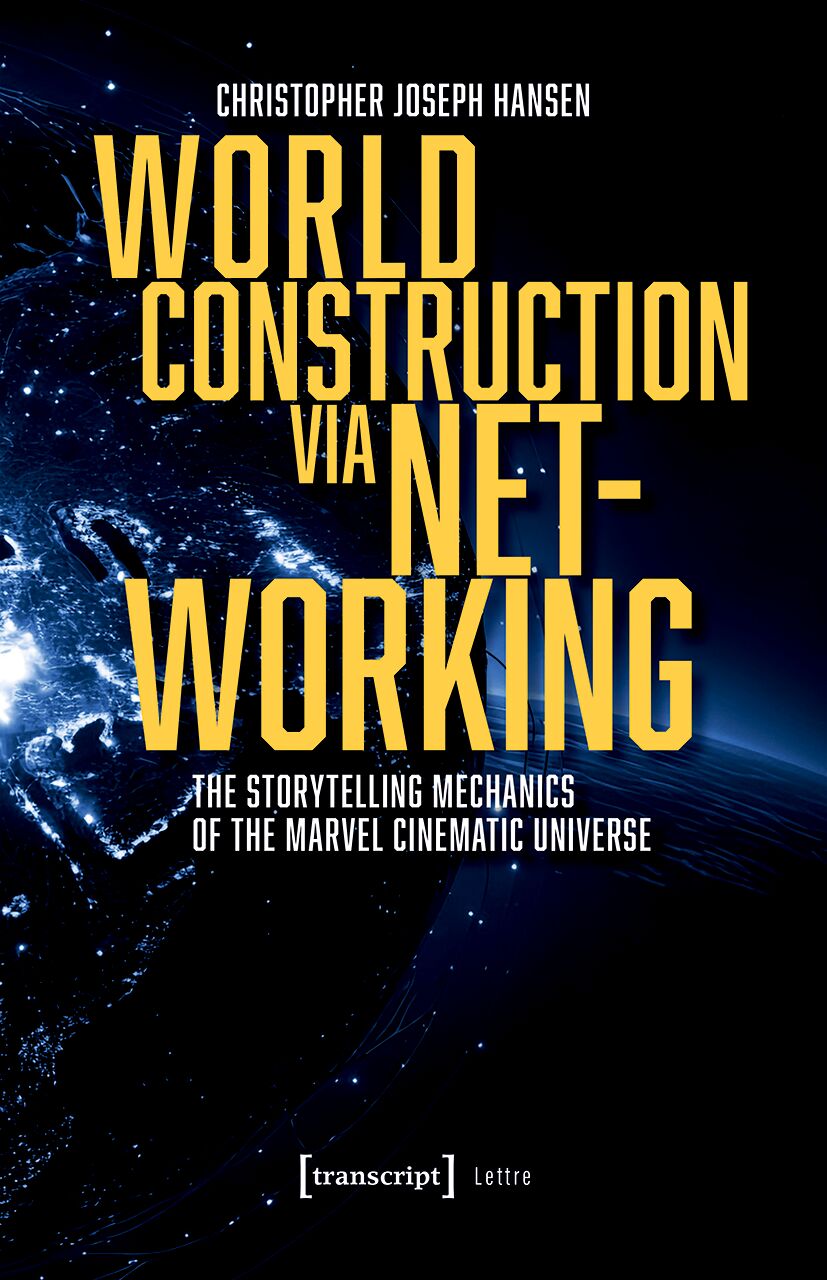
World Construction via Networking
With the mainstream's growing acceptance of worlds and storytelling spread among several different texts – e.g., films, television series, novels, and comics – this pioneering study employs a multidisciplinary approach combining transmediality, network theory, and narratology to analyze the narrative network of the Marvel Cinematic Universe. In this analysis, Christopher Hansen thoroughly examines storytelling techniques while providing a fresh theoretical framework to develop a structural model for interconnected narratives. He redefines our understanding of narrative dynamics in one of the most successful cinematic franchises of all time.
eBook

Characterization of the Skin Microbiome of Free-Ranging Bottlenose Dolphins (Tursiops truncatus) in a Dynamic Environment Using a Novel Technique
The objectives of this study are to determine if: 1) skin swabs from dolphin biopsy samples yield sufficient microbial DNA for 16S rRNA gene sequencing analyses, 2) the dolphin skin microbiome relates to the ambient water microbial community, 3) dolphin skin microbial community composition is affected by environmental attributes, and 4) sample handling affects DNA concentration or microbial community composition. These objectives will be answered by extracting, amplifying, sequencing, and analyzing skin swabs from biopsy samples collected from dolphins in Mobile Bay, Perdido Bay, and the Gulf of Mexico. It is hypothesized that: 1) dolphin skin biopsy swab samples will yield sufficient DNA to characterize the microbiome, differing from those in ambient water, 2) there will be variation in microbial community composition relative to environmental factors, 3) samples collected with cotton swabs and stored in RNAlater® will have different community compositions than samples that were collected with nylon flocked swabs and flash frozen in liquid nitrogen. This study tests a novel technique to analyze the skin microbiome of free-ranging animals without capture that will also preserve biopsy skin samples for additional studies. This information is important to assure the best methodology for future studies relating dolphin microbiome to ecology and health.
Dissertation

Improving Accessibility of in-situ Paleontological Geoheritage Via Digital Conservation: A Case-Study Using iPad-Based LiDAR in the Niagara Aspiring Geopark
A major barrier to effective field-based geoscience education is accessibility. Significant geoheritage sites are frequently located in remote and hard-to-access areas, resulting in substantial physical, financial, and skill/experience-based barriers to entry. Geosites with significant fossil content are frequently found in such hard-to-access areas, including deserts, high-altitude outcrops, and areas with restricted access (such as active quarries). Mirroring the difficulties associated with inaccessible field sites, sites that are easily accessible pose their own challenges related to conservation– namely, difficulties associated with preventing vandalism, overcollection of specimens, and unintentional damage. Here we explore the utility of tablet computer-based LiDAR (e.g., Apple iPad Pro LiDAR) as a cost-effective way to digitally conserve in-situ paleontological geoheritage, to simultaneously insure against information loss due to vandalism/illegal collection and improve accessibility for those who cannot physically visit a given geosite. We use the Middle Devonian fossil reef preserved at Wainfleet Wetlands as a case study. The site, which features an exceptionally well-preserved fossilized thicket reef, is freely accessible year-round, resulting in occasional instances of vandalism and unintentional damage. As Wainfleet Wetlands is intended to be a key geosite in the aspiring Niagara Geopark, increased visitation is expected to increase the risk of damage to the site. To mitigate this, we created 3D LiDAR models of many of the site’s most exceptional fossil specimens and incorporated them into a freely available “GeoHike”. The GeoHike serves as both a digital record of the exceptional fossils from the area and a means to increase the accessibility of these specimens.
Journal Article