
Catalogue Search | MBRL


Are you sure you want to remove the book from the shelf?

{{itemTitle}}
149
result(s) for
"Havard, Robert"
Sort by:


The Crucified Mind
Why is the Spanish input to Surrealism so distinctive and strong? What do such renowned figures as Dalí, Buñuel, Lorca, Aleixandre and Alberti have in common? This book untangles the issue of Surrealism in Spain by focusing on a consistent feature in Spanish avant-garde poetry, art and film of the late twenties and thirties: its supersaturation in religion. A repressive religious upbringing, typically under the Jesuits, intensifies both the paranoiac and the mystical - Surrealism's twin pillars - which were already deeply ingrained in the Spanish psyche. Striking examples are Lorca's prophetic voice in New York, Dalí and Buñuel's Eucharistic transformations, Alberti's Loyolan materio-mysticism. Alberti is the fulcrum of this study since his poetry goes the full distance of Surrealism's evolution from Freudian catharsis to metaphysical transcendence until it expires in a Marxist reaction to church-bound tradition when his nation convulses in civil war, the surrealist ethos in Spain is not reducible to measuring how closely it imitates French theory. It is 'more serious' than the French, says Alberti, and its bearings are found on a cross of mental suffering and in a journey out of hell that made real art in practice. ROBERT HAVARD is Professor of Spanish, University of Wales, Aberystwyth.
eBook

Integrating clinicopathologic and genomic tools in chemotherapy decision-making for early stage breast cancer
[...]the mid-2000s, clinical and pathologic factors served as the mainstay for chemotherapy decision-making in early breast cancer patients. [...]although the ODX assay may tell us if a patient will likely benefit from chemotherapy, it does not provide information about which chemotherapy is most likely to provide benefit. Since the primary objective of the study was to demonstrate that the lower boundary of the 95% CI was at least 92%, these findings indicate that those patients at high risk based on clinical and pathologic factors, but at low risk based on the MammaPrint assay, may not benefit from the addition of chemotherapy. Based on these findings, use of MammaPrint can be considered for patients with hormone-receptor-positive, HER2-negative, lymph-node-negative breast cancer who are at high risk of disease recurrence based on clinicopathologic factors. Since those patients with high clinicopathologic risk but low-risk disease based on the genomic assay may have a favorable prognosis, there is a limited benefit from adjuvant chemotherapy and giving endocrine therapy alone can be considered (5).
Journal Article
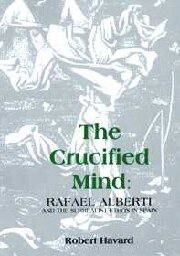
The Crucified Mind
Alberti is the key in this study of the intense religious element in Spanish avant-garde poetry, art and film of the 1920s and '30s.Why is the Spanish input to Surrealism so distinctive and strong? What do such renowned figures as Dalí, Buñuel, Lorca, Aleixandre and Alberti have in common? This book untangles the issue of Surrealism in Spain by focusing on a consistent feature in Spanish avant-garde poetry, art and film of the late twenties and thirties: its supersaturation in religion. A repressive religious upbringing, typically under the Jesuits, intensifies both the paranoiac and the mystical - Surrealism's twin pillars - which were already deeply ingrained in the Spanish psyche. Striking examples are Lorca's prophetic voice in New York, Dalí and Buñuel's Eucharistic transformations, Alberti's Loyolan materio-mysticism. Alberti is the fulcrum of this study since his poetry goes the full distance of Surrealism's evolution from Freudian catharsis to metaphysical transcendence until it expires in a Marxist reaction to church-bound tradition when his nation convulses in civil war, the surrealist ethos in Spain is not reducible to measuring how closely it imitates French theory. It is 'more serious' than the French, says Alberti, and its bearings are found on a cross of mental suffering and in a journey out of hell that made real art in practice. ROBERT HAVARD is Professor of Spanish, University of Wales, Aberystwyth.
eBook

Rafael Alberti, Maruja Mallo, and Giménez Caballero: Materialist Imagery in \Sermones y Moradas\ and the Issue of Surrealism
This article attempts to extend awareness of the context in which Alberti's work of the late 1920s, specifically \"Sobre los ángeles\" and \"Sermones y moradas,\" may be appreciated. The persistence of a subversive religious mode in these volumes is considered in the light of surrealist theory. Comparable materialist imagery is noted in Ernesto Giménez Caballero's \"Yo, inspector de alcantarillas,\" in the Vallecas school of painters and, especially, in the paintings of Maruja Mallo, Alberti's lover at the time. The whole points towards an earnestness of purpose that bears out Alberti's remark in the hitherto unpublished interview with Geoffrey Connell that Surrealism in Spain was more serious than in France.
Journal Article

