
Catalogue Search | MBRL


Are you sure you want to remove the book from the shelf?

{{itemTitle}}
1,080
result(s) for
"Hunter, Christopher"
Sort by:
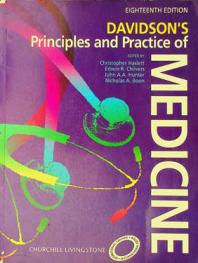
Davidson's principles and practice of medicine / editors Christopher Haslett and 3 others ; illustrated by Robert Britton
\"An internationally famous and best-selling medical textbook, Davidson is renowned for providing a rational and easily understood basis for the practice of medicine. As a concise yet up-to-date and comprehensive text on clinical medicine, it has met the requirements of several generations of medical students preparing for their final examinations.\" \"The evolution of this classic textbook continues in this Eighteenth Edition, with colour utilised to enhance the presentation of the content, while the text has been restructured and updated throughout in keeping with the expanding knowledge base of disease pathogenesis and clinical practice.\"--Jacket.
Book

IL-6 as a keystone cytokine in health and disease
IL-6 has context-dependent pro- and anti-inflammatory properties and is now regarded as a prominent target for clinical intervention. Hunter and Jones discuss the effect of IL-6 on innate and adaptive immunity, and consider how the immunobiology of IL-6 may inform clinical decisions.
Interleukin 6 (IL-6) has a broad effect on cells of the immune system and those not of the immune system and often displays hormone-like characteristics that affect homeostatic processes. IL-6 has context-dependent pro- and anti-inflammatory properties and is now regarded as a prominent target for clinical intervention. However, the signaling cassette that controls the activity of IL-6 is complicated, and distinct intervention strategies can inhibit this pathway. Clinical experience with antagonists of IL-6 has raised new questions about how and when to block this cytokine to improve disease outcome and patient wellbeing. Here we discuss the effect of IL-6 on innate and adaptive immunity and the possible advantages of various antagonists of IL-6 and consider how the immunobiology of IL-6 may inform clinical decisions.
Journal Article

Is IL-6 a key cytokine target for therapy in COVID-19?
The identification of elevated IL-6 levels in patients with severe COVID-19 led to the rapid development of clinical trials targeting this cytokine. Overall, these trials do not support the widespread use of IL-6 antagonists in hospitalized patients with mild-to-moderate disease, but IL-6 antagonists may be beneficial when rapidly deployed in patients with severe COVID-19, as we discuss here.
Journal Article

Modulation of innate immunity by Toxoplasma gondii virulence effectors
Key Points
The parasite
Toxoplasma gondii
is extremely widespread in animals and is a common cause of food- and water-borne infection in people. Although most infections are benign, they can have severe consequences in immunocompromised patients and following congenital infection.
T. gondii
is regarded as a model intracellular parasite for which forward- and reverse-genetics tools are available. In combination with the mouse model of toxoplasmosis (including the many genetic knockout and transgenic mouse lines that are available), these tools for genetic manipulation of the parasite have enabled researchers to explore the molecular determinants of
T. gondii
pathogenesis and host defence.
Forward-genetics crosses conducted in
T. gondii
, using strains of different genotypes and virulences in mice, revealed that acute virulence is largely mediated by a family of effector proteins that are secreted into the host cell cytoplasm during parasite invasion. These proteins are derived from a secretory organelle called the rhoptry and, hence, are called ROP effectors.
ROPs include a family of serine/threonine kinases that affect host targets and have important roles in infection in the mouse. Among these, ROP18 phosphorylates immunity-related GTPases, thus promoting parasite survival in activated macrophages, whereas ROP16 phosphorylates signal transducer and activator of transcription 3 (STAT3) and STAT6 and, hence, alters host gene transcription. Curiously, the activity of ROP18 is mediated by another family member called ROP5, which is a pseudokinase.
Although a limited subset of ROP kinases can largely explain the virulence of
T. gondii
in the mouse, their role in other hosts has not been established. The genome encodes more than 40 ROPs, and these different proteins might have distinct roles during infection in the wide range of hosts infected by
T. gondii
. Understanding these patterns might help in the prevention and treatment of human infections.
The intracellular parasite
Toxoplasma gondii
can infect a range of hosts and occasionally causes serious disease in humans. In this Review, Hunter and Sibley summarize recent studies that implicate rhoptry kinases and a dense-granule protein as mediators of acute virulence in the mouse model. They also describe the complex interplay between these parasite effector proteins and the innate immune system.
Toxoplasma gondii
is a common parasite of animals and humans and can cause serious opportunistic infections. However, the majority of infections are asymptomatic, possibly because the organism has co-evolved with its many vertebrate hosts and has developed multiple strategies to persist asymptomatically for the lifetime of the host. Over the past two decades, infection studies in the mouse, combined with forward-genetics approaches aimed at unravelling the molecular basis of infection, have revealed that
T. gondii
virulence is mediated, in part, by secretion of effector proteins into the host cell during invasion. Here, we review recent advances that illustrate how these virulence factors disarm innate immunity and promote survival of the parasite.
Journal Article

Single-cell analysis highlights differences in druggable pathways underlying adaptive or fibrotic kidney regeneration
The kidney has tremendous capacity to repair after acute injury, however, pathways guiding adaptive and fibrotic repair are poorly understood. We developed a model of adaptive and fibrotic kidney regeneration by titrating ischemic injury dose. We performed detailed biochemical and histological analysis and profiled transcriptomic changes at bulk and single-cell level (> 110,000 cells) over time. Our analysis highlights kidney proximal tubule cells as key susceptible cells to injury. Adaptive proximal tubule repair correlated with fatty acid oxidation and oxidative phosphorylation. We identify a specific maladaptive/profibrotic proximal tubule cluster after long ischemia, which expresses proinflammatory and profibrotic cytokines and myeloid cell chemotactic factors. Druggability analysis highlights pyroptosis/ferroptosis as vulnerable pathways in these profibrotic cells. Pharmacological targeting of pyroptosis/ferroptosis in vivo pushed cells towards adaptive repair and ameliorates fibrosis. In summary, our single-cell analysis defines key differences in adaptive and fibrotic repair and identifies druggable pathways for pharmacological intervention to prevent kidney fibrosis.
After acute injury, kidneys either successfully repair/regenerate or become fibrotic. Here the authors use scRNA-seq to study adaptive/maladaptive kidney regeneration and identify proinflammatory/fibrotic proximal tubule cells with pharmacologically targetable pyroptosis/ferroptosis signatures.
Journal Article

The African American Church House: A Phenomenological Inquiry of an Afrocentric Sacred Space
The institution of the black church in America is centered around two things: the people and their events. Very little scholarship has been documented about the physical buildings that became homes for the people and host to their events. These early church houses became the first evidence of a constructed material culture for formerly enslaved persons in America. The design and construction of black church houses provided enslaved as well as free persons of color the opportunity to physically create buildings that would become the center of African American life, beginning as early as the late 18th century and reaching to the present. Coupled with this exercise of the creation of architectural placemaking is the defining and application of the term “sacred space”.
Journal Article

Highly efficient catalysis of the Kemp elimination in the cavity of a cubic coordination cage
The hollow cavities of coordination cages can provide an environment for enzyme-like catalytic reactions of small-molecule guests. Here, we report a new example (catalysis of the Kemp elimination reaction of benzisoxazole with hydroxide to form 2-cyanophenolate) in the cavity of a water-soluble M
8
L
12
coordination cage, with two features of particular interest. First, the rate enhancement is among the largest observed to date: at pD 8.5, the value of
k
cat
/
k
uncat
is 2 × 10
5
, due to the accumulation of a high concentration of partially desolvated hydroxide ions around the bound guest arising from ion-pairing with the 16+ cage. Second, the catalysis is based on two orthogonal interactions: (1) hydrophobic binding of benzisoxazole in the cavity and (2) polar binding of hydroxide ions to sites on the cage surface, both of which were established by competition experiments.
The Kemp elimination has been catalysed in the cavity of a coordination cage with a rate enhancement (
k
cat
/
k
uncat
) of 200,000 at pD 8.5. The catalysis requires two orthogonal interactions to bring together the components: hydrophobic binding of benzisoxazole, and accumulation of hydroxide ions at the cationic cage surface by ion-pairing.
Journal Article
New IL-12-family members: IL-23 and IL-27, cytokines with divergent functions
Key Points
The interleukin-6 (IL-6) and IL-12 family of cytokines has an important role in immune regulation in the context of infection and autoimmunity. This article reviews recent studies that have highlighted the unique roles of two of the newer family members, IL-23 and IL-27.
Within this grouping of cytokines, the p40 subunit (IL-12p40) is the only component that is shared by two cytokines (IL-12 and IL-23). However, the receptors for IL-12 and IL-23 share the subunit IL-12Rβ1, and the receptors for IL-6 and IL-27 both contain gp130 (glycoprotein 130).
IL-12 has an important role in cell-mediated immunity, which is required for resistance to intracellular infections, but experimental data regarding the contribution of IL-12 to the development of autoimmunity have been contradictory.
The finding that IL-23 shares a subunit with IL-12 led to the realization that, at least in experimental models, IL-23 and not IL-12 seems to be the main cytokine involved in the development of autoimmunity.
The role of IL-23 in the context of infection and autoimmunity seems to be to stimulate a subset of T cells that do not belong to the canonical T helper 1 (T
H
1) or T
H
2-cell subset. Instead, these cells express a unique pattern of pro-inflammatory cytokines that is characterized by the secretion of IL-17, IL-6 and tumour-necrosis factor.
Initial studies on the immunobiology of IL-27 focused on its ability to promote the development of CD4
+
T cells into T
H
1 cells. Subsequently, it has become clear that this cytokine also has potent inhibitory effects on various immune-cell populations.
It seems probable that understanding how the dysregulated expression of these cytokines contributes to immune-mediated disease will provide new opportunities for the development of novel therapeutics.
Understanding the factors that influence T helper 1 (T
H
1)- and T
H
2-cell responses has been one of the main focuses of immunology for almost 20 years. Whereas the central role of interleukin-12 (IL-12) in the generation of T
H
1 cells has long been appreciated, subsequent studies indicated that IL-23 and IL-27, two cytokines that are closely related to IL-12, also regulate T
H
1-cell responses. However, as discussed in this article, it is now recognized that the ability of IL-23 to stimulate a unique T-cell subset to produce IL-17 has a dominant role in autoimmune inflammation. By contrast, IL-27 has a role in limiting the intensity and duration of adaptive immune responses.
Journal Article

Trafficking of immune cells in the central nervous system
The CNS is an immune-privileged environment, yet the local control of multiple pathogens is dependent on the ability of immune cells to access and operate within this site. However, inflammation of the distinct anatomical sites (i.e., meninges, cerebrospinal fluid, and parenchyma) associated with the CNS can also be deleterious. Therefore, control of lymphocyte entry and migration within the brain is vital to regulate protective and pathological responses. In this review, several recent advances are highlighted that provide new insights into the processes that regulate leukocyte access to, and movement within, the brain.
Journal Article
Development of a nucleoside-modified mRNA vaccine against clade 2.3.4.4b H5 highly pathogenic avian influenza virus
mRNA lipid nanoparticle (LNP) vaccines would be useful during an influenza virus pandemic since they can be produced rapidly and do not require the generation of egg-adapted vaccine seed stocks. Highly pathogenic avian influenza viruses from H5 clade 2.3.4.4b are circulating at unprecedently high levels in wild and domestic birds and have the potential to adapt to humans. Here, we generate an mRNA lipid nanoparticle (LNP) vaccine encoding the hemagglutinin (HA) glycoprotein from a clade 2.3.4.4b H5 isolate. The H5 mRNA-LNP vaccine elicits strong T cell and antibody responses in female mice, including neutralizing antibodies and broadly-reactive anti-HA stalk antibodies. The H5 mRNA-LNP vaccine elicits antibodies at similar levels compared to whole inactivated vaccines in female mice with and without prior H1N1 exposures. Finally, we find that the H5 mRNA-LNP vaccine is immunogenic in male ferrets and prevents morbidity and mortality of animals following 2.3.4.4b H5N1 challenge. Together, our data demonstrate that a monovalent mRNA-LNP vaccine expressing 2.3.4.4b H5 is immunogenic and protective in pre-clinical animal models.
Highly pathogenic avian influenza viruses from H5 clade 2.3.4.4b are circulating widely in birds and have recently caused large outbreaks in mammals. Here, Furey et al. develop a clade 2.3.4.4b HA-expressing mRNA-LNP vaccine and show that it elicits strong protective immune responses in mice and ferrets.
Journal Article